
Understanding Fence Setback Requirements
A fence can look straightforward on a sketch, then become complicated the moment a post lands too close to a property line, road allowance, utility route, or drainage feature. Understanding fence setback requirements before materials arrive helps prevent costly changes, neighbor disputes, and delays during installation.
For Vancouver Island properties, the right answer is rarely a single number. Requirements can vary by municipality, zoning, frontage type, lot layout, and whether the property is in a town, city, or regional district. A quality fence starts with a clear plan for where it can safely and legally stand.
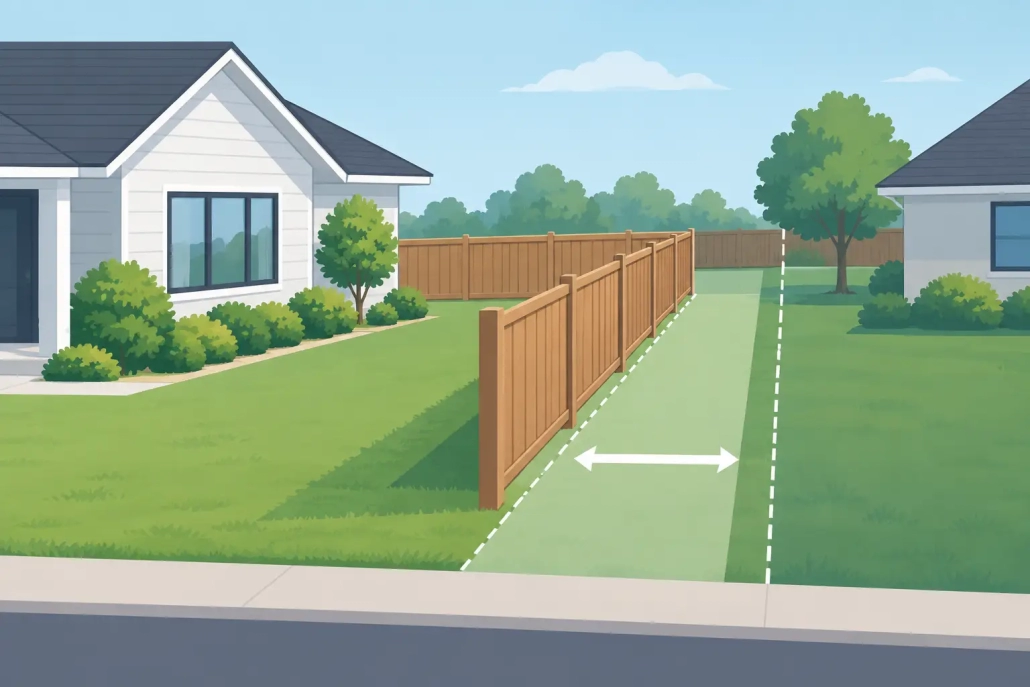
What fence setbacks actually mean
A setback is the required distance between a structure or improvement and a property boundary, road, watercourse, utility area, or other protected feature. Fences are not always treated the same way as a house, garage, or shed. In many areas, a typical side or rear-yard fence may be allowed close to the boundary, while front-yard fencing, corner lots, taller privacy fences, retaining walls, and gates can face tighter rules.
The practical question is not simply, “How close can I build to the line?” It is, “What rules apply to this specific part of my property?” A fence along a quiet rear boundary may be treated very differently from one facing a public road or located beside an intersection.
Setbacks are designed to protect sightlines, access, public infrastructure, drainage, and neighboring properties. They also give municipalities a way to manage safety and appearance where private property meets public space.
Why understanding fence setback requirements matters
A fence installed in the wrong location can create more than an awkward conversation with a neighbor. It may need to be altered or removed, even if it is newly built and well constructed. That can mean replacing posts, rebuilding gates, adjusting grades, and purchasing additional materials.
For homeowners, the most common issues involve fences built from assumed boundary lines. Existing fences, hedges, rock walls, and old stakes are not always on the legal property line. A previous owner may have built inside their lot, or a neighboring fence may have drifted over time from its intended location.
Commercial and rural properties bring another layer of complexity. Access routes, drainage ditches, agricultural uses, deer fencing, security gates, and wide equipment entrances may all affect placement. A fence that works well for privacy on a city lot may not work for a driveway turnaround, fire access, or livestock movement on acreage.
Getting the layout right early protects the investment. It also gives the installer room to build a fence that performs properly, with straight runs, solid corners, correctly swinging gates, and posts set for the conditions on site.
Start with the real property line
Before deciding on a setback, confirm where the boundary actually is. A site plan, property survey, or legal survey document can provide useful information, but its age and detail matter. If the boundary is uncertain or the project is close to a disputed area, a current professional survey may be the best move.
Do not rely only on a fence that is already there. It may be a helpful reference point, but it is not proof of ownership. The same goes for tree lines, landscaping edges, driveways, and informal markers between properties.
There is also a practical installation decision to make. Building directly on a shared boundary can be appropriate when ownership, access, and maintenance responsibilities are clear. Building slightly inside your own line gives you more control and avoids placing part of the fence on a neighbor’s land. The trade-off is that you may leave a narrow strip outside the fence that still needs occasional maintenance.
A clear, respectful conversation with the adjoining owner can prevent problems. Share the proposed fence location, height, style, and gate placement before construction begins, especially when the work affects a shared boundary or changes visibility around a driveway.
Front yards and corner lots need extra attention
Front-yard fencing is often where setbacks and height restrictions become more noticeable. Municipal rules may limit how tall a fence can be near a street, sidewalk, or driveway. Open-style ornamental or picket fencing may be allowed at a different height than a solid cedar privacy fence.
Corner lots deserve special care. The area near the intersection is often subject to a sight triangle or clear-visibility requirement. Tall fencing, dense hedges, stacked materials, or solid gate structures in that space can block a driver’s view of pedestrians, cyclists, and approaching vehicles.
This does not mean a corner property cannot have a secure, attractive fence. It means the design may need to step back, transition to a lower height, or use a more open material near the road. A good layout protects privacy where it is needed without creating a safety issue at the corner.
Check for roads, rights-of-way, and utility access
The apparent edge of a road is not always the edge of public property. Road allowances can extend beyond pavement, curbs, ditches, sidewalks, or gravel shoulders. Fencing into that area can interfere with snow clearing, drainage maintenance, road widening, or pedestrian access.
Utility rights-of-way and easements are another concern. Power, communications, water, sewer, and drainage infrastructure may cross or run alongside private property. A fence may sometimes be permitted near an easement, but it must not prevent required access or damage underground and overhead services.
Before posts are installed, underground utilities should be located through the appropriate local process. This is essential even when a fence appears to be a simple, shallow excavation. Post holes can encounter buried lines, irrigation systems, private electrical feeds, drainage pipes, or old site infrastructure.
On difficult sites, planning matters even more. Bedrock, steep grades, concrete remnants, retaining structures, and tight access can change both the post-setting method and the best fence alignment. Moving a line a small distance may avoid extensive drilling or allow for stronger construction without compromising the property plan.
Height, retaining walls, and gates can change the rules
A standard fence is one thing. A tall privacy screen, security enclosure, acoustic barrier, or fence installed on top of a retaining wall may be treated differently. Combined height is often the issue. A six-foot fence on top of a raised wall can create a far greater visual and safety impact than the same fence at ground level.
Gates also need room to function safely. Driveway gates should not swing into a public road, sidewalk, or shared access route. For commercial sites, gate placement must account for delivery vehicles, emergency access, turning radiuses, and safe visibility when vehicles enter or leave the property.
If the project includes a retaining wall, substantial grade change, or custom gate system, verify requirements before construction. These projects may involve more than basic fencing rules, particularly where drainage, engineered structures, or public access are involved.
A practical process before installation
The most reliable approach is to confirm the property line, review local municipal or regional district requirements, identify easements and utilities, and then plan the fence around the actual conditions on site. Keep copies of surveys, permit information, and approved plans where they are easy to find.
Rules can differ between Nanaimo, Campbell River, Parksville, Qualicum Beach, Courtenay, Comox, and surrounding regional areas. Even within one community, zoning and lot conditions can produce different answers. Avoid copying a neighbor’s layout or assuming that a rule from another municipality applies to your property.
At Vancouver Island Fence Company, we look at the full job before building begins: layout, access, terrain, fence purpose, post requirements, and the details that affect long-term performance. Whether the project calls for cedar privacy fencing, chain link, ornamental panels, deer fencing, or a custom solution, sound planning keeps the installation on track.
A fence should define your space without creating a problem at the edge of it. Confirm the setbacks first, then build a fence that is positioned to last, works for your property, and gives you confidence every time you look at it.

