
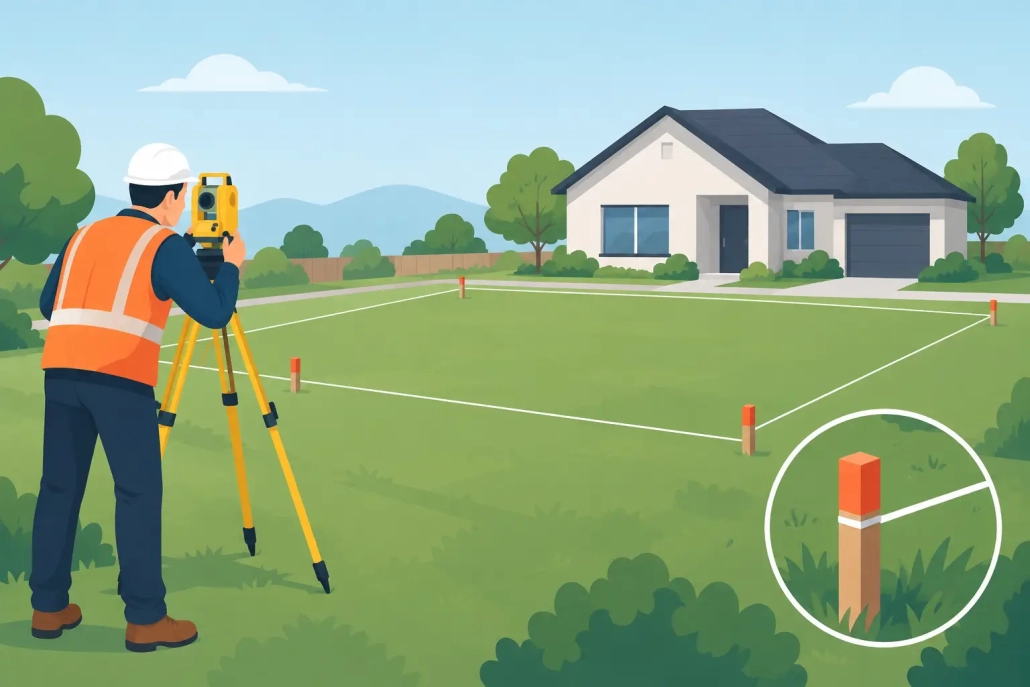
How to Mark Property Boundaries Accurately
A fence can be straight, level, and built to last for decades, but none of that helps if it sits on the wrong side of the lot line. To mark property boundaries accurately, start with reliable evidence of the legal boundary, not an old fence, a row of shrubs, or a neighbor’s best guess. A few inches can create a difficult conversation. A few feet can create a costly problem.
For homeowners, acreage owners, and commercial property managers, the right approach protects the investment in the fence and helps keep relationships with neighboring properties on solid ground. Here is what to establish before the first post hole is dug.
Start With the Legal Boundary, Not the Existing Fence
An existing fence is not automatically a property line. It may have been installed for privacy, livestock control, drainage, or convenience. It may also have been built inside the owner’s property to avoid a rock outcrop, mature trees, utility equipment, or a disagreement that predates the current owners.
The same applies to hedges, retaining walls, driveways, ditches, and tree lines. They can be useful visual references, but they do not prove ownership. Treat them as site features until the legal boundary has been confirmed.
Your property documents may include a survey plan, site plan, subdivision plan, or legal description. These records can help you understand the shape of the lot and identify where survey monuments should be located. They are a good starting point, especially when paired with visible pins or monuments that match the plan.
However, older documents and real-world conditions do not always line up cleanly. Lots change hands, markers get buried, landscaping covers corners, and previous construction can make the site harder to read. On sloped, wooded, waterfront, or rural properties, the boundary may be much less obvious than it appears on paper.
When a Professional Survey Is the Right Call
If the boundary is uncertain, a qualified land surveyor is the person who can establish or re-establish it. This is the right choice when a fence will run close to the line, when property corners cannot be found, or when a neighbor disagrees about the location.
A survey is also worth considering before a major commercial fence, a long deer fence around acreage, or any project involving gates, retaining work, significant grading, or valuable improvements near the edge of the property. The cost of confirming the line before construction is usually far less than moving completed fencing later.
A fencing contractor can identify practical installation challenges and work from marked survey points. But a contractor should not be expected to determine a legal property boundary. Those are different jobs. Keeping that distinction clear protects everyone involved.
How to Mark Property Boundaries Accurately on Site
Once the boundary has been confirmed through survey evidence or a surveyor’s field markings, make it visible enough for planning and installation. The goal is not to replace legal monuments with temporary stakes. The goal is to preserve the established reference points and clearly show the proposed fence route.
Start by locating the corners. Survey pins, iron bars, capped monuments, or other official markers are often set at lot corners, though their appearance varies. Do not pull them out, bend them, cover them with concrete, or use them as a fence post location. They need to remain accessible for future reference.
From the confirmed corners, a string line can show the intended fence run. For a long boundary, intermediate stakes and high-visibility marking paint help keep the route clear across uneven ground. On a wooded lot, flagging can help identify the line while the crew plans access, clears brush selectively, and checks for roots or rock.
It is often wise to place the fence slightly inside your own property rather than directly over the line. The correct offset depends on the site, fence design, municipal requirements, access needs, and the relationship with the neighboring owner. An inside offset can make maintenance easier and reduce the chance that footings, post holes, rails, or gate swings extend onto someone else’s land.
Do not assume a small offset means the fence can be set by eye. A fence that starts six inches inside the line but drifts over the line at the far end is still a problem. The layout needs to stay consistent from corner to corner.
Check the Entire Run, Not Just the Corners
A boundary can look straightforward until it crosses a slope, passes a drainage ditch, meets a retaining wall, or runs through dense vegetation. On larger properties, a line between two known corners may cross ground that is difficult to access or impossible to see from one end.
Walk the whole run before finalizing the layout. Look for grade changes, exposed bedrock, large roots, utility boxes, culverts, overhead lines, and drainage paths. These details affect where posts can go and what equipment is needed. They may also affect the best fence style for the job.
For example, a cedar privacy fence needs a solid, orderly layout to keep panels and top lines looking clean. Chain link can follow certain grade changes more easily, while deer and wire fencing often suit longer rural runs with changing terrain. A professional installer can recommend a practical route without compromising the confirmed boundary.
Speak With Your Neighbor Before Work Starts
A quick conversation before installation can prevent unnecessary tension. Let the adjoining owner know that you are planning a fence, explain the proposed route, and share the timing if access or noise may affect them. This is especially helpful when the fence is close to the property line or when both properties would benefit from the finished barrier.
That conversation does not replace a survey or create a legal agreement. It does, however, give both parties a chance to raise practical concerns early. A neighbor may point out a shared drainage issue, a gate they rely on for access, or a buried irrigation line near the proposed run.
If there is any disagreement about the line, stop before building. Do not try to solve a boundary dispute with a tape measure, online map, or a compromise stake. Confirm the legal boundary first, then decide how and where the fence should be placed.
Account for Utilities, Setbacks, and Access
Boundary confirmation is only one part of a good fence layout. Before digging, utility locations must be identified through the appropriate local process. Underground electrical, gas, communications, water, sewer, irrigation, and drainage lines may not be obvious from the surface. Hitting one can delay the job, create a safety issue, and add unexpected repair costs.
You should also consider local setback rules, easements, rights-of-way, and strata or neighborhood requirements where they apply. A utility easement or access route can limit what is practical to build in a certain area, even if that area is within your property.
Think ahead about maintenance as well. Can you reach both sides of the fence to stain cedar, trim vegetation, repair wire, or clear debris? Will a gate open fully without blocking a driveway or crossing the line? Is there enough room for a crew and equipment to safely work around rock, trees, or structures? These are small questions during planning and expensive questions after posts are set.
Mark the Fence Route for Installation, Not Just Approval
Once the boundary and the practical fence alignment are settled, mark corners, gate openings, changes in direction, and significant obstacles. A clear layout helps the installation crew confirm the scope before materials arrive and keeps decisions from being made mid-build.
For difficult Vancouver Island sites, that planning matters. Rock, steep grades, wet ground, heavy roots, and tight access can change the installation method. Some posts may require drilling, concrete work, or specialized equipment. A capable fencing crew can handle challenging conditions, but accurate markings and a clear route let them prepare properly.
Take photos of visible survey markers and the marked fence route before work begins. Keep survey documents, written neighbor agreements, permit information, and any layout notes with your property records. If the markers are later buried by landscaping or obscured by a finished fence, those records will be useful.
Build With Confidence From the First Post
A good fence starts before materials are delivered. Confirm the legal line, make the intended route visible, check what lies below and around it, and resolve questions before construction begins. That process gives the installer a clean plan and gives you confidence that the finished fence is where it belongs.
At Vancouver Island Fence Company, careful site planning is part of building fencing that performs well on real properties, including the ones with rough terrain, rock, slopes, and complicated access. When the boundary is properly established, the crew can focus on what they do best: building a fence that looks right, functions properly, and stands up to the work it needs to do.

