
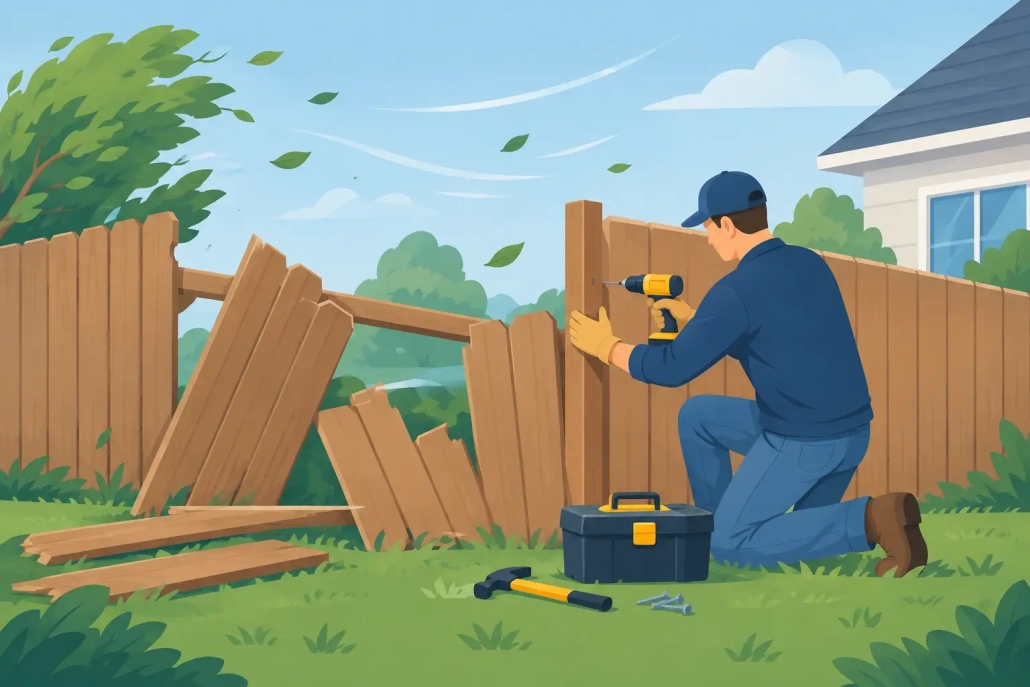
How to Repair Wind Damaged Fences Safely
A fence can look mostly intact after a storm and still be one strong gust away from failing. To repair wind damaged fences properly, the first job is not replacing a board or straightening a panel. It is finding out what moved below ground, what cracked under load, and whether the remaining structure can still carry the next storm.
On Vancouver Island, wind damage often comes with saturated soil, driving rain, falling branches, and uneven ground. A quick cosmetic repair may make the fence look better for a week, but it will not solve a loose post, damaged footing, or weakened rail. A sound repair starts with a full assessment and a clear decision: repair the affected section, reinforce the line, or replace the portion that has reached the end of its service life.
Start With Safety and a Full Inspection
Do not lean against a storm-damaged fence to test it. A section that appears stable may be held up by a broken rail, tangled wire, or one remaining fastener. Keep children, pets, and vehicles clear of leaning panels, exposed nails, and damaged chain link until the area is secured.
Walk both sides of the fence line and look for obvious movement. Leaning posts, bowed rails, separated panels, loose gates, lifted concrete, and gaps at the ground are all signs that the wind load traveled through more than one component. If a tree or large limb has landed on the fence, avoid removing it until the fence is supported. The weight may be holding damaged sections in place.
Pay close attention to the posts. Posts are the foundation of the fence, and they are often where the real damage begins. A cedar board can be replaced easily. A post that has shifted in wet soil, split at ground level, or loosened in a failed concrete footing needs a structural repair.
What Wind Damage Usually Means
Wind rarely damages every fence the same way. The repair depends on fence style, age, soil conditions, and how the wind hits the property.
Privacy fences take a broad, solid wall of wind. Cedar panels and closely spaced boards can act like a sail, especially where the fence ends at an open yard, driveway, or corner lot. A few broken boards may be visible, but the rails and posts can also be strained from the force.
Chain link and wire fencing allow more air through, but they can still fail when terminal posts bend, fabric pulls loose, top rails separate, or trees fall across the line. On acreage and rural properties, deer fencing may be damaged by windblown branches or by stretched wire after a post shifts.
Gates deserve their own inspection. A gate can become difficult to latch after a storm because the hinge post has moved, not because the gate itself is defective. Forcing a misaligned gate can crack hinges, pull fasteners out, or make an already weak post worse.
Repair Wind Damaged Fences From the Ground Up
A reliable repair follows the structure of the fence. Start with the post and footing, then repair rails, framing, panels, boards, fabric, and hardware. Replacing surface materials before stabilizing the support system wastes time and money.
Reset or Replace Loose Posts
A post that rocks in the ground, leans noticeably, or has a cracked concrete collar should be addressed before anything is attached to it. In some cases, a sound post can be reset if it has simply shifted and the surrounding material can be removed safely. More often, a damaged, rotted, or badly displaced post should be replaced.
The right solution depends on the site. Rocky ground, shallow soil, existing concrete, and difficult access can turn a simple-looking post replacement into a more involved job. On Vancouver Island, properties often have buried rock, slopes, or hardpan that require concrete drilling, jackhammering, or specialized equipment to rebuild the fence line correctly.
New posts should be set to match the fence design, local conditions, and expected load. A taller privacy fence or gate post needs more support than a light wire fence. Cutting corners on depth, alignment, or concrete is one of the most common reasons a repaired fence fails in the next major wind event.
Check Rails Before Replacing Boards
Rails transfer wind force between the boards and posts. If they are cracked, split around screws, pulled out of brackets, or sagging, replace or reinforce them before installing new boards. On cedar fencing, look closely where rails meet posts. That connection can loosen even when the rail itself looks fine.
Use exterior-rated fasteners sized for the material and the framing. Reusing rusted screws or nailing new boards onto weak rails may produce a tidy appearance, but it does not restore strength. If several rails have failed along the same run, the issue may be undersized framing, inadequate post spacing, or a fence design that is carrying more wind than it should.
Replace Damaged Boards and Panels Carefully
Once posts and rails are secure, replace cracked, missing, or badly warped boards. Match board size, spacing, and profile where possible so the repaired section does not look patched together. With cedar, natural color variation is normal. New boards will weather over time, but selecting similar material and installing it with consistent spacing helps the repair blend into the existing fence.
Prebuilt panels can be fast to install, but they are not always the best choice for uneven terrain or older fence lines. A site-built section can be adjusted to suit slopes, existing post spacing, and changing grade. This is particularly useful where a storm has exposed an underlying construction problem rather than damaged one isolated panel.
When Repair Is the Right Choice – and When It Is Not
Repairing a fence is usually worthwhile when the damage is limited to a few posts, rails, boards, or a defined section of fabric. It makes sense when the rest of the fence is straight, posts are sound, and the original construction still meets the needs of the property.
Replacement becomes the better value when failures repeat along the fence line. Multiple rotten posts, widespread rail damage, loose concrete, rusted chain link components, or a fence that leans in several directions are signs that isolated repairs will only delay a larger project. The same is true when the fence no longer provides the privacy, animal control, security, or appearance you need.
A storm can also be an opportunity to correct a design issue. For example, a solid fence in a highly exposed location may benefit from stronger posts, better bracing, adjusted board spacing, or a different fence style that reduces wind pressure. There is no one answer for every property. The best repair is the one that suits the site, the fence purpose, and the condition of the existing materials.
Do Not Miss These Hidden Problems
Storm damage is often more extensive than it first appears. Look for changes in fence alignment from one section to the next, fresh cracks in concrete around posts, fasteners pulling through wood, and sections where the bottom of the fence has lifted away from the grade.
For chain link fencing, inspect tension bands, rail ends, brace bands, terminal posts, and the tension wire. A torn fabric edge or loose tie wire may be easy to see, while a bent terminal post can gradually pull the whole run out of alignment. For wire and deer fencing, check every corner and end assembly. Those points carry the greatest tension and are critical to keeping the line secure.
If the fence sits near a retaining wall, driveway, commercial access point, or neighboring structure, consider the effect of movement beyond the fence itself. Soil erosion, drainage changes, and shifting grades can undermine new work unless they are addressed as part of the repair plan.
Why Professional Repairs Matter After a Storm
A homeowner can often replace a single board or tighten a loose gate latch. Structural fence repairs are different. Resetting posts, handling damaged concrete, rebuilding gates, stretching wire, and aligning a long run of fencing require the right tools and experience. Poor alignment can make a repaired fence look uneven, while inadequate foundations can create a safety issue and lead to another failure.
Vancouver Island Fence Company handles repairs and replacement work for residential, commercial, and rural properties across the Island. From cedar privacy fencing to chain link, ornamental, deer, and wire fencing, the goal is the same: rebuild the damaged area so it is straight, secure, and ready for the conditions it faces.
If your fence has shifted after high winds, take clear photos before moving debris or making temporary repairs. Then have the full fence line assessed before the next storm tests the weak point again.

