
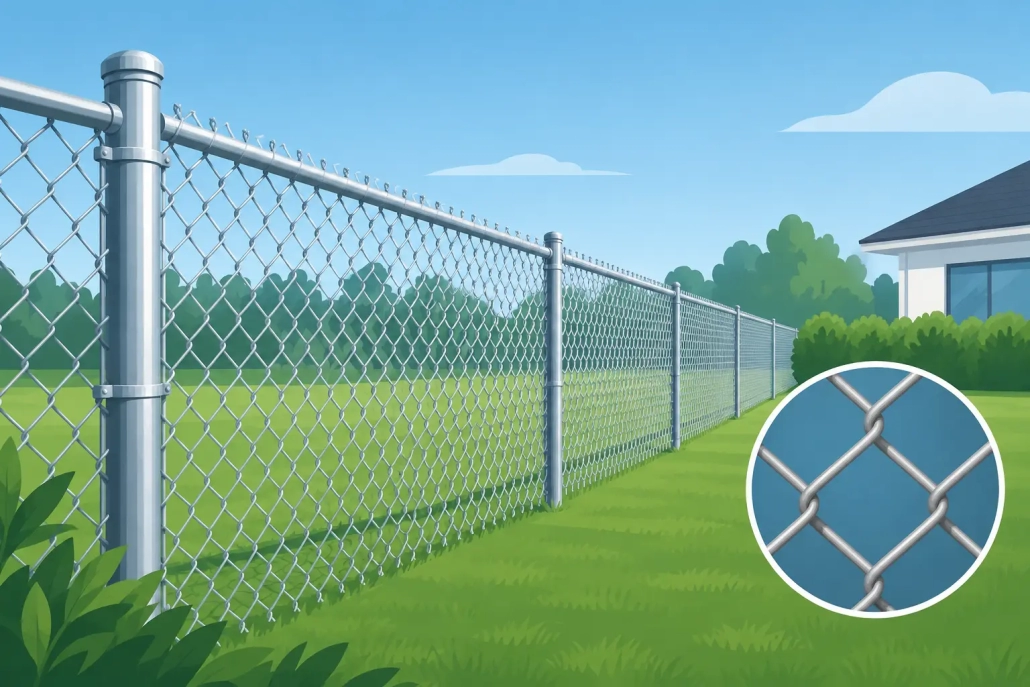
Chain Link Wire: A Practical Fence Choice
A fence does not need to be complicated to do its job well. For property owners who need a clear boundary, dependable containment, or practical security, chain link wire remains one of the most proven choices available. It is economical, adaptable, and capable of handling everything from a small backyard run to a commercial perimeter.
The right result, however, is about more than stretching wire between a few posts. Wire gauge, mesh size, framework, gates, terrain, and installation quality all affect how a chain link fence performs over time. A properly planned fence stays straight, operates smoothly, and stands up to daily use and coastal weather.
Why chain link wire still makes sense
Chain link fencing is built for function. Its open mesh allows light and airflow through, making it a practical choice where a solid privacy fence would feel too closed in or catch too much wind. It creates a visible property line without blocking sightlines around driveways, parking areas, play spaces, or commercial yards.
For homeowners, chain link wire is often used to contain dogs, protect gardens, define side yards, or secure a pool area when designed to meet applicable requirements. On acreage and rural properties, it can help manage pets, livestock areas, equipment storage, and access points. Commercial operators use it to establish secure boundaries around storage yards, service areas, utility equipment, and parking lots.
Cost is another major advantage. Compared with many wood, composite, or ornamental options, chain link can cover a large area at a more manageable price. That does not mean every chain link fence is the same. A light-duty backyard fence and a heavy commercial installation may look similar from a distance, but their materials and structural requirements are very different.
Choosing the right chain link wire
The wire mesh is the most visible part of the fence, but it should be selected for the job rather than appearance alone. Mesh is commonly described by its gauge and opening size. A lower gauge number means thicker wire. Thicker wire costs more, but it provides greater resistance to impact, bending, and cutting.
For a typical residential pet enclosure, a standard galvanized mesh may be a sensible fit. If the fence will contain larger dogs, face frequent contact, or protect a business yard, a heavier gauge and stronger framework are usually worth considering. The goal is to avoid paying for capacity you do not need while also avoiding a fence that feels flimsy from the start.
Mesh opening matters too. Smaller openings are useful where a fence needs to contain smaller animals or reduce opportunities for climbing. Larger openings may work well for general boundary fencing. If wildlife, pets, or children are part of the equation, discuss how the fence will actually be used before choosing materials.
Galvanized or vinyl-coated wire?
Galvanized chain link wire has a zinc coating that helps protect the steel from corrosion. It has the familiar silver finish and is a durable, practical option for many projects. Quality galvanized materials are especially important in wet conditions, where poor coatings and lightweight components can show wear early.
Vinyl-coated chain link adds a colored outer layer, most often black, green, or brown. It can soften the fence’s appearance and help it blend into landscaping, trees, or dark trim. Black chain link is popular around residential yards because it is less visually distracting than bright galvanized steel.
The trade-off is cost. Vinyl-coated material typically costs more, and the rest of the fence should match the quality of the mesh. A coated wire fence paired with undersized posts or weak gate hardware is not a balanced build. For a clean, long-lasting result, the framework, fittings, and installation need to be sized for the same level of use.
The framework does the heavy lifting
A chain link fence is only as reliable as its posts, rails, and terminal assemblies. The mesh provides the enclosure, but the framework holds the line under tension. End posts, corner posts, and gate posts carry significantly more load than line posts, particularly on long runs and at changes in direction.
Proper post depth and concrete footing size depend on fence height, soil conditions, wind exposure, gate weight, and the layout of the site. On Vancouver Island, a fence may encounter rocky ground, uneven grades, wet soils, or existing concrete that makes installation more demanding. These conditions are not reasons to cut corners. They are reasons to plan the installation correctly.
Top rails are commonly used to keep the fence aligned and add strength across the run. Bottom tension wire can help prevent pets from pushing under the mesh and keeps the lower edge tidy on suitable grades. For higher-security or heavier-duty applications, additional rails, larger-diameter posts, and stronger fittings may be needed.
A straight fence line is not simply an aesthetic detail. It shows that the posts are set, braced, and tensioned properly. Sagging mesh, leaning corners, and loose rails are usually signs that the structure was undersized, poorly installed, or subjected to conditions it was never designed to handle.
Gates deserve the same attention as the fence
Gates are the moving parts of a chain link system, so they often determine how satisfied you are with the finished project. A walk gate for daily dog access has different needs than a double-drive gate for service vehicles, trailers, or equipment.
Gate posts need enough strength and footing to support the opening without shifting. Hinges, latches, drop rods, and braces should be selected based on the gate’s width, weight, and frequency of use. A wide gate that opens only a few times a year may need different hardware than a smaller gate opened several times a day.
Think through access before installation begins. Consider where vehicles turn, whether snow or vegetation could interfere with swing clearance, and who needs to use the gate. A well-placed gate makes the property easier to use. A poorly placed one becomes an everyday frustration.
When chain link is the right fit – and when it is not
Chain link wire is a strong choice when security, visibility, pet containment, and budget are priorities. It works particularly well for backyards, sports areas, commercial compounds, utility spaces, and large properties where a long fence run is needed. Privacy slats can be added in some situations, although they change the wind load on the fence and should be planned for accordingly.
If complete privacy is the main goal, cedar or another solid fence style may be a better match. If the property needs a more decorative front-facing boundary, ornamental fencing can provide a more formal appearance. For deer management across larger rural areas, specialized wire fencing may offer the height and layout needed for the job.
There is no single best fence material for every property. The best choice comes from matching the fence to the purpose, site conditions, visual expectations, and budget. A practical conversation at the estimate stage can prevent costly changes later.
Get the installation details right
A chain link fence can appear straightforward, but difficult ground, slopes, buried obstacles, and concrete surfaces can quickly turn it into a technical project. Accurate layout is essential. Fence lines need to respect property boundaries, gates need to land in usable locations, and post spacing needs to support the selected materials.
Professional installation also matters when the site requires jackhammering, concrete drilling, excavation through difficult soil, or custom adjustments around existing structures. These are the details that separate a fence that merely goes up from one that performs reliably for years.
Vancouver Island Fence Company builds chain link systems for residential, commercial, and rural properties with the same focus: use the right materials, set the structure correctly, and finish the job cleanly. Whether you need a simple dog run or a secure perimeter with vehicle access, start with the actual demands of the site. A well-built chain link fence is not flashy, but it is one of the hardest-working improvements you can make to a property.

