
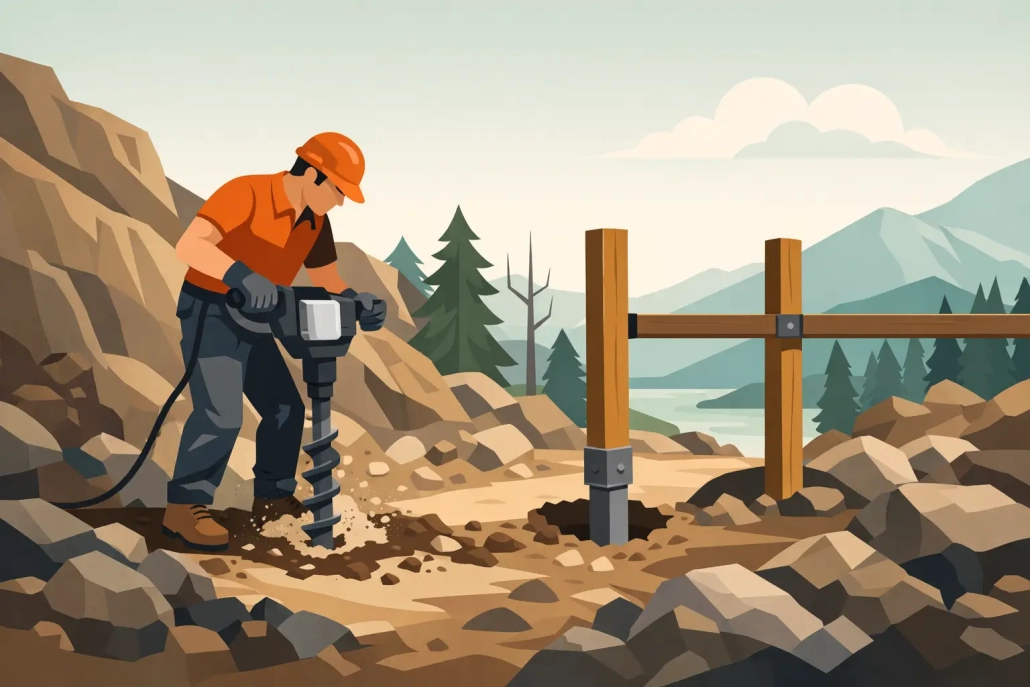
Concrete Drilling for Fence Posts on Tough Sites
A fence line can look straightforward until the first post location hits solid concrete, buried rock, an old footing, or a slab edge. Concrete drilling for fence posts is the practical answer when standard digging will not produce the depth or stability a fence needs. It is specialized site work, but it allows a well-planned fence to go where a conventional posthole simply cannot.
For Vancouver Island properties, difficult ground is common. Homes may have established patios, retaining walls, exposed bedrock, old landscape concrete, or tight access that limits excavation options. The right drilling approach protects the surrounding area while creating a secure base for the fence system above it.
When Concrete Drilling for Fence Posts Is Needed
Concrete drilling is generally used when a fence post must be installed through an existing concrete surface or into a solid concrete structure. A common example is a chain link or ornamental fence installed along a commercial slab, parking area, walkway, or loading space. It can also be the right choice for a gate post beside an existing driveway, patio, or retaining wall.
Not every concrete surface should be drilled. A thin residential patio slab may not provide enough depth or strength for a tall privacy fence or a heavy swinging gate. In those cases, the better long-term solution may be to core drill through the slab and excavate a proper footing below it, or to position the posts beside the concrete where full-depth footings can be installed.
The fence type matters as much as the surface. Light wire fencing has different demands than a six-foot cedar privacy fence. Deer fencing needs sound terminal and brace posts to carry tension. Ornamental and chain link systems rely on accurately placed posts to keep rails, panels, and gates aligned. A professional site assessment determines whether the concrete is suitable for mounting, whether it must be drilled through, and how deep the support needs to go.
The Difference Between Core Drilling and Breaking Concrete
There are two main ways to deal with concrete at a fence line: core drilling and jackhammering. They solve different problems.
Core drilling uses a diamond-tipped cylindrical bit to cut a clean, round opening in concrete. It is usually the preferred method when a post must pass through a slab because it creates a precise hole with less disturbance to the surrounding surface. The hole can then be used to access soil below, set a post, or accommodate an engineered mounting detail.
Jackhammering breaks and removes concrete. This is useful when a section of slab needs to come out, when an existing footing blocks the line, or when drilling alone cannot create the required footing size. It is more disruptive, but sometimes it is the only proper option. Trying to avoid necessary removal can leave a post under-supported, which often creates movement, sagging gates, and premature fence failure.
The choice depends on the thickness and condition of the concrete, the post load, nearby structures, and the finished appearance required. A clean drilled opening is often ideal near a finished patio or commercial walkway. A heavier removal and replacement approach may be better where structural strength is the priority.
Why Post Depth and Layout Still Matter
Concrete does not replace proper fence engineering. A post anchored shallowly in a slab can still move under wind pressure, gate use, frost movement, or the pull of stretched wire. The concrete may crack before the post provides the support the fence needs.
Privacy fences, especially solid cedar designs, catch a significant amount of wind. Gate posts take repeated side loads every time the gate opens or closes. On acreage and rural properties, long runs of deer or wire fencing place tension on corners and ends. These conditions call for post spacing, depth, bracing, and footing size that match the job.
Accurate layout is just as important. Once a concrete hole is drilled, there is little room to correct a misplaced post. Professionals establish the property line, fence offsets, gate clearances, grade changes, and post centers before drilling begins. This is particularly important around buildings, sidewalks, driveways, and existing landscaping where a small mistake can be expensive to repair.
Gates Need Extra Attention
A gate is usually the most demanding part of a fence line. A standard walk gate, double driveway gate, or commercial access gate puts more force on its hinge post than a line post will ever see. If the post is set into or near concrete, the installation needs enough depth and footing mass to resist that force over time.
This is why gate locations should be considered early, not after the rest of the fence is laid out. The right post size, hardware, clearance, and support method can be built into the plan from the start.
What a Professional Drilling Process Looks Like
Good concrete drilling begins before equipment arrives. The crew reviews access, identifies visible services and drainage features, confirms fence layout, and checks the condition of the concrete. If there is a chance of buried utilities, those must be located before any drilling or excavation takes place.
The work area is then marked and protected. Depending on the surface and drilling method, crews may use water to control heat and dust during coring. Slurry and debris need to be managed carefully, especially near finished landscaping, buildings, or public-facing commercial areas.
After the opening is drilled or concrete is removed, the crew prepares the location for the post and footing. That may mean excavating below the slab, installing gravel for drainage where appropriate, setting the post plumb, and placing concrete around it. The finished fence is only as good as this groundwork. A straight line of panels or rails depends on every post being installed at the correct height, depth, and alignment.
For projects involving post bases or surface-mounted hardware, installers must also evaluate concrete thickness, edge distance, reinforcement, and anchor capacity. Anchoring too close to a slab edge can cause cracking. Using the wrong anchor for the load can lead to loose hardware and unsafe gates. These are details worth getting right the first time.
Common Problems That Cause Fence Failures
The most common issue is treating concrete as a shortcut. Setting a post into a shallow drilled hole without considering the load may look acceptable on installation day, then loosen after a season of wind and rain. Another frequent problem is drilling into old or deteriorated concrete that lacks the strength to hold an anchor or resist cracking.
Drainage also deserves attention. Water that collects around posts can shorten the life of wood components and contribute to movement in the surrounding soil. On sloped Vancouver Island properties, drainage planning and grade changes often need to be addressed alongside the fence layout.
Finally, there is the question of access. A fence beside a home, through a landscaped yard, or along a narrow commercial corridor may require compact equipment and careful planning. The fastest-looking method is not always the best method if it damages hardscape, disrupts operations, or leaves an awkward repair behind.
Choosing the Right Contractor for Difficult Ground
Concrete drilling and jackhammering are not add-ons to be treated casually. They are part of the foundation of the fence. Ask whether the contractor can assess the site, handle difficult access, plan for gate loads, and complete the drilling, footing, and fence installation as one coordinated job.
Vancouver Island Fence Company has handled challenging fence sites across Nanaimo, Campbell River, Parksville, Qualicum Beach, Courtenay, Comox, and surrounding communities since 1999. From decorative residential fencing to commercial chain link, deer fencing, and custom builds, the goal is the same: install a fence that looks right, functions properly, and stays secure.
If your proposed fence line crosses concrete, rock, or an existing hardscape feature, bring it up during the estimate. A clear site plan and the right drilling method can turn a difficult location into a clean, durable installation that serves your property for years.

