
Can Fences Follow Property Lines? What to Know
A fence that appears to follow a property line can still be in the wrong place. On Vancouver Island, old pins may be buried, terrain can shift the practical fence route, and a neighbor’s existing fence may not sit on the legal boundary at all. So, can fences follow property lines? Usually, yes – but only after the boundary, local requirements, site conditions, and your intended fence design have been properly considered.
For homeowners, acreage owners, and commercial property managers, getting this right before posts go in avoids expensive corrections later. A well-built fence should protect the property, suit the site, and stand up for years. It should not create a boundary dispute.
Can Fences Follow Property Lines Exactly?
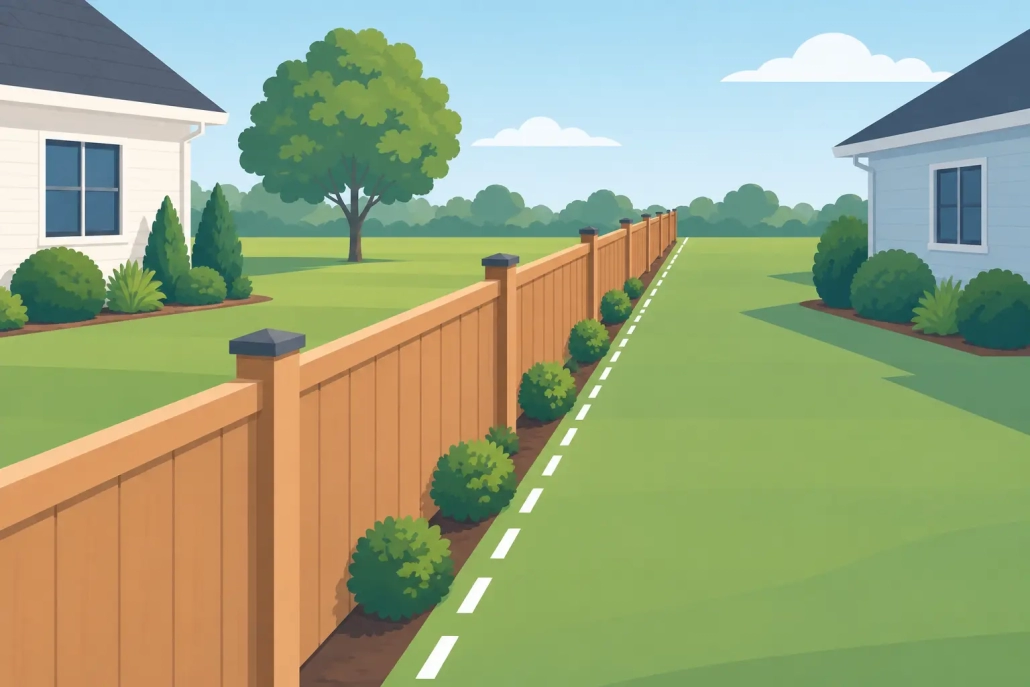
In many cases, a fence can be installed directly on a surveyed property line. Whether that is the best choice depends on the agreement between neighboring owners, municipal rules, access needs, and the construction method.
A boundary-line fence can make efficient use of space, especially on a smaller residential lot. It also creates a clear division between properties when both owners agree on its location and purpose. But a fence placed exactly on the line is often shared in practice. That can complicate decisions about style, height, repairs, replacement, gates, and who pays for what.
Some owners choose to set the fence slightly inside their own property instead. This gives them control over maintenance and future changes. The trade-off is that the narrow strip outside the fence remains part of their land, and they may need to maintain it if it is accessible.
There is no one-size-fits-all answer. A cedar privacy fence between two urban backyards raises different questions than deer fencing around an acreage or chain link around a commercial yard.
Start With the Actual Property Boundary
The most common mistake is assuming a visible feature marks the legal line. An old fence, hedge, retaining wall, driveway edge, or row of trees may have been treated as a boundary for decades without being the surveyed property line.
Before planning fence placement, review your property documents and look for survey information. If the exact location matters, especially where there is a tight lot, a new build, a dispute, or a valuable improvement near the boundary, a licensed land surveyor is the right professional to confirm it.
Property pins can be helpful, but they are not always easy to find or reliable as a do-it-yourself reference. Pins may be buried, damaged, moved, or obscured by landscaping and construction. A contractor can work from confirmed survey information, but should not be expected to determine a legal boundary.
This step matters even more on sloped or heavily treed sites. The line may be legally straight while the practical route for a fence needs careful layout to handle grade changes, drainage, rock, roots, and safe access.
Do Not Rely on a Neighbor’s Fence
A neighboring fence may look established, but age does not prove accuracy. It may be offset to one side, installed for convenience, or built before a survey was available. Matching it without checking can carry an old error onto your property.
If you are replacing an existing fence, measure and discuss the intended route before demolition begins. That is much easier than discovering a conflict after new concrete footings have been installed.
Talk to Your Neighbor Before Work Starts
When a fence is intended to sit on a shared boundary, a direct conversation is good practice. Discuss the proposed location, height, style, cost, gates, construction access, and how future maintenance will be handled.
A neighbor may be happy to share the cost of a practical boundary fence. They may also have concerns about sightlines, pets, gardens, drainage, or access to their side yard. Addressing those concerns early helps keep the project straightforward.
A simple written agreement is often worthwhile when both parties are contributing. It does not need to be complicated, but it should clearly state what is being built, where it will be located, how costs are divided, and who will be responsible for future repairs or replacement. For questions about legal rights or obligations between neighboring owners, speak with a qualified legal professional.
If a neighbor does not agree to a shared fence, you may still have options to build inside your own boundary, subject to local rules. The key point is not to treat a disagreement as permission to place a fence on land that may not be yours.
Check Local Setbacks, Height Rules, and Permits
A surveyed boundary is only one part of the layout. Municipal and regional requirements can affect where and how a fence may be built. Rules vary by community and property type, so confirm the requirements that apply to your location before ordering materials or booking installation.
Height limits are common, particularly in front yards and near streets. Corner lots may have sight-triangle requirements to keep intersections visible. Waterfront, environmentally sensitive, strata, agricultural, and commercial properties can have additional restrictions. A gate opening onto a public area or a fence built near utility infrastructure may also require special attention.
For commercial sites, fencing may need to meet security, access, visibility, or safety requirements. For rural properties, the design may need to manage deer, livestock, dogs, or wildlife movement without creating weak points along uneven ground.
A quality installation begins with a layout that respects these realities. Moving a planned fence line a few feet can sometimes solve a setback issue, protect a tree, avoid difficult underground conditions, or make future maintenance easier.
Site Conditions Can Change the Best Fence Route
Following the property line does not always mean following it with a perfectly straight, level fence. Vancouver Island properties often come with grades, bedrock, mature trees, drainage channels, and irregular access. Those conditions affect the post layout and the type of fence that will perform best.
On a steep slope, a fence may be stepped or racked to follow the grade. On rocky ground, posts may require concrete drilling or jackhammering to achieve the depth and stability needed for a lasting build. In wet areas, the layout may need to account for drainage so water does not undermine posts or collect against the fence.
The fence material matters too. Cedar fencing offers privacy and a warm finished look, but it needs a strong frame and properly set posts. Chain link is a practical choice for security, enclosures, and large areas with changing grade. Deer and wire fencing can protect gardens, orchards, and rural land while covering long runs efficiently. Ornamental fencing can provide a clean, durable boundary where curb appeal and visibility both matter.
The right solution is not always the most expensive one. It is the one that matches the boundary, the purpose of the fence, and the ground it has to stand on.
Plan Access and Maintenance on Both Sides
Even when a fence follows the property line, crews need room to build it safely. Equipment, materials, excavation, concrete work, and post-setting may require temporary access from one side or both. Confirming that access before the project starts prevents delays and avoids unnecessary disruption to gardens, sheds, vehicles, or neighboring property.
Think about the years after installation as well. Who will trim vegetation? Can you reach both sides to make repairs? Will a gate be needed for utility access, garbage bins, equipment, or backyard maintenance? A fence line that looks ideal on a sketch can be inconvenient once landscaping grows in.
For acreage and commercial fencing, access planning is even more critical. Long runs may cross uneven terrain, pass through wooded areas, or require vehicle gates in specific locations. Setting the route correctly at the beginning saves time and keeps the finished fence functional.
When It Makes Sense to Set the Fence Inside Your Line
Setting a fence slightly within your own property can be a smart choice when there is uncertainty about the boundary, no agreement with a neighbor, or a need to retain full control over maintenance. It can also help when local rules require a setback from a road, easement, ditch, or utility area.
The downside is lost usable space, even if it is only a narrow strip. On a compact residential lot, that may matter. On a larger rural or commercial site, an offset may be the simplest way to avoid conflict and keep the project moving.
The exact offset should be based on confirmed boundary information and the fence design. Leave enough room to maintain the structure without stepping onto neighboring land.
Build Once, Build It in the Right Place
Fence placement is a decision that affects property use, neighbor relationships, and the long-term value of the installation. A careful plan is especially valuable when the job involves difficult terrain, privacy requirements, animal control, security, or custom construction.
Vancouver Island Fence Company has worked with the varied ground conditions found across Nanaimo, Campbell River, Parksville, Qualicum Beach, Courtenay, Comox, and surrounding communities since 1999. Once the property line and project requirements are clear, a professional installation team can help turn that plan into a fence built for the site.
Before you commit to a fence route, confirm the line, talk through the plan, and account for the ground beneath it. A few careful decisions at the start can give you a boundary that looks right, works hard, and stays that way.

