
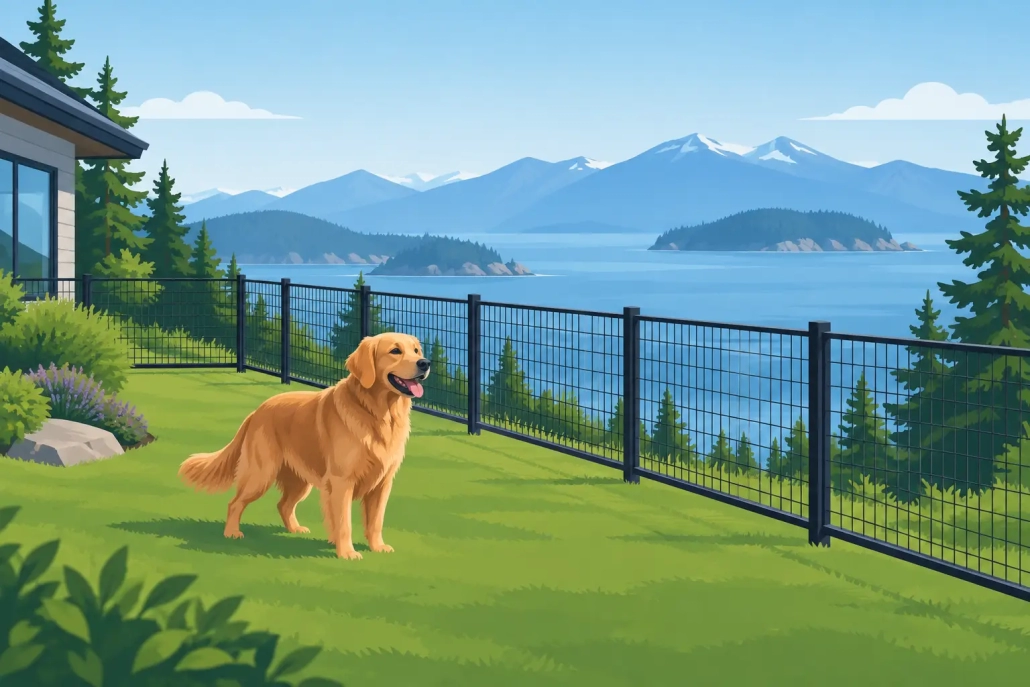
Dog Containment Fences That Work on Vancouver Island
A dog that can slip through a gap, clear a low rail, or follow a scent toward the road needs more than a boundary marker. Dog containment fences need to match the dog, the property, and the conditions on the ground. On Vancouver Island, that often means working around slopes, rock, mature trees, wet soil, and irregular lot lines without leaving weak points behind.
The right fence gives your dog room to move while giving you confidence that they stay safely where they belong. It should also work for the people using the property every day, look appropriate for the home or acreage, and hold up through coastal rain and changing seasons.
What Makes a Dog Fence Actually Containing?
Containment is about more than fence height. A fence can look solid from the street and still fail because the bottom edge has gaps, the gate does not latch properly, or the material is easy for a determined dog to climb, chew, or push through.
Start with your dog’s behavior. A small dog may need tight spacing at the bottom of the fence. A large, athletic dog may need more height and a material that cannot be climbed easily. Dogs that dig need a plan below grade, while dogs that react to wildlife, passing people, or neighboring dogs may benefit from a more private fence design.
A properly planned installation accounts for all of these factors before posts are set. That includes the fence line, changes in grade, gate locations, access for maintenance, and the places where a dog is most likely to test the boundary.
Choosing the Right Dog Containment Fence Material
There is no single best material for every property. The practical choice depends on your dog’s size and temperament, the level of privacy you want, the terrain, and the appearance you want around the home.
Cedar fencing for privacy and visual appeal
Cedar is a strong choice for homeowners who want a secure enclosure without making the yard feel like a kennel. A full-height cedar fence blocks many visual distractions that can trigger barking or fence-running, and it provides a warm, finished look around patios, gardens, and family yards.
For dog containment, board placement matters. A design with boards installed tightly together avoids openings a small dog can squeeze through. The bottom of the fence should follow the grade closely, with custom cuts or retaining details where needed to prevent gaps on sloped ground.
Cedar is not always the best answer for a dog that chews aggressively or climbs. In those cases, a more durable wire or chain link solution may be better suited to the job.
Chain link fencing for dependable containment
Chain link is one of the most practical dog fence options for active dogs, large yards, side runs, and commercial or multi-unit properties. It is durable, visible, and available in a range of heights. Vinyl-coated chain link can provide a cleaner finished appearance than traditional galvanized material while maintaining the same functional strengths.
It is particularly effective where visibility matters. Property owners can see through the enclosure, keep an eye on the dog, and maintain views across the lot. The trade-off is that some dogs become more reactive when they can see people, animals, or traffic beyond the fence.
For dogs that dig, chain link can be extended below grade or paired with a buried wire apron. For climbers, added height, a secure top treatment, and a well-designed gate system can make a major difference.
Wire fencing for rural properties and larger enclosures
Wire fencing works well for acreages, rural properties, and large dog runs where function is the priority. It can be adapted to the size of the dog and the conditions of the site, whether the goal is keeping a farm dog close to home or enclosing a larger exercise area.
The right wire gauge and opening size are critical. Wide openings may be fine for a large dog but unsuitable for a small breed. A fence that keeps your dog in should also be considered alongside the wildlife you may want to keep out. On Island properties, deer and other animals can put pressure on a fence line, especially near wooded areas.
Ornamental fencing for controlled residential spaces
Ornamental fencing offers a clean, durable look around front yards, pools, landscaped areas, and entry spaces. It can be a good containment option for dogs that do not climb or squeeze through openings, particularly when paired with carefully selected picket spacing and self-closing gates.
This option is usually more about appearance and long-term durability than privacy. If visual triggers are a concern, ornamental fencing may be better used at the front of the property while a more private fence encloses the main dog area.
Height, Gaps, and Gates Matter More Than Most Owners Expect
Many containment problems happen at the details, not in the main fence panels. A fence needs to be tall enough for the dog’s athletic ability, not simply their current size. Puppies grow, and an excited dog can jump much higher than expected when a deer, squirrel, or another dog passes by.
The bottom clearance is just as important. Uneven ground can leave openings large enough for a small dog to escape or for a larger dog to start digging. On steep grades, the fence may need stepped sections, racked panels, custom fabrication, or grading work to maintain a tight line along the ground.
Gates deserve the same attention as the fence itself. A quality dog gate should latch positively and swing without dragging on the ground. In high-use areas, self-closing hinges or a double-gate entry can prevent an accidental escape when groceries, equipment, or visitors are moving through the yard.
Plan for the Dog You Have and the Property You Use
Before selecting a design, think through how the space will function. A fenced backyard may be enough for a calm companion dog, while a high-energy breed may need a larger run or access to a separate exercise area. A dog enclosure should not block access to sheds, gardens, utility equipment, or waterfront paths that you use regularly.
These four questions help establish the right scope:
- Does your dog jump, dig, climb, chew, or react strongly to activity outside the yard?
- Do you need privacy from neighbors or clear visibility across the property?
- Is the site level, or does it include rock, drainage concerns, trees, or steep changes in grade?
- Will the fence also need to manage deer, livestock, children, pool access, or security?
A fence can often serve more than one purpose, but those purposes should be planned together. For example, a cedar privacy fence around the house can be combined with chain link or wire fencing for a larger, less visible dog run. That approach can control costs while putting each material where it performs best.
Professional Installation Solves the Hard Parts
A straight-forward yard can still require careful layout and solid post installation. On Vancouver Island, many properties add another layer of difficulty: bedrock, tight access, uneven grades, heavy roots, drainage channels, or established landscaping that needs to be protected.
This is where professional installation earns its value. Posts need proper depth, alignment, and concrete support where appropriate. Fence panels need to remain consistent as the ground changes. Gates need to stay square and operational over time. If rock drilling, jackhammering, or custom site work is needed, it should be addressed as part of the build rather than treated as an afterthought.
Vancouver Island Fence Company designs and installs dog containment solutions for standard yards, challenging sites, and larger rural properties. From a private cedar enclosure to durable chain link and wire fencing, the goal is the same: build a fence that fits the property and does its job every day.
Do Not Treat Maintenance as an Afterthought
Even a well-built fence benefits from a regular walk-around. Check latches, hinges, bottom clearances, damaged boards, loose wire, and areas where a dog has started digging. After windstorms or heavy rain, inspect the fence line for fallen branches, washouts, and movement around posts.
Keep shrubs and climbing plants trimmed back from the fence. They can hold moisture against wood, hide damage, and give an agile dog extra footing. If you notice a small weakness, repair it early. Dogs are very good at finding the one spot that has started to give way.
The best containment fence is not simply the tallest or most expensive option. It is the one designed around your dog, installed to suit your ground conditions, and built with no easy way out. A site visit and clear conversation about how your property is used can turn a fence line into a secure space your dog can enjoy for years.

