
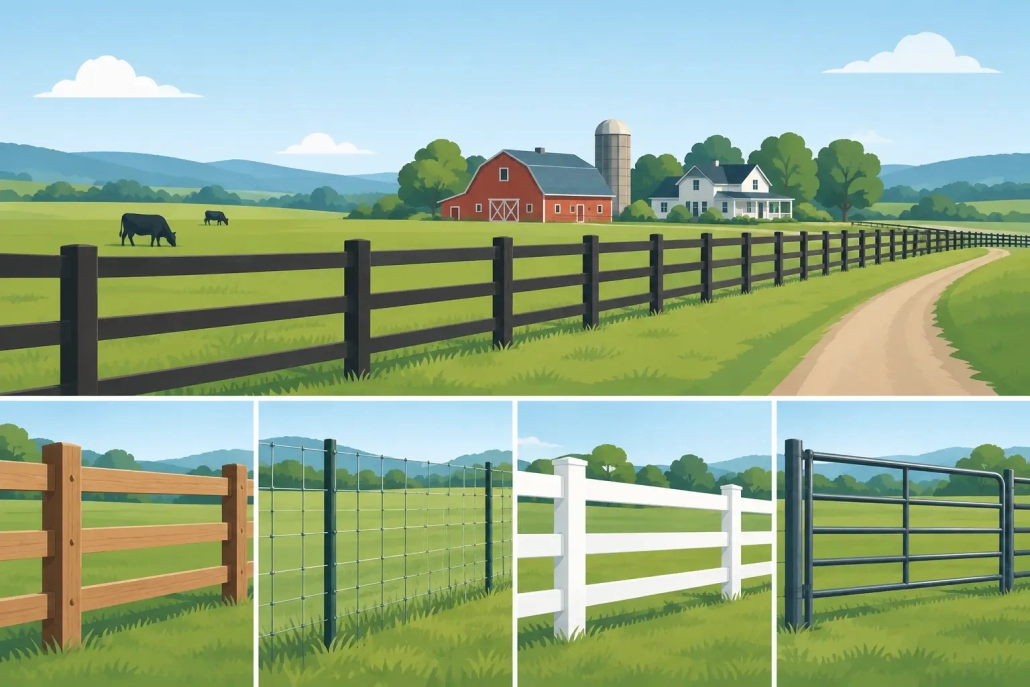
Farm Boundary Fencing Options for Acreages
A farm boundary fence has to do more than show where one property ends and another begins. It may need to hold livestock, discourage deer, protect equipment, define access points, and stand up to wet ground, roots, slopes, and coastal weather. The right farm boundary fencing options depend on what the fence must contain or keep out, how visible it should be, and what your site will allow.
For acreage owners, a low upfront price is not always the lowest-cost choice. A fence that sags, corrodes early, or fails at the gates can create ongoing repair work. Starting with the job the fence needs to do leads to a better material choice and a stronger installation.
Start With the Boundary and the Ground
Before choosing a fence style, confirm the actual property line. Existing fence lines are not always survey lines, especially on older rural properties. If there is any uncertainty, review your survey or speak with a qualified survey professional before setting posts. A new fence installed in the wrong location is an expensive problem to correct.
Next, assess the ground. On Vancouver Island, farm and acreage sites can include bedrock, clay, uneven grades, drainage channels, dense brush, and mature tree roots. Those conditions affect post depth, spacing, bracing, and installation methods. A level open field calls for a different approach than a steep wooded perimeter or a property where every other post location hits rock.
Access matters too. Think beyond the main entrance. Equipment, feed deliveries, trailers, and emergency vehicles may all need room to pass. Gates should be placed where they make daily work easier, not simply where the fence line happens to begin.
Farm Boundary Fencing Options by Job
Wire fencing for practical acreage boundaries
Wire fencing is one of the most flexible choices for long farm perimeters. It can be built with woven wire, welded wire, field fence, or other configurations selected for the animals and pressure the fence will face. It is a practical option for marking boundaries, enclosing livestock, and protecting gardens or smaller working areas.
Woven wire is often a strong choice where animals could lean, rub, or test the fence. Its connected wire pattern handles pressure better than lighter welded products in many farm applications. Mesh opening size should match the livestock or wildlife concern. Smaller openings may help with young animals or predators, while larger field fence patterns can suit broader agricultural enclosures.
The quality of the posts and corner braces is just as important as the wire itself. Long wire runs create tension. Without properly set end posts, braced corners, and secure strainers, even good wire can loosen over time. This is where professional layout and installation make a measurable difference.
Chain link for security and clear boundaries
Chain link fencing is a durable choice for farm entrances, storage yards, utility areas, dog runs, and boundaries where visibility is useful. It creates a clear physical line without blocking sightlines across the property. Galvanized chain link resists corrosion, while black vinyl-coated systems can provide a more finished appearance around homes, businesses, and high-visibility areas.
For a full acreage perimeter, chain link is usually best reserved for locations that need higher security or a more controlled enclosure. It can be paired with locked gates, heavier posts, and taller heights around equipment, fuel, materials, or commercial operations. If wildlife pressure is a concern, the height and bottom treatment need to be planned carefully. Deer can clear a short fence, and smaller animals can work underneath an unsecured bottom edge.
Deer fencing for gardens, orchards, and crops
Deer fencing is designed around one simple fact: deer do not respect a low barrier when there is food on the other side. For gardens, orchards, landscaping, and crop areas, fence height is often the deciding factor. A fence that looks substantial but is too short may not solve the problem.
Black mesh deer fencing can be a less visually intrusive option for rural properties, particularly where protecting a view matters. It must be tensioned correctly and supported by a suitable post system. Deer pressure, snow load, wind exposure, and the size of the enclosed area all affect the final design.
Deer fencing works best when gates are included in the plan from the start. A well-built perimeter with one weak gate opening gives wildlife the easiest possible entry point. Gates need proper latches, stable hinges, and enough clearance to operate through changing seasons and ground movement.
Cedar fencing for homes and visible frontage
Cedar fencing is not usually the first choice for enclosing an entire large farm, but it is an excellent option near the home, along a driveway, or at a road-facing boundary. It offers privacy, warmth, and a finished look that works well with rural and semi-rural properties.
Many acreage owners use cedar strategically. A cedar privacy fence can define the living area, screen neighboring views, or create a safer yard for children and pets, while wire or chain link fencing handles the larger functional perimeter. This combination keeps the project focused on where appearance matters most without overspending on miles of decorative fencing.
Cedar does require thoughtful construction. Posts, rails, drainage, and ground clearance all affect service life. A fence installed too close to constantly wet soil will age faster than one built with proper clearance and stable footings.
Ornamental fencing for entry areas and commercial sites
Ornamental fencing brings a clean, durable appearance to entrances, office areas, multifamily properties, and rural businesses that need security without an industrial look. It is a strong fit for defining a formal entrance, controlling access around a commercial building, or separating public-facing areas from working farm operations.
This type of fence is often combined with chain link or wire fencing farther back on the property. The result is an entrance that looks polished while the working areas remain practical and cost-conscious.
Do Not Overlook Posts, Corners, and Gates
Fence failures usually start at the structural points, not in the middle of a straight run. Corners, ends, changes in grade, and gates take the most force. They need solid posts, proper bracing, and footing methods suited to the ground conditions.
On difficult sites, standard post-hole digging may not be enough. Rock, compacted soil, concrete remnants, and sloped terrain may require jackhammering, concrete drilling, or specialized site preparation. Trying to force a basic installation method onto difficult ground can leave posts shallow or poorly aligned. That may save time on day one and create problems soon after.
Gate selection deserves the same attention as the fence material. A narrow walk gate serves a different purpose than a wide double gate for tractors or trailers. Consider the swing direction, grade, snow and mud buildup, latch placement, and whether the opening needs to accommodate future equipment. A gate that drags across uneven ground becomes a daily frustration quickly.
Plan for Maintenance Before Installation
Every fence material needs some maintenance, but the amount varies. Wire fences should be checked for tension, damaged mesh, and vegetation pushing against the line. Chain link benefits from periodic inspection of fittings, gates, and areas where water collects. Cedar may need cleaning or finishing depending on the look and level of protection you want to maintain.
It also helps to clear a manageable strip along the fence route. Brush and invasive growth can hide damage, place pressure on wire, and make repairs harder. On larger properties, choosing a fence alignment that can be accessed by vehicle or equipment will make future maintenance much easier.
Build the Fence Around the Work You Do
The best boundary fence is rarely a single material used everywhere. A working acreage may need wire fencing along the outer property line, deer fencing around food-producing areas, chain link around equipment, and cedar at the home frontage. Each section should earn its place by solving a specific problem.
Vancouver Island Fence Company designs and installs fencing for straightforward boundaries and challenging sites alike, including projects that require careful layout, rock work, drilling, or custom gates. A site visit allows the fence plan to account for the terrain, access needs, animal pressure, and the way you use the property every day.
A well-planned fence gives you a clear boundary, safer spaces, and fewer issues to manage down the road. Start with the ground you have and the job the fence must perform, then build the system that will keep working season after season.

