
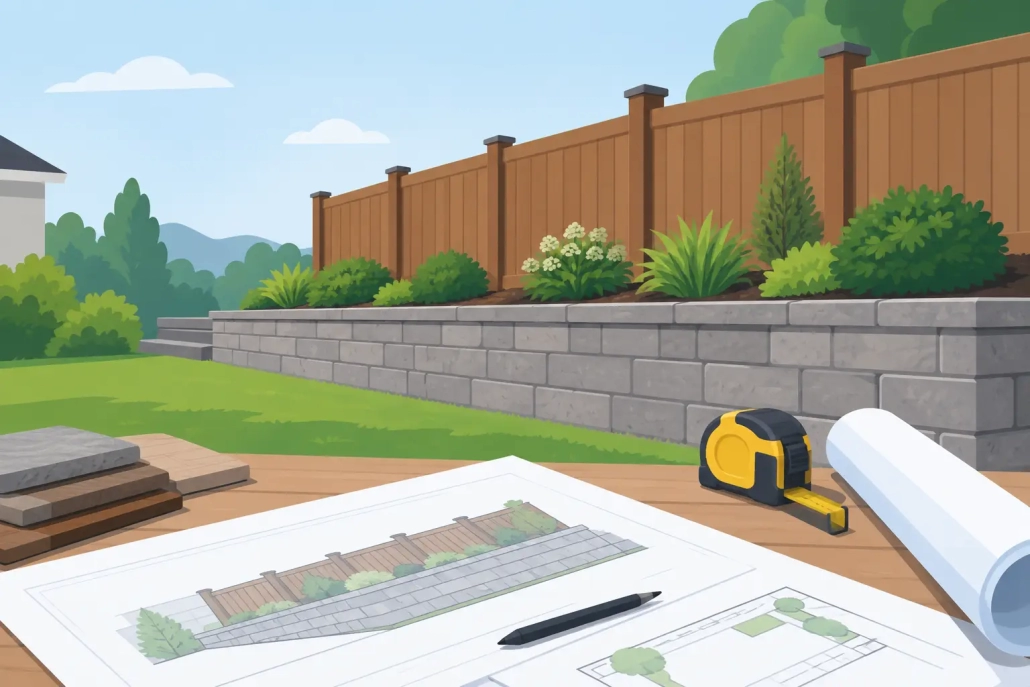
Planning Your Retaining Wall Fence Project
A retaining wall fence project can solve two problems at once: it can hold back a difficult slope and create a secure, attractive boundary above it. It can also become one of the more demanding projects on a property if the wall, drainage, footings, and fence are treated as separate jobs. On Vancouver Island, heavy seasonal rain, rocky ground, and sloped lots make the planning stage just as important as the finished look.
The strongest projects start with a clear understanding of what the wall must retain, what the fence must do, and how water will move through the site. A cedar privacy fence above a short landscape wall has different requirements than a chain link security fence beside a commercial grade change. Good workmanship means building for the actual conditions, not forcing a standard fence design onto an uneven lot.
Start With the Wall, the Grade, and the Water
Before choosing fence panels or post styles, look at the ground. A retaining wall carries soil pressure, and that pressure increases when water is trapped behind the wall. If drainage is ignored, even a well-built wall can shift, bow, or settle over time.
The site needs a plan for drainage behind and below the retaining wall. This often includes free-draining aggregate, drainage pipe, filter fabric, and a clear outlet for water. The final grade should direct surface water away from the wall where possible. On a wet Vancouver Island property, this is not a finishing detail. It is part of the structure.
Wall height also matters. Low garden walls may be relatively straightforward, while taller walls can require engineered design, permits, and more substantial construction. Requirements vary by municipality and property conditions, so it is wise to confirm local rules before materials are ordered or excavation begins.
A fence should not be used to make up for a retaining wall that is undersized or unstable. The wall must safely manage the soil behind it before the fence is considered. This sequence protects the project, the neighboring property, and your budget.
Decide Whether the Fence Should Stand Independently
One of the most important decisions in a retaining wall fence project is whether the fence posts will be installed into the wall or set independently behind it. Both approaches can work, but they are not interchangeable.
Independent Posts Often Give More Flexibility
Setting posts in their own concrete footings behind the retaining wall generally keeps fence loads separate from wall loads. This is often the better option for taller privacy fences, wind-exposed locations, gates, deer fencing, or long runs where future repairs may be needed.
Independent posts need adequate setback from the wall, along with footing depth and concrete sized for the soil conditions and fence height. The available space can be tight on a small lot, but separating the structures can prevent unnecessary stress on the wall.
Mounting Posts to a Wall Requires the Right Structure
In some cases, fence posts can be mounted directly to a concrete or properly designed retaining wall. This can preserve usable yard space and create a clean finished line. However, it only works when the wall is engineered or built to accept those loads and the mounting method is suitable for the fence.
A fence catches wind. A solid cedar fence catches considerably more wind than an open wire fence. Every gust transfers force through the posts and into the attachment points. Drilling into a wall without confirming its design can crack concrete, compromise reinforcement, or create a fence that moves before its time.
For difficult sites, concrete drilling and specialized fastening may be part of the work. That is a job for experienced installers with the right equipment, not a shortcut with surface brackets and hope.
Choose Materials That Fit the Job
The best material depends on the role of the fence, exposure to weather, maintenance expectations, and the appearance you want from the street and yard. There is no single right answer for every retaining wall and fence combination.
Cedar fencing is a popular choice for residential privacy and a natural look. It suits many Nanaimo, Parksville, Qualicum Beach, Courtenay, and Comox properties, especially when homeowners want warmth and curb appeal. Cedar still needs solid framing, proper post support, and enough clearance from soil and standing water to avoid premature decay.
Ornamental fencing provides a more open, refined boundary. It works well along front yards, commercial entries, walkways, and walls where you want to define a property without blocking the view. Its open design also reduces wind load compared with a solid privacy fence.
Chain link and wire fencing are practical choices for acreage, commercial areas, pet containment, and utility boundaries. Deer fencing can be the better answer where gardens, landscaping, or crops need protection from wildlife. These systems may be less visually private, but they can cover long distances efficiently and perform well on uneven terrain.
Fence material should also match the wall finish. A clean concrete wall may suit ornamental panels or a modern horizontal cedar design. A natural stone or block wall often looks right with traditional cedar, wire, or black chain link. The goal is not to make every material match exactly. It is to create a boundary that looks intentional.
Plan for Slopes, Corners, and Gates
Straight, level fence lines are the easy part. Corners, elevation changes, and gates are where an installation proves its quality.
On a slope, a fence can follow the grade or step down in sections. A racked fence follows the slope and can provide a smooth visual line, but it requires panels and rails designed for that movement. A stepped fence keeps panels level and drops them at each post. It can work well with retaining walls because the steps can align with wall courses or landscape terraces.
Avoid leaving large gaps under the fence simply because the ground falls away. Those gaps affect privacy, security, pet containment, and the finished appearance. The right solution may be stepped panels, custom-built sections, grade adjustments, or a combination of methods.
Gates deserve special attention. A gate near a retaining wall needs room to swing or slide without hitting the wall, dragging on uneven ground, or placing pressure on adjacent fence posts. Gate posts typically need more support than line posts, particularly for wide vehicle gates or heavy wood gates. Planning this early is far easier than changing it after the wall and fence are complete.
Build in the Right Order
Most successful projects follow a logical sequence: site assessment, layout, excavation and wall preparation, drainage installation, retaining wall construction, backfill and compaction, then fence installation. Final grading and finishing are completed around the finished work.
Rushing the fence before the wall is stable can lead to rework. Backfill behind a retaining wall needs to be placed and compacted correctly. If the soil settles later, independently set fence posts may end up with exposed footings, awkward grade changes, or poorly supported panels.
The order can vary on a constrained site. Sometimes fence posts need to be set before final backfill, or an existing fence needs to stay in place until a replacement is ready. That is where a contractor who understands both site construction and fencing can make a practical plan instead of creating a problem for the next trade.
Budget for What You Cannot See
The visible fence and wall materials are only part of the cost. Excavation, rock removal, hauling, drainage rock, concrete, footings, access limitations, and disposal can significantly affect the final scope. A level backyard with easy equipment access is very different from a steep side yard with bedrock and limited room to work.
It pays to discuss site conditions during the estimate. If jackhammering, concrete drilling, or difficult access may be involved, those details should be considered before the project begins. A lower initial number that ignores drainage or ground conditions is not a saving if the work has to be corrected later.
Vancouver Island Fence Company handles standard installations as well as demanding site work, including custom layouts, drilling, and challenging terrain. The right approach is a clear quote based on the property in front of you, not a one-size-fits-all price.
Get a Layout You Will Still Like Years From Now
A retaining wall fence should feel like part of the property, not an obstacle added after the fact. Consider sightlines from windows, driveway access, landscaping, lighting, garbage storage, and how people move through the yard. A few inches of placement can affect whether a gate is convenient, a walkway feels open, or a view remains available.
Take the time to mark the proposed wall and fence line before construction starts. Walk it with the installer. Check property boundaries, utility locations, and neighboring grades. Then build the wall and fence for the rain, slope, wind, and daily use they will face. That careful start is what gives a finished project the strength and craftsmanship to speak for itself.

