
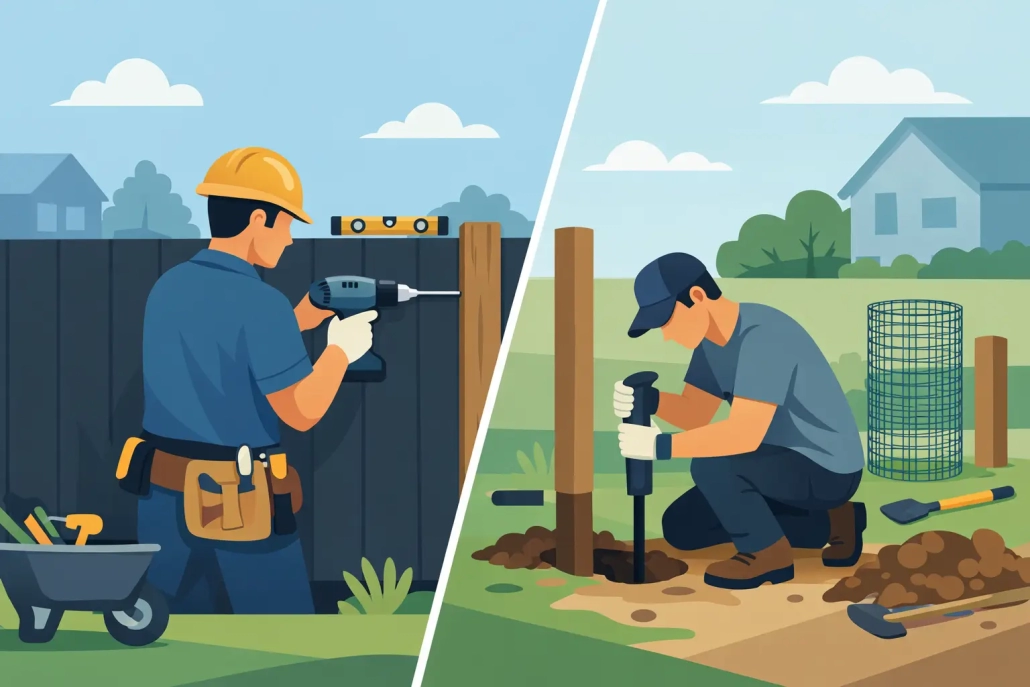
Professional Installation Versus DIY Fencing
A fence can look simple from the street: posts, rails, panels, and a gate. The work underneath tells a different story. When weighing professional installation versus DIY fencing, the real question is not just who can put boards in the ground. It is who can build a fence that stays straight, secure, and useful through wet weather, uneven ground, and years of daily use.
For some properties, a DIY fence is a reasonable project. For others, it becomes an expensive correction job after posts shift, gates drag, or a fence line misses the property boundary. The right choice depends on your site, the purpose of the fence, your available time, and the standard you expect when the project is finished.
Start With the Job, Not the Material
Many owners begin by comparing the price of cedar, chain link, wire, or ornamental panels. Material matters, but it does not determine whether a project is suited to DIY work. The site is usually the deciding factor.
A short, level run of basic fencing on clear soil is very different from a long perimeter fence across a sloped acreage. It is also different from a privacy fence beside an established home where landscaping, drainage, utility lines, neighboring structures, and tight access all need attention. On Vancouver Island, rock, roots, wet soil, and changes in grade are common reasons a straightforward plan becomes more involved.
Before choosing an approach, be clear about what the fence must do. A decorative front fence, a secure commercial enclosure, a deer barrier, and a dog run have different load requirements, post spacing, gate needs, and installation methods. A fence that looks right but does not solve the actual problem is not a good value.
Where DIY Fencing Can Make Sense
DIY fencing can be a practical choice when the design is modest and the conditions are predictable. Homeowners with construction experience, the right tools, and enough time may enjoy building a small section of wire fencing or replacing a limited number of damaged panels.
The cost savings can be meaningful when labor is the largest part of a simple project. You also control the schedule and can work in stages. If a fence is non-critical, away from complicated property lines, and does not require deep drilling or heavy excavation, doing the work yourself may be a sound decision.
That said, DIY savings should be measured against the full cost. Posts, concrete, fasteners, gates, hardware, gravel, delivery charges, tool rental, disposal, and replacement materials add up quickly. So does lost time when a post hole hits rock or a layout needs to be redone.
A homeowner should also be realistic about the physical side of the work. Setting posts accurately requires consistent measurements, bracing, level lines, and patience. Fence materials are awkward to move, especially on slopes or through narrow side yards. A single gate that is out of square can create a daily frustration for years.
Professional Installation Versus DIY Fencing on Difficult Sites
The difference between professional installation versus DIY fencing is most obvious when the site fights back. Difficult terrain is not unusual in Nanaimo, Campbell River, Parksville, Qualicum Beach, Courtenay, Comox, and surrounding areas. Rock shelves, mature roots, steep grades, compacted ground, and limited access can all affect the method and cost of installation.
A professional crew arrives with a process, equipment, and experience built around those conditions. That can include concrete drilling, jackhammering, specialized post-setting methods, precise layout work, and adjustments for changing elevation. The goal is not to force a standard fence onto an unusual site. It is to build the right fence for the site.
This matters especially for retaining-adjacent fences, long runs over rolling terrain, gates on slopes, and commercial or rural projects. In these situations, a mistake is rarely isolated. One poorly placed post can throw off several panels. A weak corner or end post can affect the tension and stability of an entire wire or chain link run.
Professional installation also helps when a fence needs custom details. A stepped cedar fence, an ornamental section that ties into masonry, a deer fence around a large property, or a secure enclosure with multiple access points all require more than a basic material list. Good craftsmanship is the ability to make the finished fence work as a complete system.
Cost Is More Than the Initial Quote
DIY projects often look cheaper on paper because the labor line is removed. That comparison is fair only when the homeowner already has the tools, skills, time, and site conditions to complete the job properly. If not, the initial savings can narrow quickly.
Professional pricing reflects labor, equipment, material handling, layout, site preparation, installation, cleanup, and accountability for the finished work. It can be a larger upfront investment, but it also creates a clearer scope and a more dependable result. For property managers and commercial operators, that predictability is often worth more than the lowest possible initial number.
The long-term cost of a fence is shaped by durability. Posts set at the right depth, properly aligned rails, correctly tensioned wire, and well-built gates reduce future repairs. Quality installation can also protect the appearance and use of the property. A crooked privacy fence or sagging gate does not just create an inconvenience. It can affect curb appeal, security, and neighbor relationships.
There is another cost that is easy to overlook: rework. Correcting a failed DIY fence may require removal, new materials, and fresh post holes. In rock or concrete, that correction can be harder than getting the installation right the first time.
Boundaries, Permits, and Utilities Need Attention
A fence is a permanent improvement, so the layout deserves care. Before building, confirm where the property line is and whether there are local regulations, height limits, strata rules, or permit requirements that apply. A fence installed on the wrong side of a boundary can become a costly dispute, even if the construction itself is solid.
Utility locates are equally important. Digging without knowing what is below the surface is a risk no homeowner or contractor should take. Water lines, electrical services, communications lines, irrigation, and drainage systems may cross areas that appear clear.
A professional installer can help identify practical concerns before work begins, including gate placement, drainage flow, access for equipment, and transitions between fence types. This planning stage is where many problems are prevented. It is much easier to adjust a layout on paper or with string lines than after concrete has cured.
The Value of a Complete Installation
The strongest fencing projects are planned as complete systems. That means choosing a material that fits the job, building a stable framework, and making sure access points perform properly. Gates deserve particular attention because they carry repeated weight and movement. A gate that is undersized, poorly supported, or installed out of level will show problems quickly.
Professional crews also work efficiently because their methods are repeatable. They know how to establish a straight line, manage corners and elevation changes, set posts consistently, and finish details cleanly. For a homeowner, that can turn a multi-weekend project into a defined installation schedule with less disruption to the property.
Vancouver Island Fence Company has worked on fencing projects since 1999, including standard residential installations and complex sites that require serious preparation. That experience matters when the job calls for more than a post-hole digger and a stack of panels.
How to Make the Right Choice
DIY is worth considering if your fence is short, straightforward, and on level, accessible ground – and if you are prepared to handle layout, digging, material transport, and corrections yourself. It can be satisfying work when the stakes are low and the scope is clear.
Professional installation is usually the better fit when the fence protects children, pets, livestock, equipment, or a commercial property. It is also the practical choice for challenging terrain, substantial gate systems, long fence lines, custom designs, rocky ground, or projects where appearance matters as much as function.
Ask yourself one plain question: if this fence needs to still look good and work properly five or ten years from now, am I confident in every part of the build? If the answer is anything short of yes, a detailed professional quote is a sensible next step.
A well-built fence should give you a clear boundary, reliable access, and one less thing to worry about. Choose the approach that gives your property that result, not just the lowest number on the first day.

