
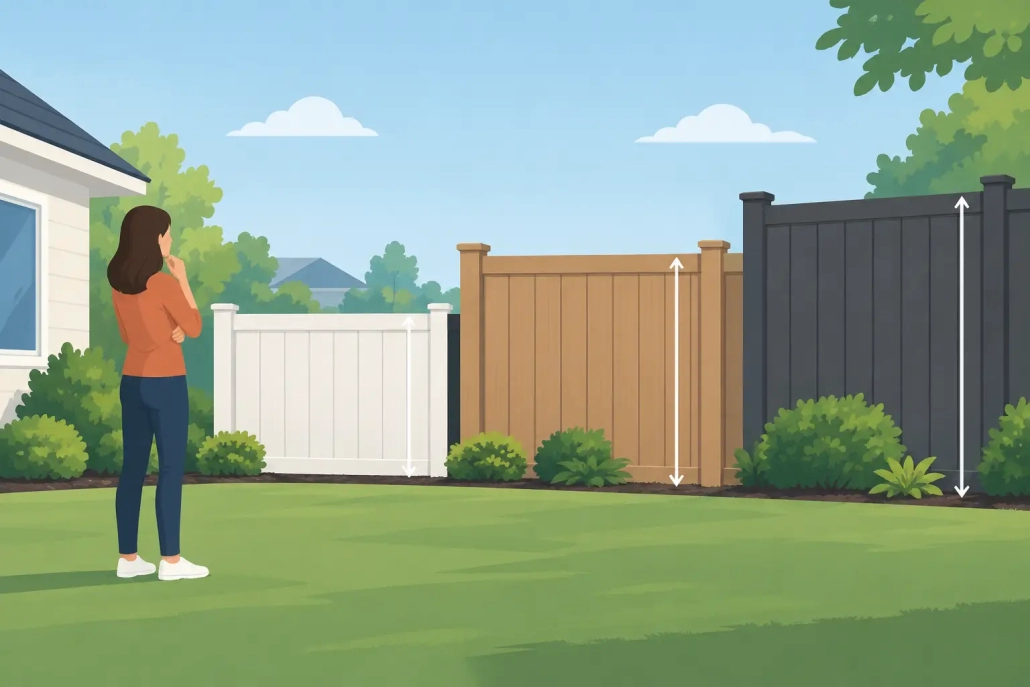
How to Choose Proper Fence Height for Your Yard
A fence that is too short can leave a backyard exposed, fail to contain a dog, or give deer an easy route into the garden. A fence that is taller than necessary can block a view, create unnecessary cost, or run into local restrictions. To choose proper fence height, start with what the fence must do every day, then match that need to your property, material, and local requirements.
For Vancouver Island properties, the right answer is rarely one standard number. A compact Nanaimo backyard, a rural acreage near Campbell River, and a commercial lot in Courtenay all have different conditions. The best fence is the one built to solve the real problem without overbuilding the project.
Choose Proper Fence Height Based on Its Job
The intended use should drive the height decision. Privacy, pet containment, security, and animal exclusion may all call for a different fence design.
For most residential privacy fencing, 6 feet is a common working height. It gives meaningful separation between neighboring yards, screens patios and hot tubs, and creates a defined outdoor space without making the yard feel closed in. Cedar fencing at this height remains a popular choice because it is functional, attractive, and suits a wide range of home styles.
A 4-foot fence is often enough when the goal is to mark a front-yard boundary, protect a garden from foot traffic, or create a clean visual edge without hiding the property. Ornamental fencing works particularly well at lower heights. It provides a polished look while keeping sightlines open around driveways, front walks, and landscaped areas.
Security may call for more height, but height alone is not the whole answer. A 6-foot chain link or ornamental fence can establish a strong perimeter for many commercial and residential applications. For higher-risk sites, the fence layout, gate hardware, footing depth, fabric or panel strength, and access control all matter. A poorly built tall fence is less useful than a properly installed fence designed around the site.
Privacy Is About Sightlines, Not Just Measurements
A 6-foot fence does not always provide 6 feet of privacy. Grade changes, raised decks, neighboring windows, retaining walls, and slopes can all affect what people see from either side of the property line.
Imagine a yard that drops away toward the rear. A fence measured at 6 feet from the low side may look much shorter from the higher neighboring property. The same issue occurs when a neighbor has an elevated deck overlooking the yard. Adding height may help, but sometimes a better solution is a privacy screen, a stepped fence line, strategic planting, or a custom section in the area that needs coverage.
This is why professional site assessment matters. The height should be considered from the point where privacy is needed, not only from the base of each fence post. On difficult terrain, installation may involve stepped panels, racked sections, retaining considerations, or deeper post work to keep the finished fence straight, secure, and consistent.
Front Yard and Backyard Rules Can Differ
Many communities place tighter restrictions on front-yard fence height than backyard height, especially near streets, corners, sidewalks, and driveways. Visibility for drivers and pedestrians must be protected. A solid tall fence near a driveway can create a safety issue even if it looks good on a site plan.
Before finalizing a design, confirm the current municipal requirements that apply to your address. Rules can vary by community and zoning, and strata developments, homeowner associations, and private covenants may set additional limits. A permit may also be required for certain fence types, locations, or heights.
Property lines deserve the same attention. Never assume an existing fence marks the legal boundary. If there is uncertainty, reviewing a survey or speaking with a qualified survey professional can prevent an expensive dispute later. A few inches in the wrong direction can become a major problem once posts and concrete are in the ground.
Fence Height for Dogs and Other Pets
For many dogs, a 4-foot fence is enough. For athletic breeds, large dogs, or dogs that jump when excited, 5 or 6 feet is usually the safer choice. A dog that can clear a fence once has learned that it is possible, so it is better to build for the animal you have rather than the animal you hope will stay calm.
Height is only one part of containment. Dogs can dig under a fence, push through weak sections, squeeze through wide openings, or exploit a loose gate. Chain link, wire fencing, and cedar fencing can all work for pets when installed with the right spacing, bottom detail, gate latch, and post depth.
For a dog that digs, the lower edge may need special attention. Depending on the site, that can mean burying wire, extending material below grade, adding a dig barrier, or addressing the specific area where the dog tends to escape. On sloped ground, gaps beneath panels are another common issue. A fence needs to follow the grade closely enough to contain the pet without looking uneven or trapping water where it should drain away.
Deer Fencing Needs More Height Than Yard Fencing
Deer are capable jumpers. A standard 6-foot backyard fence may discourage some deer, but it is not a dependable solution for properties where deer pressure is consistent. Gardens, orchards, and rural properties generally need a taller deer fence, often in the 7- to 8-foot range or higher depending on the layout and level of protection needed.
Deer fencing can be built with different materials, including high-tensile wire, mesh, and more visible fencing options where appearance is a concern. The right design depends on whether the goal is to protect a small garden, enclose a larger acreage, or keep deer away from a specific crop or landscaped area.
Location matters as much as height. Deer are more likely to test a fence where there is an easy takeoff and landing area. Slopes, nearby banks, stacked materials, and raised ground can reduce the effective fence height. Gates must also match the system. One low or poorly secured gate can defeat an otherwise well-planned enclosure.
Think About Wind, Terrain, and Fence Material
Taller fences catch more wind. This is especially true for solid cedar panels, privacy screens, and other designs with little airflow. On exposed Vancouver Island sites, a 6-foot solid fence may require stronger posts, proper spacing, deeper holes, and carefully placed concrete to handle seasonal weather.
Chain link and wire fencing allow more wind to pass through, which can make them practical for larger rural and commercial enclosures. Ornamental fencing can also offer strength with a more open appearance. Cedar provides excellent privacy and curb appeal, but it must be built with the right structure behind it.
Ground conditions should not be treated as an afterthought. Rocky soil, bedrock, steep grades, buried obstacles, and limited access can change how posts are installed and what fence design makes sense. Some properties require jackhammering or concrete drilling to create a stable foundation. Those details affect the long-term performance of a taller fence far more than the panel height written on an estimate.
Do Not Build Taller Than the Problem Requires
More height usually means more material, larger posts, more labor, and greater wind load. It can also make a small yard feel boxed in. If the actual issue is one overlooking window or a short section beside a patio, raising the entire perimeter may not be the best investment.
A mixed-height design can be more effective. You might use a 6-foot cedar privacy fence around a backyard seating area, a lower ornamental fence at the front, and a taller deer fence around a productive garden. This approach gives each area the protection and appearance it needs while keeping the property functional and balanced.
If you are planning a new fence, walk the property with the final purpose in mind. Stand where you relax, where your dog runs, where vehicles enter, and where wildlife approaches. A properly planned fence height starts with those real conditions. Vancouver Island Fence Company can assess the site, recommend a practical design, and build a fence that is made to perform for years.

