
Fence Posts Leaning? Find the Cause and Fix It
A fence rarely starts leaning without a reason. Fence posts leaning may look like a minor cosmetic issue at first, but the movement usually points to failing wood, loose soil, poor drainage, inadequate footings, or pressure placed on the fence over time. On Vancouver Island, wet winters, coastal weather, uneven ground, and aging cedar can all turn a straight fence line into a repair that needs prompt attention.
The good news is that a leaning post does not always mean the entire fence must be replaced. The right repair depends on what is moving, why it is moving, and whether the rest of the structure is still sound.
Why fence posts start leaning
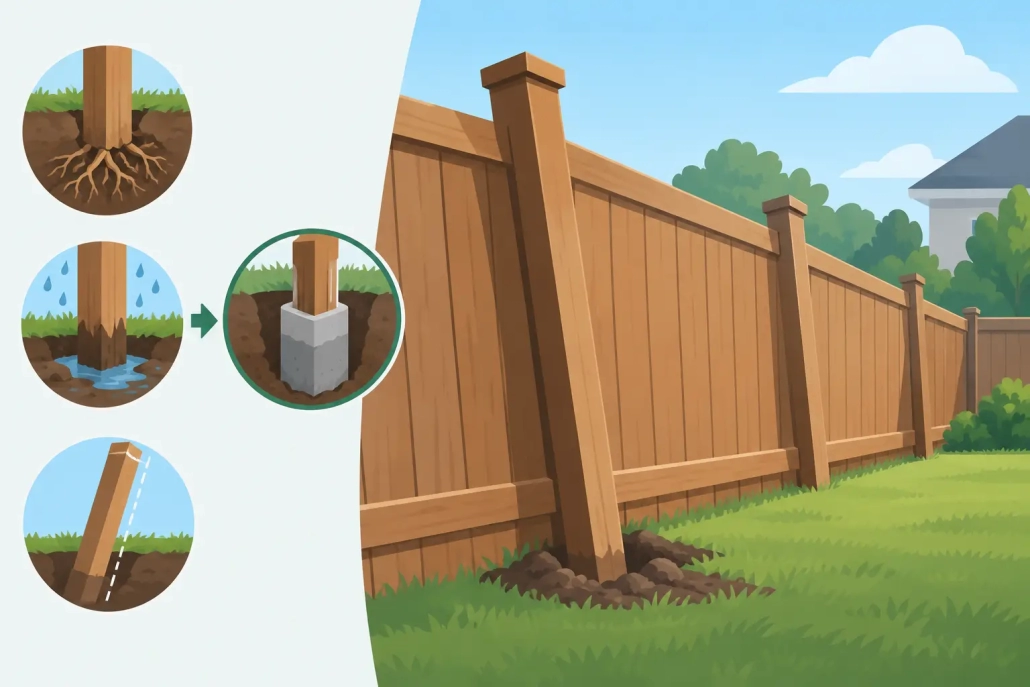
A fence post is the structural anchor for every rail, panel, gate, and section attached to it. When that anchor shifts, the fence follows. Posts commonly lean because the soil around the base has softened or washed away, allowing the post to move under wind pressure and the weight of the fence itself.
Water is a frequent cause. Soil that stays saturated loses its ability to hold a post firmly in place. Poor drainage around a property, a downspout that drains beside the fence, or a low area that collects winter runoff can all weaken the ground around a footing. Frost movement can also push posts out of alignment where the soil repeatedly freezes and thaws.
Wood rot is another common issue, especially with older cedar fences. A post may look acceptable above ground while the section at or below grade has deteriorated. Once that buried portion loses strength, no amount of tightening rails or adding surface hardware will make the post reliable again.
Installation details matter as well. A post set too shallow, placed in an undersized concrete footing, or installed without proper compaction may hold for a few seasons before it begins to move. Heavy gates put added stress on their hinge posts, while long solid privacy fence runs catch wind like a sail. A post that was adequate for a light wire fence may not be adequate for a six-foot cedar privacy fence.
Check whether the problem is isolated or structural
Before deciding on a repair, look down the full fence line. A single leaning post with straight rails on both sides may be an isolated footing failure. Several posts leaning in the same direction can indicate drainage issues, undersized footings, or a fence that was installed without enough depth for the site conditions.
Check the condition of the post near ground level. Soft wood, cracking, dark decay, insect damage, or a post that twists easily are signs that replacement is usually the better choice. A sound post that has simply shifted may be reset, braced, or reinforced, depending on access and the type of fence.
Pay close attention to gates. If a gate drags, will not latch, or has started pulling its hinge post inward, deal with it quickly. Gate posts carry concentrated weight and movement every day. Leaving them unsupported can damage the gate frame, hardware, adjoining panels, and the neighboring post.
It is also worth looking at the rails and fasteners. If the fence panels are sagging, rails have split, or screws are pulling out, the leaning post may be only one part of the issue. A repair should restore the whole section, not just force one post back into a vertical position.
When a simple repair can work
A minor lean can sometimes be corrected when the post is in good condition and the footing has not failed completely. This is more likely with a newer fence, a light chain link or wire fence, or a temporary shift caused by a single storm or localized soil settlement.
For a sound post, a contractor may excavate around the base, straighten the post, reset it to proper depth, and add new concrete or compacted material as required. The fence section may need temporary bracing while the repair is completed. If the post supports a gate, the repair often requires additional depth and a larger footing to prevent a repeat problem.
Surface braces can offer a short-term solution in limited situations, but they are not a substitute for a secure footing. A brace may be useful while planning a repair or stabilizing a small utility fence. It is rarely the right finish for a prominent cedar privacy fence or a commercial perimeter where appearance and security matter.
When leaning fence posts need replacement
Replacement is the practical option when a post has rotted at the base, cracked, broken, or pulled loose from a failed concrete footing. Trying to reuse damaged material often saves little money and can leave the fence vulnerable to the next period of heavy rain or high wind.
Replacing one post may be straightforward if the rails and panels can be removed and reattached without damage. However, older fence sections can be fragile. Nails may be rusted in place, rails may split during removal, and panels may no longer line up once the new post is set plumb. In those cases, replacing a complete section can produce a cleaner and longer-lasting result.
For a fence near concrete, rock, retaining walls, driveways, or buildings, access can change the scope of work. Some sites require concrete drilling, jackhammering, or careful excavation around underground services. This is where a basic post replacement becomes a site-specific construction job. The goal is still simple: install a straight, properly supported post without creating damage elsewhere on the property.
The right footing depends on the fence and site
There is no single footing size that fits every property. A decorative fence on level, well-drained ground does not need the same foundation as a tall cedar privacy fence exposed to wind. Deer fencing, wire fencing, chain link, and commercial security fencing each place different demands on posts and corner assemblies.
Depth is critical. A post needs enough embedment below grade to resist movement, with allowance for local soil conditions and frost exposure. A larger-diameter footing may be needed in wet or loose soil, at gate openings, and on long stretches of solid fencing. Concrete can be part of a durable installation, but it must be used correctly. A concrete collar that traps water against a wood post can speed up decay if drainage is ignored.
The material matters, too. Pressure-treated wood, cedar, steel posts, and galvanized chain link posts all have different strengths and service lives. Cedar offers a natural look that suits many Vancouver Island homes, but proper installation is still what keeps it standing straight. Steel may be the better choice for high-use gates, commercial applications, or areas needing greater resistance to movement.
Prevent future fence posts from leaning
The best prevention starts before installation. Proper layout identifies soft ground, slopes, drainage paths, underground obstacles, and areas where a fence will carry extra wind load. A fence should follow the property and the purpose it serves, rather than forcing a standard installation method onto a difficult site.
Keep water moving away from fence lines where possible. Repair leaking downspouts, avoid piling soil against posts, and address low spots that stay wet for long periods. Do not attach heavy items, such as large planters or storage racks, to a privacy fence unless the supporting structure was designed for that load.
Regular checks help catch movement early. After a severe windstorm or a long stretch of rain, walk the fence line and look for posts that are shifting, loose boards, leaning gates, or newly opened gaps at the bottom of panels. Small corrections are easier before a leaning section pulls adjacent posts out of line.
Get the repair matched to the property
A leaning fence can affect privacy, security, curb appeal, and the safe operation of gates. It can also lead to disputes when a fence starts crossing a property line or pushing against a neighbor’s structure. The right approach is not to pull the post upright and hope it holds. It is to identify the cause below ground and repair the footing, post, drainage, or fence section that caused the movement.
Vancouver Island Fence Company handles repairs and replacements for cedar, ornamental, chain link, deer, and wire fencing, including challenging sites that need drilling, excavation, or custom solutions. If your fence has started to move, a site assessment can determine whether a targeted repair will do the job or whether replacement will provide better value. A straight fence starts with solid posts, and solid posts are built for the ground they are standing in.

