
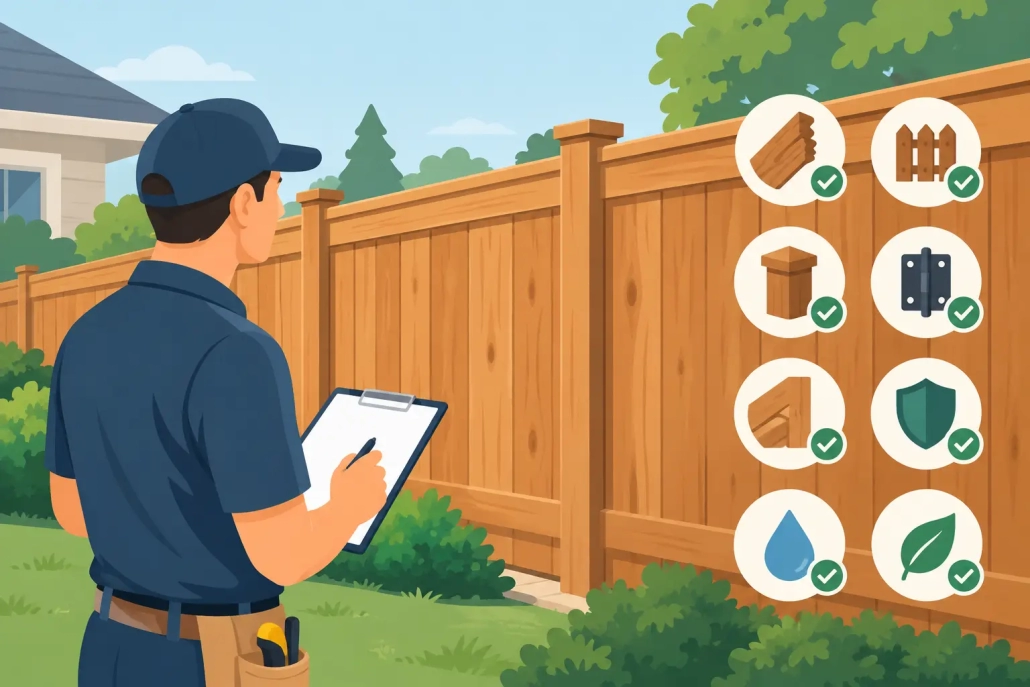
8 Checks in a Cedar Fencing Contractor Review Guide
A cedar fence can look straight and solid on installation day, then reveal weak posts, loose rails, and uneven lines after its first wet Vancouver Island winter. That is why a cedar fencing contractor review guide should look beyond photos and star ratings. The right contractor is not simply selling cedar boards. They are building a structure that must handle moisture, wind, changing ground conditions, gates, and the everyday use of your property.
For homeowners, property managers, and acreage owners, the goal is simple: hire a contractor with the experience, materials, and site capability to build the fence properly the first time.
Start With Cedar Fence Work You Can Verify
A contractor may install several types of fencing, but cedar fencing has its own requirements. Ask to see completed cedar projects that are comparable to yours in height, layout, and purpose. A short decorative garden fence is not the same as a six-foot privacy fence along a busy road, and neither is the same as a long boundary fence on sloped rural land.
Look closely at project photos and, when possible, completed work in person. You want consistent post spacing, level top lines, clean board alignment, secure gate framing, and details that suit the property. A quality cedar fence should feel intentional from every angle, including the side facing your neighbor.
Reviews are useful when they describe the actual work. Comments about clear communication and friendly crews matter, but look for specific references to workmanship, site challenges, cleanup, timelines, and how the contractor handled a problem. Detailed reviews usually tell you more than a long list of vague five-star ratings.
Ask What Type of Cedar Will Be Used
Not all cedar materials are equal, and a quote should make clear what is being supplied. Ask whether the fence uses cedar boards, cedar rails, cedar posts, or a combination of cedar and pressure-treated structural components. There can be sound reasons for different material choices, but they should be explained upfront.
Cedar is valued for its natural resistance to decay, warm appearance, and stability. It is still wood, however. It will weather over time, and it needs correct installation to perform well. Board thickness, rail size, post depth, fasteners, and spacing all affect how the fence holds up.
A contractor should also be able to explain the trade-off between appearance and budget. A tighter board layout may provide more privacy, while small gaps can improve airflow and allow for natural seasonal movement. A capped fence, lattice top, horizontal design, or custom gate can add curb appeal, but each detail changes both material costs and labor.
Use This Cedar Fencing Contractor Review Guide Before Comparing Quotes
The lowest quote is not always the best value. A lower number can reflect fewer rails, shallower post holes, lighter materials, excluded demolition, or a lack of site preparation. Compare proposals line by line so you know what each contractor is actually building.
A clear cedar fence estimate should address the fence height and style, linear footage, post spacing, gate locations, materials, removal of existing fencing, and disposal. It should also state whether site conditions could create additional work. This is especially important on Vancouver Island, where rock, tree roots, slopes, drainage issues, and tight access are common.
If one quote is significantly cheaper, ask direct questions. Is concrete included for every post? How deep will posts be set? Are gates framed to resist sagging? Is the contractor accounting for drilling or jackhammering if the site requires it? A professional contractor will answer clearly instead of avoiding the details.
Check Whether the Contractor Can Handle Your Site
A fence line is rarely as simple as it looks from the street. Existing concrete, bedrock, retaining walls, mature landscaping, elevation changes, and narrow side yards can all change the installation plan. These conditions are not necessarily a reason to avoid a project. They are a reason to hire a crew equipped to deal with it.
Ask how the contractor evaluates difficult sites before work begins. A proper site visit should consider access for crews and materials, soil conditions, the location of utilities, drainage, property lines, and any obstacles along the fence route. If the job needs concrete drilling, jackhammering, custom post solutions, or careful work around existing structures, that should be part of the conversation before the estimate is accepted.
Experience with challenging terrain matters because shortcuts become expensive later. A post that is poorly set in rocky ground or a gate installed without enough support may work at first, then shift as the ground settles and the seasons change.
Evaluate the Installation Details That Protect Your Investment
Cedar boards get most of the attention, but the structure behind them determines whether the fence stays straight. Ask the contractor how posts are installed and supported, how many rails will be used, and what hardware is planned for gates. These are practical questions, not technical trivia.
For a typical privacy fence, taller sections need adequate rail support to prevent boards from warping or loosening. Posts must be set at an appropriate depth for the fence height, soil conditions, and exposure. Gates need reinforced framing and hardware selected for their width and weight. A wide vehicle gate has very different demands than a standard walk gate.
Pay attention to the bottom of the fence as well. A level fence may leave gaps on uneven terrain, while a stepped layout follows the slope in sections. Neither approach is automatically better. It depends on the grade, privacy needs, pets, children, and the finished look you want. An experienced contractor should explain the options and recommend an approach that fits the site.
Confirm the Plan for Boundaries, Utilities, and Permits
A beautiful fence in the wrong location is still a problem. Before construction, confirm your property line and discuss who is responsible for locating underground utilities. Do not rely solely on an old fence, hedge, or informal understanding with a neighbor as a boundary marker.
Local rules can also affect fence height, placement, and visibility near driveways or intersections. Strata properties, commercial sites, and properties with shared boundaries may have additional requirements. Your contractor may not provide legal boundary advice, but they should recognize when a survey, utility locate, or permit check is needed before posts go into the ground.
Good communication with neighbors can prevent unnecessary conflict. If the fence sits on or near a shared line, discuss the plan early. Clarify which side will face outward, how access will be managed, and whether old materials will be removed from both properties.
Judge Communication Before the Job Starts
The estimate process is often a preview of the installation experience. Is the contractor responsive? Do they show up for the site visit prepared to measure and discuss options? Do they answer questions directly and provide a written scope that matches what was discussed?
No contractor can control every delay. Weather, material availability, underground conditions, and scheduling changes happen. What separates dependable service is communication. You should know who to contact, when work is expected to begin, what the crew needs from you, and how changes will be approved if the site reveals an unexpected issue.
Be cautious of broad promises with no details. A contractor who says they can build anything should also be able to explain how they will build your fence, what it will cost, and what could affect the schedule. Capability is proven through planning and workmanship, not sales language.
Questions Worth Asking Before You Hire
Bring these questions to your consultation so you can compare contractors on the same basis:
- What cedar materials, rail sizes, posts, and fasteners are included in the quote?
- How will you handle rock, roots, concrete, slopes, or limited access along the fence line?
- What post depth and support method do you recommend for this fence height and site?
- How will gates be framed and reinforced to prevent sagging?
- Does the estimate include removal, disposal, cleanup, and any required site preparation?
- What happens if the crew finds an unexpected site condition after work begins?
The answers should be specific to your property. A contractor who has inspected the site should not need to rely on vague assumptions.
A cedar fence is part privacy screen, part security feature, and part of the first impression your property makes. Choose a contractor who treats it as a structural project, not a quick row of boards. If you need a fence built for a difficult site or a custom layout, Vancouver Island Fence Company can assess the property and provide a clear, practical quote. The best next step is to walk the fence line with a contractor who is ready to solve the real conditions in front of them.

