
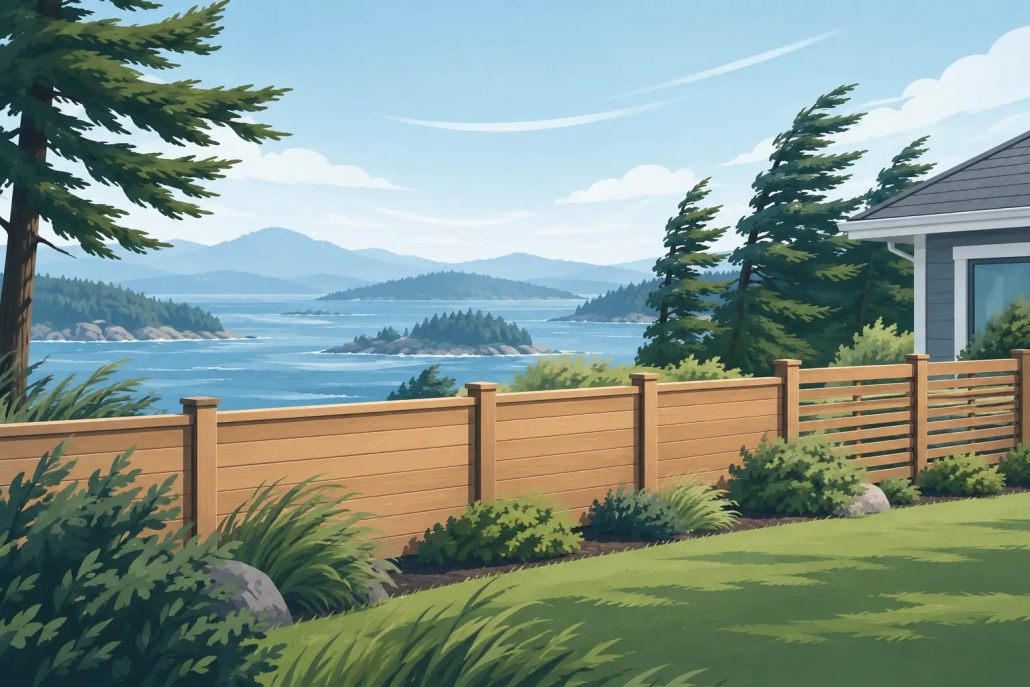
Choosing a Fence for Windy Yards on Vancouver Island
A fence for windy yards has to do more than mark a property line or create privacy. On Vancouver Island, persistent coastal gusts, winter storms, exposed lots, and saturated soil can turn an ordinary fence into a costly repair job. The right design manages wind pressure from the start, with materials, posts, footings, and spacing selected for the conditions on your property.
A taller solid fence is not automatically a stronger fence. In fact, a fully closed panel can act like a sail when a strong gust hits it. That force transfers directly into the rails, posts, concrete, and soil. Good fence construction starts by looking at exposure, grade, soil conditions, fence height, and the job the fence needs to do.
Why Wind Changes Fence Design
Wind does not push evenly across every yard. A home near the water, an open acreage, a corner lot, or a property above a bluff may receive far more wind than a sheltered neighborhood in town. A fence can also create its own trouble when it channels wind through a narrow side yard or catches gusts at the end of a long straight run.
The main issue is wind load. The more solid surface a fence presents, the more force it must resist. A six-foot cedar privacy fence offers excellent screening, but it needs a properly engineered support system in an exposed location. A chain link or ornamental fence lets air pass through, reducing pressure on the structure. Neither option is universally better. The right choice depends on whether privacy, security, pet containment, appearance, or animal control is the priority.
Posts usually fail before panels do. A post that is too shallow, undersized, poorly set, or installed in weak ground may begin to lean after one hard season. Once a fence starts moving, rails loosen, boards separate, gates go out of alignment, and the repair can spread well beyond one section.
Best Fence Options for Windy Yards
Open-style fencing for high exposure
Chain link, wire fencing, and ornamental fencing are often smart choices for highly exposed properties. Their open design allows wind to move through instead of building pressure against a solid wall. They are especially practical for commercial sites, rural properties, dog runs, gardens, and larger boundaries where durability matters more than complete visual privacy.
Chain link is a dependable, cost-effective option for security and containment. It works well on uneven ground and can be built at different heights. For acreage and agricultural-style applications, wire fencing or deer fencing can protect gardens, livestock areas, and property boundaries without creating a large wind-catching surface.
Ornamental fencing provides a cleaner, more finished appearance while still allowing airflow. It is a strong fit for front yards, pool areas, commercial entrances, and properties where curb appeal matters. Because it does not block the wind like a solid wood fence, it can be a sensible choice in exposed coastal locations.
Cedar privacy fencing with the right build
Cedar remains a popular choice because it looks natural, offers privacy, and suits many Vancouver Island homes. It can perform well in wind, but the details matter. Post size, post depth, rail layout, panel construction, and the condition of the ground all affect how the fence holds up.
For windy sites, a contractor may recommend stronger posts, deeper footings, closer post spacing, additional rails, or a design that breaks up long unbraced runs. In some cases, stepping the fence with the grade or using shorter sections is better than forcing one continuous wall across uneven terrain.
A board-on-board or partially spaced cedar design can offer privacy while allowing some air to pass through. This is a trade-off. It will not screen as completely as a solid panel, but it may reduce wind pressure and create a more durable result in the right location. A louvered or slatted design can also work, provided it is built with a support system suited to the exposure.
Mixed-material solutions
Some yards do not need one fence style from end to end. A property may benefit from a solid cedar privacy fence around a patio, with chain link, deer fencing, or ornamental fencing along the more exposed boundaries. This approach can protect the areas where privacy matters most without asking a full-height solid fence to take the full force of coastal wind.
For example, a backyard seating area may need screening from neighbors, while the side or rear property line only needs pet containment. Building every section as a heavy privacy fence may add cost and wind load without adding much value. A site-specific plan usually performs better than a one-style-fits-all approach.
Posts, Footings, and Soil Matter More Than Most People Think
A quality fence is only as dependable as what is below grade. Wind pulls, twists, and rocks fence posts in the soil. If the footing is inadequate or the ground stays wet for long periods, movement can happen even when the fence materials look substantial above ground.
Post depth should reflect the fence height, soil conditions, and wind exposure. Taller fences and exposed sites generally require more support. Concrete footings can provide stability, but they must be installed correctly. Poor drainage, shallow holes, or a post set in unsuitable ground can still lead to trouble.
Vancouver Island properties can present difficult installation conditions, including rock, hardpan, steep grades, established landscaping, and wet ground. A fence contractor needs the equipment and experience to deal with those conditions properly. Jackhammering, concrete drilling, custom brackets, and careful layout are sometimes necessary to build a fence that stays straight and secure.
Gate posts deserve special attention. Gates add concentrated weight and are opened and closed repeatedly, which puts extra stress on their posts. In a windy yard, a gate can act like a large moving panel. Properly sized gate posts, solid hardware, and a well-planned opening help prevent sagging and binding.
Layout Choices That Reduce Wind Damage
The location of a fence can make a major difference. Before construction begins, look for wind corridors, open fields, slopes, gaps between buildings, and long exposed property lines. A small adjustment to the route may reduce wind exposure or avoid difficult ground conditions.
Long runs benefit from thoughtful bracing and solid alignment. Corners and ends are common pressure points, especially where the fence changes direction. A well-built corner assembly helps distribute force through the structure instead of allowing one post to carry too much load.
Height also deserves a practical conversation. A seven- or eight-foot privacy fence may provide more screening, but it creates significantly more surface area for wind to hit. Sometimes a lower fence combined with strategic landscaping, a pergola, or a screened patio area provides the privacy you want with less risk and less cost.
Do not overlook drainage. Water pooling around posts weakens soil support and can accelerate deterioration over time. On sloped or wet properties, grading and drainage details should be considered before the first post hole is dug.
When Repair Is Enough and When Replacement Makes Sense
A fence that leans slightly after a storm is not always a full replacement job. If the posts remain sound and the damage is limited to a few boards, rails, or one section, a targeted repair may be the sensible option. Addressing the problem early can prevent a small failure from spreading across the line.
Replacement is often the better long-term choice when multiple posts are leaning, rot is visible at ground level, concrete footings are shifting, or repeated repairs have left the structure uneven. Reusing a weak layout or undersized post system simply puts the new materials back in the same position to fail.
A professional assessment should focus on the cause, not just the visible damage. Replacing broken boards without addressing poor post depth, weak corners, or excessive wind load may make the fence look better temporarily, but it will not solve the structural issue.
Vancouver Island Fence Company builds fencing with the property conditions in mind, from cedar privacy fences to chain link, ornamental, wire, and deer fencing. Whether the site is open, rocky, sloped, or difficult to access, the goal is the same: a fence that looks right, does its job, and is built to stay put.
Before choosing a style, stand in the yard on a windy day and notice where the gusts hit hardest. That simple observation, combined with a proper site assessment, is often the best starting point for a fence that can handle the weather for years to come.

