
How to Secure a Commercial Perimeter With Fencing
A commercial fence has to do more than mark a property line. It needs to control access, discourage trespassing, protect equipment, and stand up to daily use and Vancouver Island weather. When considering how to secure commercial perimeter fencing, the strongest result comes from planning the entire boundary as one working system – not simply choosing the tallest fence available.
A warehouse yard, strata property, utility site, retail storage area, farm operation, and industrial lot all have different risks. The right solution depends on what needs protection, who needs access, how visible the property should remain, and what the ground will allow. A professional site review identifies those details before posts go in the ground.
Start With the Real Security Risk
Perimeter security works best when it addresses specific problems. A site dealing with after-hours trespassing needs a different setup than a property that must keep customers, staff, delivery drivers, and contractors moving safely through designated entrances.
Walk the full property boundary and look beyond the obvious front gate. Check rear lanes, service yards, side access points, retaining walls, wooded edges, drainage routes, and places where the grade changes quickly. These are often the areas where a basic fence installation can develop gaps or weak points.
Consider what the fence needs to protect. High-value equipment, vehicles, inventory, fuel tanks, waste bins, livestock, or restricted work areas may each call for a different level of security. It also helps to identify whether the main concern is theft, vandalism, unauthorized parking, public safety, animal entry, or all of the above.
A practical security plan should answer three questions: Where should people enter? Where should they never enter? How will authorized users get through without creating daily frustration? Those answers guide the fence layout, gate placement, and access control choices.
Choose a Fence That Fits the Site
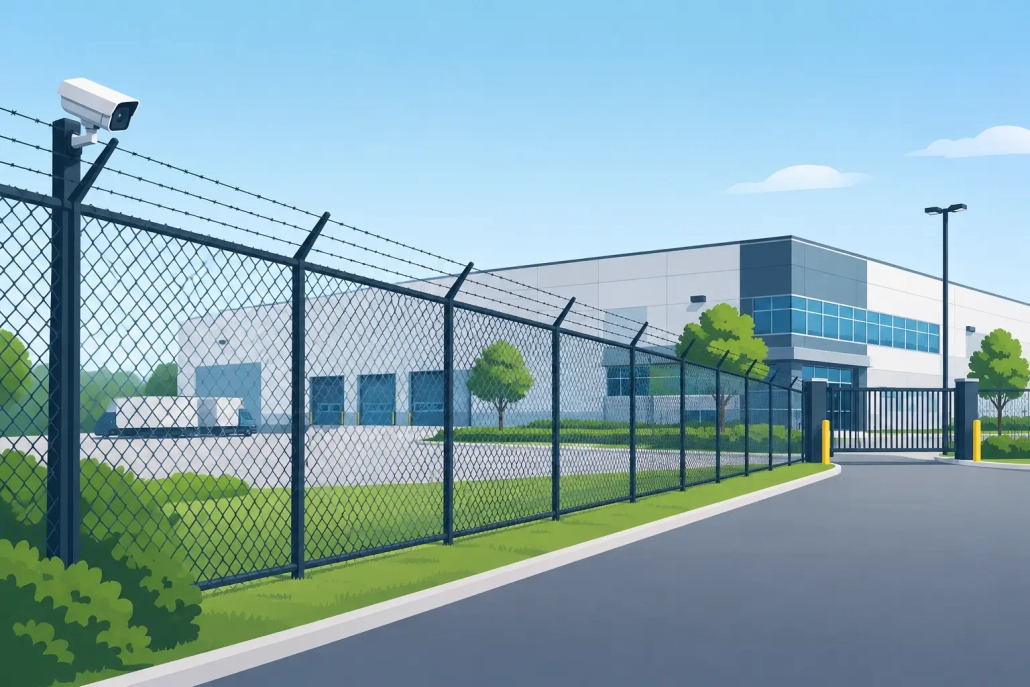
For many commercial properties, chain link fencing is the most practical starting point. It provides a clear boundary, holds up well under regular use, and can be installed at a range of heights. It also works well with gates, barbed wire extensions where appropriate, privacy screening, and access-control equipment.
Chain link is not the only answer. Ornamental metal fencing can provide a more polished appearance around offices, multi-family properties, schools, and visible commercial frontage while still establishing a firm boundary. Wire fencing may be better suited to acreage, rural commercial operations, or locations where animal control is part of the job. Deer fencing is a useful choice where protecting landscaping, crops, or grounds from wildlife is the priority.
Material selection involves trade-offs. Privacy slats can reduce views into a storage yard, but they also catch more wind and may limit sightlines from the street or building. A solid-looking fence can improve privacy, while an open-style fence makes it easier for staff, neighbors, and cameras to see activity around the perimeter. The best choice depends on whether privacy or visibility carries more value at your site.
Height matters as well, but taller is not always better. A higher fence can create a stronger physical and visual deterrent, yet it may require additional approvals, stronger structural design, or a different approach around entrances. Local regulations, neighboring properties, and the intended use of the site should all be reviewed before finalizing the plan.
How to Secure Commercial Perimeter Access Points
A fence is only as secure as its gates. If a pedestrian gate does not latch properly or a vehicle gate can be forced open, even a well-built fence line loses much of its value. Gates should be planned around actual traffic patterns rather than added as an afterthought.
Separate pedestrian and vehicle access whenever possible. A dedicated walk gate helps prevent people from using a large vehicle gate for everyday entry. For vehicle traffic, consider the size and turning needs of delivery trucks, service vehicles, trailers, snow removal equipment, and emergency access.
Gate hardware should match the level of use. A lightly used swing gate has different demands than a busy commercial entrance that opens dozens of times a day. Heavy-duty hinges, reliable latches, lockable drop rods, reinforced posts, and properly aligned frames all matter. Poor gate alignment is one of the fastest ways for a commercial fence system to become inconvenient and vulnerable.
For sites with regular staff or contractor traffic, access control may be worth the investment. Depending on the property, this can include keypad entry, card or fob access, intercoms, automatic operators, or controlled lock boxes. These systems do not replace a strong gate, but they reduce the need to leave gates unlocked or share keys widely.
Eliminate Gaps and Weak Spots
Most perimeter failures happen at transitions: under a gate, along a slope, beside a building, or where one fence type meets another. These details need the same attention as the main fence line.
Uneven terrain is common across Vancouver Island, and it can make a standard installation more complicated. A fence that follows a steep grade without proper planning may leave openings underneath or create awkward, climbable angles. Stepped panels, racked fencing, grade adjustments, retaining solutions, or custom-built sections may be needed to keep the line secure.
Pay close attention to the bottom of the fence. If wildlife, pets, or people can pass underneath, the perimeter is incomplete. Depending on the site, this may call for tighter ground clearance, buried mesh, a bottom tension wire, concrete curbing, or additional wire reinforcement.
Posts are another critical detail. Commercial fencing must be anchored for the soil conditions, fence height, wind exposure, and gate weight. On difficult sites, installation may require concrete drilling, jackhammering, rock work, or other specialized construction methods. Cutting corners below ground can lead to leaning posts, sagging gates, and costly repairs later.
Add Layers Instead of Relying on One Barrier
A perimeter fence is strongest when it is part of a layered approach. Fencing creates the physical boundary, but lighting, visibility, signage, landscaping, and cameras can make that boundary more effective.
Keep vegetation trimmed back from the fence line. Dense shrubs and overgrown trees can conceal damage, provide cover for trespassers, or make regular inspections difficult. At the same time, avoid placing stored materials, dumpsters, pallets, or equipment close enough to the fence that they can be used as a step over it.
Lighting should cover gates, corners, parking areas, and service entrances without creating glare for drivers or neighboring properties. Camera placement should focus on likely entry points and provide a clear view of gates, not just a distant view of the fence. Signs identifying private property, restricted areas, or controlled access can also establish expectations before someone reaches the gate.
These additions should support the fence, not compensate for a weak installation. A camera can show what happened after a breach. A properly designed perimeter helps prevent the breach in the first place.
Plan for Durability and Maintenance
Commercial fencing takes abuse from weather, vehicles, repeated gate use, and occasional impacts. Coastal exposure, heavy rain, wet soil, and wind can all affect long-term performance. Choose materials and finishes suited to the environment, and do not treat installation quality as an optional upgrade.
Routine inspections are straightforward but valuable. Walk the perimeter several times a year and after major storms. Look for loose fittings, damaged mesh, leaning posts, lifted footings, erosion, cut wire, and gates that no longer latch cleanly. Small repairs are usually simple when caught early.
It is also wise to review access when staffing or site use changes. Remove old codes, collect keys from former tenants or contractors, and confirm that emergency access still works as intended. Security is not a one-time installation. It is an operating part of the property.
Build the Perimeter Around How the Property Works
The most effective commercial fencing is built for the way a site actually operates. It accounts for truck traffic, employee access, sightlines, terrain, public-facing areas, and the level of protection required. A fence that looks good but blocks operations will eventually be bypassed. A fence that is easy to work around will not provide much security.
Vancouver Island Fence Company designs and installs commercial fencing with those site realities in mind, including difficult terrain and custom construction requirements. Whether the job calls for chain link, ornamental fencing, wire fencing, deer fencing, or a combination of materials, the goal is the same: a boundary that is built to last and does its job every day.
Start with a clear look at the risks and the daily traffic on your property. From there, the right fence, gate, and installation details become much easier to choose – and much harder for unwanted visitors to get around.

