
Concrete Core Drilling for Fencing Projects
A new fence does not always start in bare soil. Many properties have concrete patios, retaining walls, driveways, curbs, slabs, or existing foundations right where a fence line needs to go. Concrete core drilling fencing makes it possible to install secure fence posts in those locations without tearing out large sections of concrete or compromising the finished look of the property.
For homeowners, businesses, and acreage properties, the right installation method comes down to the site. A post that is properly drilled, positioned, and anchored can provide a clean, durable base for ornamental fencing, chain link, privacy screens, gates, and other custom fence systems. The key is evaluating the concrete and the fence requirements before any holes are drilled.
Why Concrete Core Drilling Works for Fencing
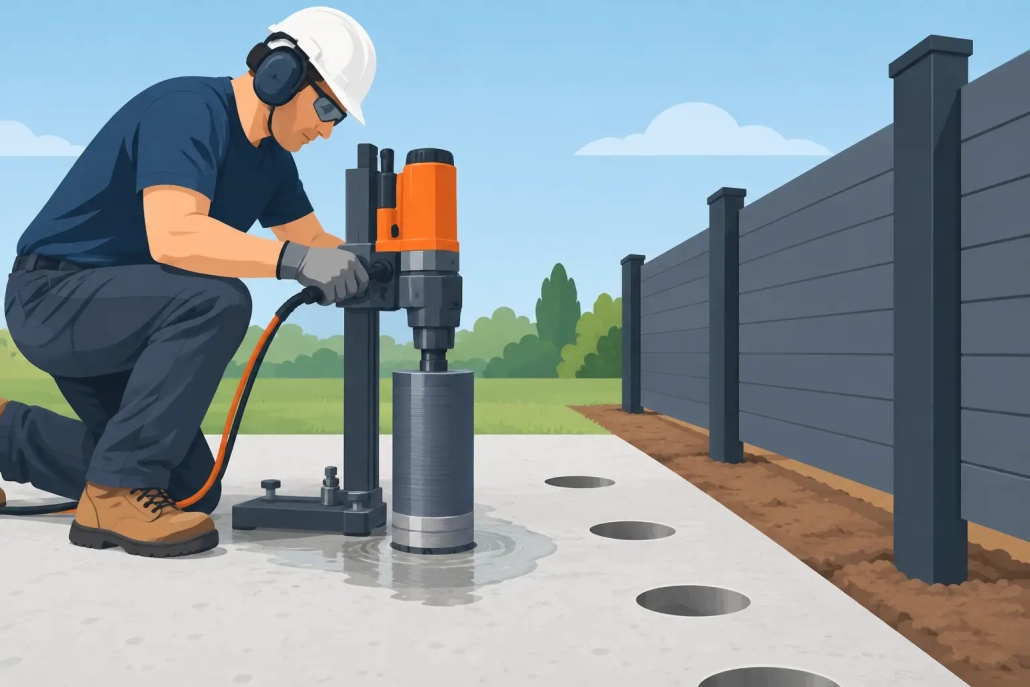
Core drilling uses a diamond-tipped circular bit to cut a precise hole through concrete. Unlike breaking concrete with a jackhammer, the process removes a clean cylindrical core and leaves the surrounding slab largely intact. That matters when the concrete is part of a finished patio, commercial walkway, pool-area surround, loading area, or driveway.
The finished hole is sized for the fence post and anchoring method. Once the post is set plumb, it may be secured with an appropriate grout, concrete, or engineered anchoring system based on the application. The result is a fence post that begins below the surface rather than being attached with a surface-mounted bracket.
This approach is often chosen for appearance as much as strength. Surface mounts can work well in the right setting, but they remain visible and depend on the condition and thickness of the slab. A core-drilled post can offer a cleaner profile, especially for aluminum ornamental fencing, privacy panels, handrail-style barriers, and gates where alignment is critical.
When Concrete Core Drilling Fencing Is the Right Choice
Core drilling is not automatically the best method for every concrete surface. It is a practical option when the slab or concrete structure is sound, thick enough for the intended post depth, and free of conflicts that could affect drilling. A site review determines whether the concrete can support the planned fence and whether a different installation method would perform better.
It is commonly used when a fence needs to be installed along the edge of a patio or deck slab, on a concrete retaining wall, around a commercial building, or across an existing hardscape where excavation would be disruptive. It can also be useful for replacing a fence where old posts have failed but the surrounding concrete remains in good condition.
Gate posts need extra attention. A gate creates repeated side loads every time it opens and closes, and a heavy driveway gate demands a much stronger foundation than a simple garden panel. In some cases, drilling into an existing slab is suitable. In others, the correct solution is to remove a small section of concrete and build a dedicated footing designed for the gate load.
The same applies to privacy fencing. Solid cedar panels catch more wind than open chain link or ornamental fencing. On exposed Vancouver Island properties, wind load, fence height, post spacing, and soil conditions all affect whether core drilling is appropriate and how deep the posts need to be set.
What Happens Before the Drill Starts
A professional installation begins with layout, not drilling. Fence lines are measured, corners are established, and post locations are checked against property boundaries, access points, grade changes, and gate swings. On a commercial or strata property, the work may also need to account for pedestrian routes, vehicle access, and site safety requirements.
The concrete itself must be assessed. Its thickness, condition, reinforcement, and location all matter. Cracked or thin concrete may not be a reliable foundation. Drilling too close to a slab edge can cause damage, while drilling through a suspended slab, waterproofed area, or utility route requires added caution and may not be advisable.
Utility and Site Checks Matter
Concrete can hide more than reinforcement steel. Depending on the property, there may be electrical conduit, water lines, drainage, radiant heating, or other services below or within the slab. Locating services and reviewing the construction area before drilling helps prevent costly damage and unnecessary delays.
Existing structures also affect the plan. A fence beside a building may require exact clearances. A post near a retaining wall must not undermine the wall or interfere with drainage. On uneven terrain, each post location may need a different approach to keep the finished fence level, straight, and properly supported.
The Core Drilling and Installation Process
Once the layout is confirmed, the drilling equipment is positioned over each marked post location. Water is typically used during diamond drilling to control heat and dust while producing a clean cut. The removed concrete core is lifted out, and the hole is cleaned so the post can be installed correctly.
The post is then placed, leveled, and braced before the selected anchoring material is installed. Proper alignment at this stage is essential. A fence can only look straight if its posts are straight, and small errors become obvious across a long run of panels or chain link fabric.
After the posts have cured or been secured according to the selected system, the remaining fence components are installed. That may include rails, cedar boards, ornamental panels, chain link mesh, wire fencing, privacy slats, or custom gates. The final result should be stable, cleanly finished, and built around how the property will actually be used.
Core drilling can create slurry from water and concrete dust. On finished residential and commercial sites, containment and cleanup are part of doing the job properly. Careful crews protect adjacent surfaces, manage debris, and leave the work area orderly rather than treating a finished patio or storefront like an open construction site.
Choosing the Right Fence for a Concrete Base
The fence style should suit both the property and the drilled foundation. Ornamental fencing is a strong choice for front yards, pool surrounds, commercial boundaries, and locations where visibility matters. Its open design is less affected by wind and gives a polished appearance without closing off the view.
Cedar fencing brings warmth and privacy, but it needs a post system designed to handle the weight and wind exposure of solid panels. For a backyard patio or courtyard, a shorter privacy screen may be the right balance between enclosure and airflow. For taller fences, the condition of the concrete and the required post depth deserve close review.
Chain link and wire fencing are practical options for commercial sites, pet areas, sports spaces, rural properties, and security boundaries. They are often well suited to concrete drilling because the posts can be placed precisely along curbs, slabs, and building perimeters. Deer fencing may require taller posts and additional bracing, particularly on large or exposed acreage.
Why Professional Equipment and Experience Make a Difference
Concrete drilling is specialized work. It requires the right diamond bits, drilling equipment, water control, layout tools, and understanding of concrete conditions. A poorly placed hole cannot simply be moved without leaving a visible repair. A post installed out of plumb can affect every section that follows.
There is also a difference between making a hole and building a dependable fence foundation. The installer needs to consider post diameter, embedment depth, fence height, gate weight, wind exposure, drainage, and the condition of the existing concrete. Those details determine whether the finished fence stays straight and secure through years of use.
Vancouver Island Fence Company handles challenging site work as part of a complete fencing project, including concrete drilling, jackhammering, and custom installation requirements. That means the fence design and the foundation method are planned together, rather than treating drilling as an afterthought.
Plan the Foundation Before Choosing the Finish
A fence can be decorative, secure, private, or built for animal control, but it is only as dependable as the posts holding it up. If your planned fence line crosses concrete, bring that detail into the conversation early. A clear site assessment can identify the right installation method before materials are ordered and work begins.
The best result is not always the fastest option. Sometimes core drilling is the cleanest and most durable solution. Other times, a new footing, a surface-mounted system, or a revised fence layout will serve the property better. Getting the foundation right gives every fence above it a better chance to perform exactly as it should.

