
Fence Drainage Solutions That Protect Your Yard
A fence line that stays wet through the fall and winter will eventually show it. Cedar posts soften at ground level, steel hardware corrodes, panels shift, and muddy runoff can carry soil away from the base of the fence. On Vancouver Island, where heavy rain and sloped lots are common, fence drainage solutions are not an add-on. They are part of building a fence that stays straight, secure, and good-looking for years.
The right approach depends on where the water is coming from, how quickly it moves, and what type of fence you are building. A low backyard corner needs a different fix than a commercial site with runoff from a parking area or a rural property where seasonal water crosses the fence route. The goal is simple: move water away without weakening the fence or creating a drainage problem for a neighboring property.
Start With the Water, Not the Fence
Before posts are set, look at the site during or shortly after rain if possible. Standing water tells part of the story, but water marks on soil, moss growth, washed-out mulch, and soft ground around existing posts can reveal the bigger pattern.
A proper site assessment considers the overall grade, roof downspouts, driveway runoff, nearby ditches, retaining walls, and neighboring elevations. Water may be collecting at the fence line because the fence is in its path, but it may also be arriving from another part of the property. Installing a new fence without addressing that movement can lead to premature repairs.
On a flat lot, the concern is usually water that has nowhere to go. On a sloped lot, the concern is often water that moves too quickly and erodes the soil around posts. Both conditions can affect a cedar privacy fence, chain link fence, ornamental fence, deer fence, or wire fencing, although the best drainage detail will vary with each system.
Fence Drainage Solutions for Common Site Problems
Poor Grading Along the Fence Line
If the ground slopes toward the fence, water can pond against panels and saturate post holes. Minor grading can often direct surface water away from the fence and toward a suitable drainage area. The finished grade should shed water without exposing fence footings or leaving a sharp drop that is difficult to maintain.
This is often the most effective fix because it addresses the cause rather than just the symptom. However, grading needs to be planned carefully around patios, garden beds, property lines, utility routes, and existing landscaping. On tight residential lots, even a small change in elevation can affect where water ends up.
Gravel at Post Locations
Gravel is commonly used beneath or around fence posts to help water drain from the bottom of the hole. It can reduce prolonged moisture exposure and provide a firm base when the surrounding soil is heavy or slow-draining.
Gravel alone is not a cure for a wet site. If water is constantly flowing toward a post, the post hole can still remain saturated. It works best as one part of a larger plan that includes proper grade, sound post installation, and a clear route for surface water.
French Drains and Drainage Pipe
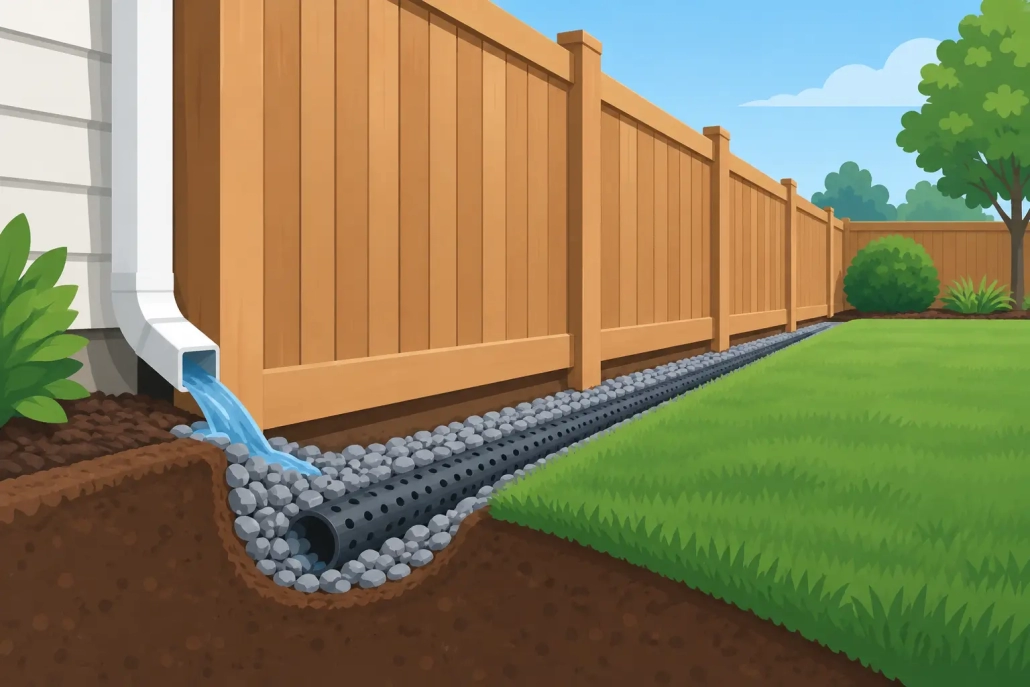
A French drain can be a practical option where water repeatedly collects along one section of fence. This system typically uses perforated pipe in a gravel-filled trench to collect water and carry it to an approved outlet. It is useful for low areas, retaining-wall drainage, and fence lines below higher ground.
The outlet matters as much as the trench. A drain must discharge to a location that can handle the water safely, not onto a neighbor’s lot, against a foundation, or into an area that will become another muddy problem. Depending on the property, the work may need to tie into an existing drainage plan or follow local requirements.
Swales and Surface Channels
A shallow swale is a shaped section of landscape that guides runoff across the property. It can be a good solution for larger yards, acreages, and rural sites where there is room to direct water naturally. Unlike a buried drain, a swale is visible and easier to inspect, but it needs enough slope to function without becoming an erosion channel.
Surface channels can also help near gates, driveways, and commercial access points. These locations often see compacted soil and concentrated runoff, which means water can undermine the fence line faster than it does in an undisturbed yard.
Retaining and Erosion Control
Where a fence runs across a steep grade, drainage and soil retention need to work together. Water moving downhill can wash out the soil below the fence, leaving gaps and reducing support around posts. A retaining wall, properly installed landscape edging, rock, or other erosion-control measures may be needed before the fence goes in.
The fence should not be expected to function as a retaining structure unless it has been specifically designed and built for that purpose. Standard fence posts and panels are not meant to hold back wet soil. Separating the retaining work from the fence structure protects both investments.
Protecting Different Fence Materials From Water
Wood fences are especially vulnerable where posts stay wet at ground level. Good drainage, correctly installed posts, and enough clearance between the bottom of the fence and the soil help reduce rot and staining. A small gap below a cedar fence also allows water and debris to pass rather than collect against the boards.
Chain link and ornamental fencing generally handle moisture better than untreated wood, but water can still create problems. Saturated ground can cause posts to lean, while pooling water can speed up corrosion at damaged coatings, hardware, and base connections. In high-use commercial areas, drainage also helps prevent soft, rutted ground near gates and access points.
Deer fencing and wire fencing are often installed across long runs, uneven terrain, and rural properties. In these settings, the priority is keeping water from cutting channels under the fence or loosening end and corner posts. Those posts carry the greatest tension and deserve extra attention where the ground is wet or unstable.
Plan Drainage Before Installation Begins
The best time to solve drainage concerns is before the first post hole is dug. Once a fence is installed, correcting grade or adding a drain can require removing panels, disturbing finished landscaping, and working around concrete footings.
A professional installation plan should account for site access, underground utilities, soil conditions, slope, fence height, gate locations, and drainage needs at the same time. Difficult sites may require concrete drilling, jackhammering, excavation, or custom layout work. That is where experience matters. A fence can look straightforward from the street while the ground below tells a different story.
For properties in Nanaimo, Campbell River, Parksville, Qualicum Beach, Courtenay, Comox, and surrounding communities, local rainfall and varied terrain should be part of the conversation from the first estimate. Vancouver Island Fence Company approaches drainage as part of the site work, not as an afterthought once water starts causing damage.
When a Drainage Upgrade Is Worth It
Not every fence project needs a French drain or major excavation. If water moves away naturally, posts are stable, and the soil dries within a reasonable time after rain, good installation practices may be enough. Adding more drainage than the site needs can increase cost without improving performance.
An upgrade is worth considering when you see repeated ponding, leaning posts, soil erosion, muddy gate areas, water flowing from a neighboring slope, or a fence line near a retaining wall. These are signs that the ground needs attention before a new fence is asked to do its job.
A well-built fence starts with solid ground. If water is already working against your yard, address its path first, then build the fence around a plan that is made to last.

