
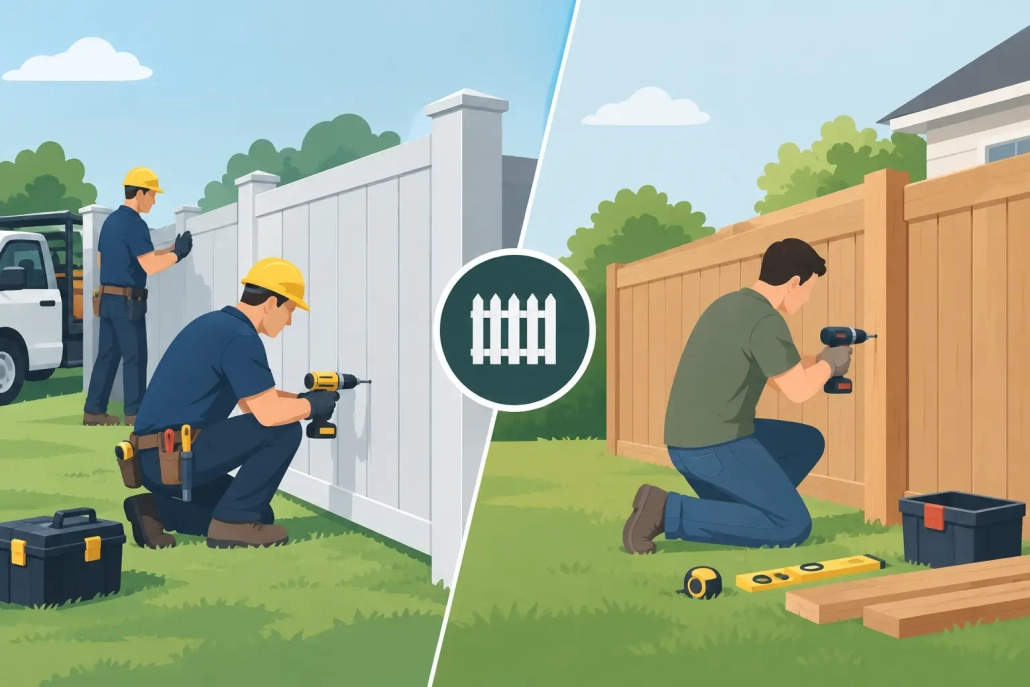
Contractor Versus DIY Fencing: Which Fits?
A fence can look straightforward from the street: posts, rails, panels, gate. The work gets more complicated the moment a property line slopes, roots run through the dig area, rock sits below the surface, or an old fence comes out unevenly. That is where the contractor versus DIY fencing decision becomes less about who can hold a level and more about who can deliver a fence that stays straight, secure, and useful for years.
For some Vancouver Island properties, a well-planned DIY project makes sense. For others, professional installation prevents expensive corrections, neighbor disputes, damaged utilities, and a fence that starts leaning after its first wet season. The right choice depends on the fence’s job, the site, and how much time and risk you are prepared to take on.
Start With What the Fence Must Do
A decorative front-yard fence has different requirements than a deer fence around an acreage, a chain link enclosure for commercial equipment, or a cedar privacy fence between close neighbors. Before comparing labor costs, define the purpose. Are you creating privacy, keeping children or pets contained, securing a business yard, marking a boundary, or protecting a garden from wildlife?
The more critical the job, the less room there is for guesswork. A gate that will be used several times a day needs properly set hinge posts and enough clearance to swing through changing ground conditions. A deer fence needs the right height, tension, and corner bracing. A security fence needs materials and installation details that match the risk it is meant to address.
DIY can be a good fit when the layout is short, open, and simple, and the fence is mainly cosmetic. It becomes harder when performance matters as much as appearance.
Contractor Versus DIY Fencing: The Real Cost Question
DIY fencing often appears less expensive because you are removing the contractor’s labor charge. That can be true, particularly for a short run on level ground where you already own basic tools. But material purchases are only part of the budget.
A realistic DIY estimate includes post-hole tools or equipment rental, concrete, fasteners, gravel, string lines, levels, saw blades, disposal fees, delivery charges, protective equipment, and the cost of correcting mistakes. If an existing fence must be removed, factor in the labor and haul-away work before the first new post goes in.
Time has value, too. A fence that looks like a two-day project can stretch across several weekends when weather changes, a post hole hits rock, or materials arrive late. This matters for property managers and business owners who need a secure perimeter on a schedule, but it matters for homeowners as well. A partially completed fence is not much help when you have a dog to contain or a new neighbor waiting for privacy.
Professional installation is an upfront investment, but it gives you a clearer project scope. An experienced crew can plan material quantities, set posts efficiently, manage removal, and deal with difficult ground without stopping the job to learn the next step. The lowest initial price is not always the lowest total cost when repairs or replacement arrive a few seasons later.
Site Conditions Decide More Than Most People Expect
Vancouver Island properties rarely come with perfectly level, soft, obstacle-free ground. Sloping lots, mature trees, bedrock, clay, drainage paths, and older landscape features all affect a fence installation. Even a modest grade can create awkward gaps under panels or uneven top lines if the layout is not planned correctly.
A contractor evaluates the entire run before building. That includes changes in elevation, access for equipment, soil conditions, existing structures, corners, gates, and where the fence meets driveways or retaining walls. The goal is not simply to put posts in the ground. It is to create a consistent, structurally sound line that fits the property.
Rock is a common tipping point in the DIY decision. Hand digging is difficult enough in compacted soil. When a post location meets buried rock or concrete, the work may require specialized drilling, jackhammering, or a revised installation approach. Moving a post without understanding the layout can throw off panel spacing, gate placement, and the full fence line.
Drainage also deserves attention. Water collecting around posts can shorten their life and soften surrounding soil. On a wet or uneven property, the installation plan should account for runoff rather than trap it behind the fence.
Boundary Lines and Local Requirements Are Not Details
A beautiful fence in the wrong location is still a problem. Do not assume an old fence marks the true property line. Previous owners may have installed it inside the boundary, outside it, or simply where the terrain made installation easier. If there is any uncertainty, confirm the line before buying materials or digging holes.
Setbacks, height restrictions, pool enclosure rules, and strata requirements can also affect your design. Commercial sites may have additional security, access, or visibility considerations. A professional installer can identify practical concerns early, but property owners should still confirm the rules that apply to their location.
Before any excavation, utilities must be located. This is not a step to rush through because a fence post is small. Buried electrical, gas, water, irrigation, and communications lines do not care whether the hole was dug by a contractor or a homeowner. Plan the work properly and wait for clearance before breaking ground.
Materials Are Only as Good as the Installation
Cedar offers warmth, privacy, and a classic look that suits many Island homes. Chain link is a durable, practical choice for pets, commercial sites, and larger enclosures. Ornamental fencing provides a cleaner, more formal finish, while wire and deer fencing can protect gardens, livestock areas, and rural properties without blocking the view.
Each material has its own installation demands. Cedar needs straight, well-supported framing to avoid a wavy appearance. Chain link depends on solid terminal posts, correct tension, and properly braced corners. Wire fencing can sag or fail under pressure if the end assemblies are not built to carry the load. Ornamental systems need accurate post spacing so panels fit cleanly and gates operate properly.
This is where DIY projects can lose their savings. Buying quality materials does not fix shallow posts, uneven spacing, poorly mixed concrete, or undersized gate supports. A fence performs as a system. Posts, footings, rails, hardware, tension, and layout all work together.
When DIY Makes Sense
DIY is worth considering when the project is genuinely simple and you are comfortable working carefully. A short section of basic fencing on accessible, level ground can be a satisfying project for a homeowner with the right tools and enough time. It can also make sense for replacing a small, nonstructural section that matches an existing fence.
Be honest about your experience before committing. Can you set multiple posts at consistent depth and alignment? Can you keep the fence line square when the ground changes? Can you build and hang a gate that will not drag? If the answer is uncertain, start smaller or bring in help before purchasing a full project’s worth of materials.
DIY is usually a poor match for long fence runs, steep grades, rock excavation, large gates, commercial security needs, precise boundary work, or fencing that protects animals and people. Those projects have more consequences when something goes wrong.
What a Professional Crew Brings to the Job
Hiring a contractor is not just paying someone else to dig holes. You are paying for site assessment, layout experience, suitable equipment, material knowledge, and a crew that knows how to solve problems without compromising the finished fence.
That is especially valuable when a project involves concrete drilling, difficult access, removal of old materials, custom details, or an unusual fence design. A capable fencing contractor can recommend whether a stepped, racked, or custom-built solution suits the slope and intended use. They can also build the structural details that are easy to overlook, including braced corners, properly supported gates, and post depths suited to the job.
Vancouver Island Fence Company has worked with residential, commercial, and rural fencing needs across the Island since 1999. For clients facing challenging sites or custom requirements, full-service installation means one team can manage the work from the first estimate through the finished fence.
Make the Choice Based on the Finished Result
The best question is not, “Can I build this fence?” Most determined property owners can build some version of a fence. Ask instead, “Will this fence still do its job after wet weather, ground movement, daily gate use, and years of exposure?”
If your project is simple, DIY can save money and give you control over the pace. If the site is difficult or the fence has an important job to do, professional installation can protect your budget and your property from problems that are far more costly than the original labor.
A fence should make your property easier to use, safer to manage, and better to look at. Start with an honest assessment of the ground, the fence’s purpose, and the standard you expect when the work is finished.

