
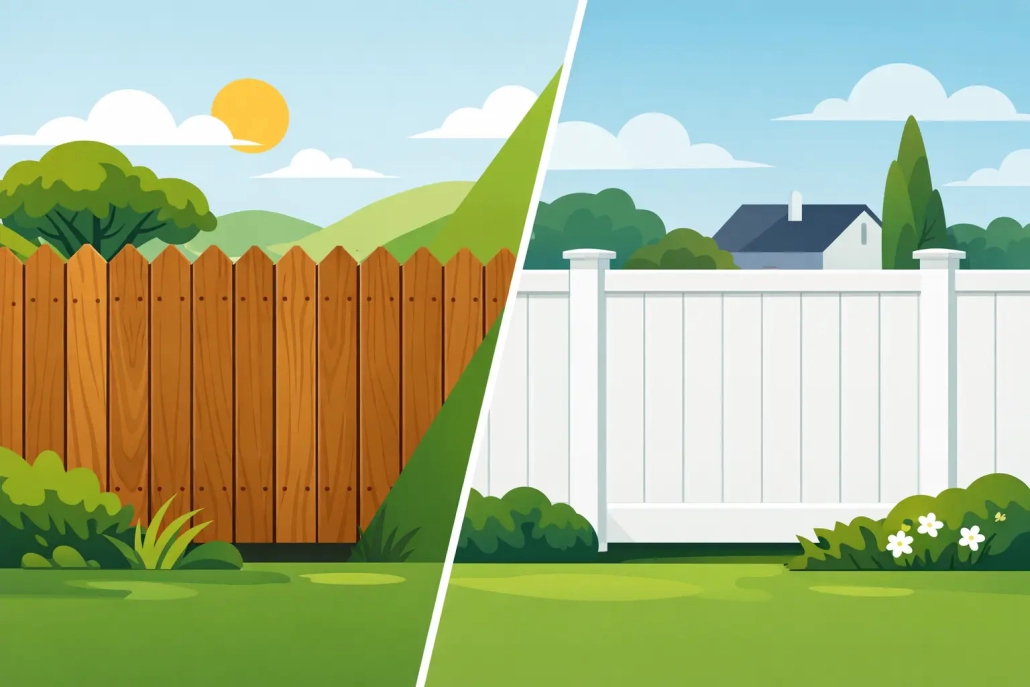
Cedar Fence Versus Vinyl Fence for Your Yard
A fence has to do more than mark a property line. Around Vancouver Island, it needs to handle rain, wind, damp ground, salt air in some locations, and the day-to-day demands of family life. When comparing a cedar fence versus vinyl fence, the better choice comes down to the look you want, how much maintenance you will accept, and how the fence will be built on your specific site.
Cedar remains a favorite for homeowners who want a warm, natural privacy fence that fits the Island landscape. Vinyl appeals to buyers looking for a clean, consistent appearance with limited upkeep. Both can work well, but they perform differently over time and require different installation approaches.
Cedar Fence Versus Vinyl Fence at a Glance
Cedar is a real wood fence material with natural grain, color variation, and character. It can be built in many styles, from a straightforward solid-panel privacy fence to a horizontal design, lattice-top fence, or custom gate system. It is also easy to adapt around slopes, retaining walls, mature trees, and unusual property lines.
Vinyl is a manufactured material formed into uniform panels and posts. It is commonly chosen for white privacy fencing, picket fencing, and defined residential boundaries. Its smooth finish and consistent color suit newer homes and properties where a polished, low-maintenance look is the priority.
Neither material is automatically right for every job. A well-built cedar fence can outlast a poorly installed vinyl fence, and a vinyl fence on weak posts will not stay straight simply because the panels require less maintenance. Installation quality, post depth, drainage, and site conditions matter as much as the material itself.
Appearance and Curb Appeal
Cedar has an advantage when natural appearance is the goal. Fresh cedar offers warm reddish and honey tones, while weathered cedar gradually turns silvery gray if left untreated. Many homeowners prefer that aging process. Others stain or seal the wood to maintain a particular color and add protection from moisture.
Because cedar is built from individual boards, it offers more design flexibility. Board orientation, cap rails, trim, lattice, gate details, and height can be tailored to the home and the property. This makes cedar a strong choice for established neighborhoods, wooded lots, and homes with a more traditional or West Coast style.
Vinyl has a more uniform look. It will not show grain, knots, or natural variation, which is exactly what some owners want. A white vinyl fence can look crisp around a pool area, landscaped backyard, or newer subdivision. The trade-off is that vinyl styles can look more manufactured, and matching a custom detail or an older home is not always as easy.
Cost: Initial Price and Long-Term Value
Upfront pricing varies by fence height, layout, gate requirements, site access, and the work required below ground. A simple level yard costs far less to fence than a rocky slope where post holes need drilling or jackhammering. Material cost is only one part of the project.
Cedar can be competitively priced for a standard privacy fence, especially when the design uses common dimensions and straightforward access. Custom cedar work may cost more, but it also gives property owners more control over the finished result.
Vinyl materials often carry a higher initial cost than basic cedar construction. The system includes specialized posts, rails, brackets, panels, and caps. Its long-term appeal is lower routine maintenance, since it does not need staining or painting. Still, lower maintenance does not mean no maintenance or no future repair costs.
A damaged cedar board can usually be removed and replaced without rebuilding a full section. Vinyl repairs can be more involved when a panel cracks, a rail breaks, or an older product line is no longer available in the same profile or shade. Ask about replacement availability before selecting a vinyl system.
Maintenance and Cleaning Requirements
Cedar needs regular attention if you want it to keep its original color and resist moisture as effectively as possible. Depending on exposure, a quality stain or sealant may be needed every few years. Clearing leaves, soil, and vegetation away from the bottom of the fence also helps prevent persistent moisture against the boards.
If you are comfortable with cedar aging naturally, maintenance can be simpler. The wood will still benefit from inspections for loose boards, fasteners, and early signs of rot near ground contact. On Vancouver Island, shaded fence lines and areas with poor drainage deserve particular attention.
Vinyl does not require staining, sealing, or painting. It can usually be cleaned with mild soap, water, and a soft brush. That makes it attractive for busy households and rental properties. However, vinyl can collect mildew, algae, dirt streaks, and pollen, particularly along damp or shaded fence lines. White vinyl shows grime more clearly than most stained cedar finishes.
Avoid harsh abrasives and aggressive pressure washing on either material. The goal is to clean the fence without damaging the surface, forcing water into joints, or loosening components.
Weather Performance on Vancouver Island
Cedar contains natural oils that help it resist decay and insect damage, but it is not maintenance-free. Continuous moisture, poor airflow, and posts set in wet ground can shorten the life of any wood fence. Good construction protects cedar where it is most vulnerable: at the post, along the bottom edge, and at fastener locations.
Vinyl does not rot, absorb water, or attract insects. That is a clear benefit in wet conditions. But vinyl can become more brittle in cold weather, and strong impacts can crack panels or rails. It also expands and contracts with temperature changes, so the system must be installed according to the manufacturer’s specifications.
Wind is a major factor for both materials. A solid six-foot privacy fence creates a large surface that catches wind. Proper post spacing, embedment depth, concrete work, rail support, and gate framing are essential. On exposed waterfront, hillside, or open rural properties, the fence design may need to account for higher wind load instead of relying on a standard panel layout.
Strength, Privacy, and Security
For privacy, both cedar and vinyl can provide a fully enclosed fence with minimal gaps. Cedar is often easier to customize when a yard needs stepped sections, varied heights, a tight fit beside a retaining wall, or a gate built to a nonstandard opening.
Vinyl panels can provide excellent privacy when they are part of a properly supported system. But the panels and rails are designed to work as a matched product. Modifying them in the field is more limited than modifying wood. This can matter on uneven terrain, where a fence may need to rack with the grade or be carefully stepped to avoid gaps.
Neither cedar nor vinyl is the best answer for every security need. For commercial yards, animal containment, high-security boundaries, or wide acreage, chain link, ornamental fencing, deer fencing, or wire fencing may be a better fit. The right fence starts with what it must do, not just what it looks like from the street.
Installation Details That Make the Difference
The most expensive fence is one that has to be repaired early. Before choosing materials, consider underground services, access for equipment, drainage, soil type, existing structures, and the condition of the grade. Rocky ground and difficult access are common realities on Island properties, and they affect the installation plan.
Posts are the backbone of a fence. They need to be set at the right depth, aligned correctly, and supported for the load they will carry. Gates require even more care. A gate that is not framed and hung properly can sag, drag, or stop latching long before the rest of the fence shows wear.
For cedar, quality lumber selection, corrosion-resistant fasteners, and thoughtful board spacing help manage moisture and movement. For vinyl, correct post reinforcement, rail engagement, and concrete support are critical. A professional installer should assess the site before promising a one-size-fits-all solution.
Which Fence Is Right for You?
Choose cedar if you value natural beauty, design flexibility, repairability, and a fence that can be built around the character of your property. It is especially well suited to custom privacy fencing, sloped yards, and homes where wood complements the exterior.
Choose vinyl if a consistent finished appearance and reduced refinishing work are your main priorities. It can be a practical choice for level residential lots, especially where a white or uniform fence style matches the home.
For many Vancouver Island property owners, the decision is less about cedar being better than vinyl or vinyl being better than cedar. It is about choosing a material and fence design that match the site, the budget, and the years of use ahead. Vancouver Island Fence Company can assess those conditions and build a fence that is made to hold up, look right, and do its job from the first post onward.
Before you commit, walk the property with the installer and point out drainage concerns, grade changes, gates, pets, neighboring views, and areas exposed to wind. Those details are where a dependable fence begins.

