
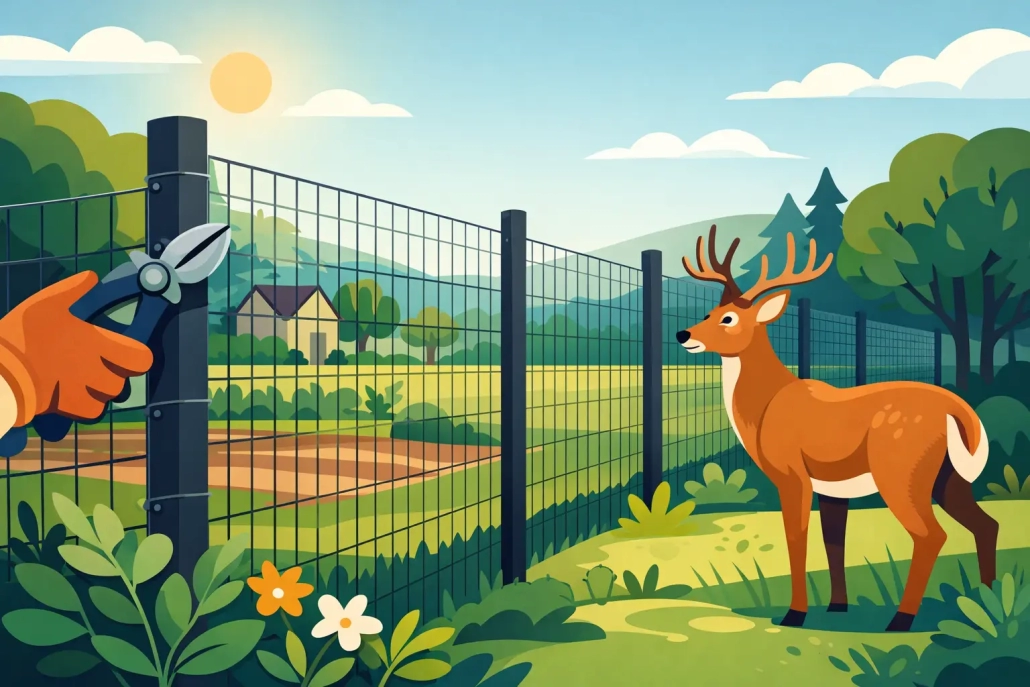
Deer Fence Installation That Protects Your Property
A deer can turn a carefully planted garden into a stripped bed overnight. On Vancouver Island, properties near wooded areas, acreage, farmland, and even established neighborhoods can see regular deer pressure. Proper deer fence installation is not simply a matter of putting up wire. The fence has to be high enough, tight enough, and built around the real conditions of your site.
For homeowners protecting landscaping, gardeners protecting food crops, and property managers maintaining grounds, the right fence is a practical investment. It creates a clear barrier without closing off views or making a rural property feel boxed in. The key is choosing a design that deer will not easily jump, push under, or walk around.
What Makes Deer Fence Installation Effective?
Height is the first requirement. Deer are capable jumpers, especially when frightened or motivated by fresh growth. A fence that looks tall from the ground may still be an easy obstacle for a deer. In most situations, an 8-foot deer fence provides the dependable protection property owners need. Some sites may require additional height or specialized configurations, particularly where there is heavy deer activity or the ground slopes toward the protected area.
The fence also needs to be properly tensioned. Loose mesh can sag over time, create openings at the bottom, and reduce the clean, professional appearance of the installation. Strong posts, properly spaced supports, and secure tensioning keep the fence upright through changing weather and normal seasonal movement.
The bottom edge matters just as much as the top. Deer generally look for the easiest path. If there is a gap under the fence, a damaged corner, or an open gate, they will find it. The fence should follow the grade closely, with the lower edge secured where needed to prevent animals from pushing underneath.
A deer fence does not need to look heavy or industrial. Black mesh and wire systems can be highly effective while remaining visually unobtrusive from a distance. That makes them a strong choice for gardens, estates, farms, nurseries, and properties where protecting the view is as important as protecting the plants.
Start With the Property, Not the Fence Material
Every successful deer fence installation starts with an honest look at the site. A level backyard with easy access is very different from a sloped acreage, a rocky lot, or a property bordered by dense forest. The fence design should respond to those conditions instead of forcing a standard layout onto difficult ground.
On Vancouver Island, terrain can change quickly across a single property. There may be exposed bedrock, steep grades, roots, drainage swales, retaining walls, or established landscaping to work around. These details affect post placement, fence height, gate locations, and the equipment needed to complete the job correctly.
Before installation, identify the area that truly needs protection. Fencing the entire property may make sense for a large garden, orchard, hobby farm, or commercial growing area. In other cases, enclosing a vegetable garden, planting beds, young trees, or a backyard living space is more practical and cost-effective.
Access should also be planned from the beginning. A fence only works when gates stay closed, but gates must be convenient enough to use every day. Gardeners may need a walk gate near the house and a wider gate for wheelbarrows, mowing equipment, or deliveries. Rural properties often benefit from larger access points for tractors and maintenance vehicles. A gate that is poorly located or difficult to latch becomes the weak point of the entire enclosure.
Choosing Posts, Mesh, and Gate Hardware
Deer fencing is a system. The mesh gets most of the attention, but it cannot perform well without a solid framework. Post selection depends on the fence height, the length of the run, soil conditions, wind exposure, and the type of mesh being installed.
Wood posts can suit properties where a traditional appearance matters, while steel posts offer strength and a slimmer profile. Corner posts, end posts, and gate posts carry more load than line posts and must be built accordingly. Those structural points need careful installation to keep the fence tensioned and straight over time.
Mesh selection depends on the level of protection and the look you want. Lighter deer mesh can blend into the landscape well, but it still requires proper tension and support. Heavier wire mesh may be the better choice where there is frequent wildlife contact, larger enclosed areas, or a need for added durability. If smaller animals are also a concern, the mesh opening and lower-edge design may need to change.
Gate hardware deserves the same attention as the fence itself. A sagging gate or unreliable latch creates frustration and leaves an easy entry point for deer. Quality hinges, sturdy frames, and secure latching hardware help the gate operate properly through regular use. For larger openings, the design may call for reinforced gates or a double-gate setup.
Why Professional Installation Pays Off
Deer fencing can appear simple until the work reaches a slope, rock shelf, tight access area, or long run that must remain straight and tensioned. This is where professional installation makes a clear difference. The work is not just about setting posts. It is about building a barrier that holds its shape, follows the grade, and continues to perform after wet weather, wind, and seasonal use.
Difficult ground often requires more than hand tools. Rocky sites may need jackhammering or concrete drilling to establish secure post locations. Existing hardscape, utility considerations, trees, and drainage must be handled carefully. Trying to shortcut these challenges can leave a fence with weak posts, uneven height, or sections that loosen over time.
A professional crew can also help avoid common layout mistakes. Gates can be positioned for how you actually move through the property. Corners can be reinforced before tension is applied. Fence lines can be adjusted around obstacles without leaving gaps that compromise the enclosure. These decisions are easier and less expensive when made before materials are installed.
Vancouver Island Fence Company brings the equipment and site experience needed for standard installations as well as demanding builds. From Nanaimo and Parksville to Campbell River, Courtenay, Comox, Qualicum Beach, and surrounding communities, the goal is straightforward: build a fence that fits the property and does the job it was built to do.
Common Deer Fence Problems to Avoid
The most frequent issue is installing a fence that is too short. A shorter fence may reduce casual browsing, but it may not stop determined deer. If the goal is reliable exclusion, fence height should be based on deer behavior rather than the minimum material cost.
Another problem is poor tensioning. A stretched or sagging fence can create a route over, under, or through the barrier. It also looks unfinished and can put added stress on posts and connections. Proper tensioning requires the right tools, sound structural supports, and attention to the full length of the run.
Leaving gaps at grade is another avoidable mistake. Uneven land often creates openings below the mesh. On a sloped or irregular site, the fence may need to be stepped, contoured, or secured at specific points to maintain protection along the bottom edge.
Finally, do not treat the gate as an afterthought. An open, loose, or damaged gate makes even the best fence ineffective. Choose a gate size and location that supports daily use, then make sure its latch is easy to operate and secure.
Plan for Long-Term Protection
A well-built deer fence needs relatively little maintenance, but it should still be checked periodically. Walk the fence line after major storms, heavy snow, falling branches, or landscaping work. Look for loose ties, damaged mesh, leaning posts, or ground movement near the bottom edge. Small repairs handled early can prevent a larger problem later.
Vegetation should also be managed along the fence line. Vines, shrubs, and fallen limbs can place unnecessary weight on mesh and make inspections harder. Keeping the line reasonably clear helps the fence remain effective and preserves its clean appearance.
If deer are damaging plants now, waiting another season usually means replacing more landscaping and losing more time in the garden. A properly planned fence gives you the freedom to plant what you want, protect what you have built, and enjoy your property without wondering what will be eaten next.

