
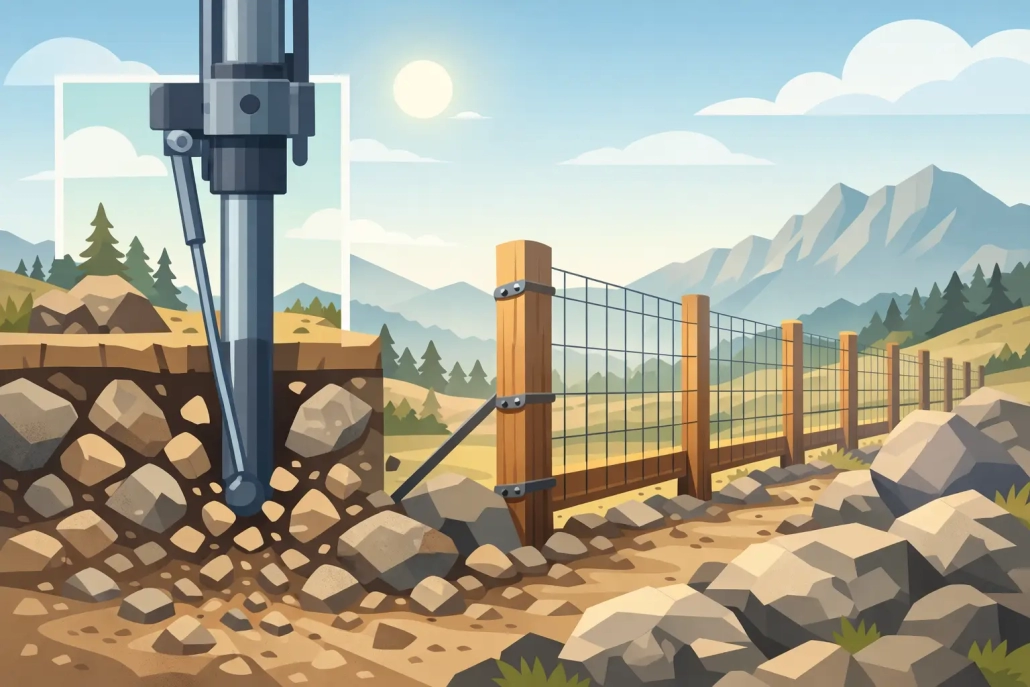
Fence Installation on Rocky Ground That Lasts
Rock is part of the landscape across Vancouver Island. From shallow bedrock near the coast to buried boulders, fractured stone, and hardpan inland, difficult ground can change a fence project quickly. Fence installation on rocky ground is not a matter of forcing standard post holes into a site that will not accept them. It requires the right layout, equipment, footing method, and installer judgment from the start.
A well-built fence on challenging terrain can be just as straight, secure, and attractive as one installed in easy soil. The difference is in how the site is assessed before the first post is set. Cedar privacy fencing, ornamental fencing, chain link, deer fencing, and wire fencing can all work on rocky properties when the support system matches the ground conditions.
Why Rocky Ground Changes Fence Installation
In normal soil, posts can often be augered to a consistent depth and set in concrete. On rocky ground, an auger may hit bedrock before it reaches the planned depth. It may encounter a single boulder that blocks one post location but not the next. Rock can also sit just below a thin layer of soil, making a fence line look straightforward until excavation begins.
The risk is not simply slower digging. Posts that are too shallow, poorly anchored, or set in improvised locations can move with frost, wind load, gate use, or seasonal drainage. A fence may look acceptable on installation day and begin to lean, rack, or sag over time.
Rocky sites also require closer attention to elevation. A sloping property with exposed stone may need stepped panels, racked fence sections, custom cuts, or adjusted post spacing to keep the finished line clean. This matters most with privacy fences, where uneven gaps under the fence or awkward changes in height are highly visible.
Start With a Site Assessment, Not a Post Hole
The best approach begins with walking the proposed fence line. An experienced installer looks for exposed rock, changes in grade, drainage paths, existing retaining walls, access limitations, trees, utilities, and the locations of gates. What is visible above ground is only part of the picture, but it provides useful clues about what may be below.
Property boundaries should be confirmed before layout begins. A difficult site is not the place to discover a boundary issue after posts have been drilled or anchored. If a survey pin is unclear or a boundary is in question, resolve it before construction.
The layout can often be adjusted slightly to avoid the worst obstruction without compromising the fence line. Moving a post a few inches may be possible in some designs. In others, especially chain link systems and ornamental fencing with fixed panel widths, post spacing needs to remain precise. This is where planning saves time and prevents patchwork solutions later.
Access is another practical factor. A backyard may have plenty of rock but limited room for machinery. In that case, portable drilling equipment, jackhammers, and hand-guided tools may be the right fit. Larger open sites may allow more efficient mechanical excavation. The method should suit the property, not the other way around.
Footing Options for Fence Installation on Rocky Ground
There is no single footing method for every rocky property. The right choice depends on the depth and type of rock, fence height, wind exposure, gate loads, drainage, and the material being installed.
Drilling Into Bedrock
When solid bedrock is close to the surface, drilling directly into the rock can provide a strong anchor point. A contractor uses concrete drilling equipment to create a controlled hole, then secures the post or a compatible post base with an appropriate anchoring system. This approach is often effective where digging deeper is not realistic.
Direct drilling needs to be done accurately. Hole placement, depth, alignment, and cleaning matter. A post that is slightly out of plumb is much harder to correct once it is fixed into rock, particularly on a long fence run where every panel needs to line up.
Breaking and Excavating Rock
If the rock is fractured, uneven, or blocking a standard post location, jackhammering may allow enough material to be removed for a conventional concrete footing. This is more labor-intensive than digging in soil, but it can be the best option for heavy cedar fencing, tall chain link fencing, or gate posts that need substantial support.
A proper excavation should create room for the footing rather than simply wedge a post between rocks. Tight voids around a post can trap water or leave weak points in the concrete. The goal is a stable, consistent base that supports the load the fence will carry.
Surface-Mounted Posts and Custom Bases
On some sites, surface-mounted post bases attached to sound concrete or bedrock are appropriate. They can be useful around existing slabs, retaining structures, patios, or exposed rock shelves. However, surface mounting is not a shortcut for every fence.
The base, anchors, and supporting material must be designed for the fence height and expected force. A light wire fence has different demands than a six-foot privacy fence or a commercial security enclosure. Gate posts deserve special attention because repeated opening and closing creates leverage that can loosen an undersized installation.
Match the Fence Type to the Site
The ground conditions affect the installation method, but the fence style affects it too. A practical design considers both.
Cedar fencing is a popular choice for privacy, curb appeal, and a natural look. On rocky terrain, each wood post must be carefully positioned and set plumb so the rails and boards create a clean line. Stepped construction can work well on slopes, while custom trimming may be needed where rock rises along the bottom of the fence.
Chain link fencing adapts well to uneven ground and is a reliable option for residential, commercial, and acreage properties. Its framework requires accurate post placement and tension, but the fabric can follow changes in grade more easily than rigid fence panels. It is often a sensible choice for pet containment, property separation, and security where function is the priority.
Ornamental fencing provides a durable, polished finish, but it requires precise layout. Panel sizes, post centers, and grade transitions need to be planned before drilling begins. For properties with dramatic elevation changes, custom transitions or stepped sections may be necessary to maintain a professional appearance.
Deer fencing and wire fencing are often used on larger rural or semi-rural properties. They can cover long distances efficiently, but terminal posts, corner posts, and braced sections still need dependable anchoring. Rocky ground is especially demanding at corners because wire tension concentrates force at these locations.
Gates Need Stronger Support
A fence may sit securely for years while a poorly installed gate begins to sag within a season. On rocky ground, gate posts should never be treated like ordinary line posts. They carry the weight of the gate, the force of daily use, and often the added pressure of wind.
For driveway gates, walk gates, and commercial access points, the post footing and hardware should be selected as part of the overall design. Sometimes this means deeper excavation through broken rock. Other times, it means drilling into competent bedrock or using engineered bracing. The correct solution depends on gate width, weight, and use.
It is also worth planning gate clearance around uneven ground. A gate that barely clears rock in summer may bind after frost movement or debris buildup. Proper measurements at the beginning prevent frustrating adjustments later.
Drainage and Frost Movement Still Matter
Rock does not eliminate water problems. In fact, shallow rock can direct water toward fence posts, along a fence line, or into low areas where soil remains saturated. Water that freezes and expands can shift surrounding material, while standing moisture can shorten the life of wood components.
A professional installation considers how water moves across the site. Posts should not be set in poorly prepared holes that collect water. Where needed, drainage conditions, grade adjustments, and footing details can be addressed before the fence is completed.
Vancouver Island weather adds another reason to build carefully. Wet winters, coastal exposure, and strong winds can test every post and connection. A fence that is properly aligned and securely anchored from day one is far less likely to need early repairs.
What to Expect From a Professional Installation
Rocky terrain generally takes more time than open soil. Drilling, breaking rock, hauling materials through limited access, and customizing the layout are skilled tasks. The cost can vary depending on how much rock is encountered, how accessible the work area is, and whether the project includes gates, retaining features, or long fence runs.
That said, difficult ground does not mean your project has to become unpredictable. A clear site review and detailed estimate establish the likely methods, materials, and potential variables before work begins. Vancouver Island Fence Company has handled challenging site construction since 1999, including jackhammering and concrete drilling where standard installation methods are not enough.
If your property has exposed bedrock, buried boulders, or a slope that makes a basic fence installation questionable, bring those details up during the estimate. A good fence starts with an honest look at the ground beneath it, then a plan built to stand on it for years.

