
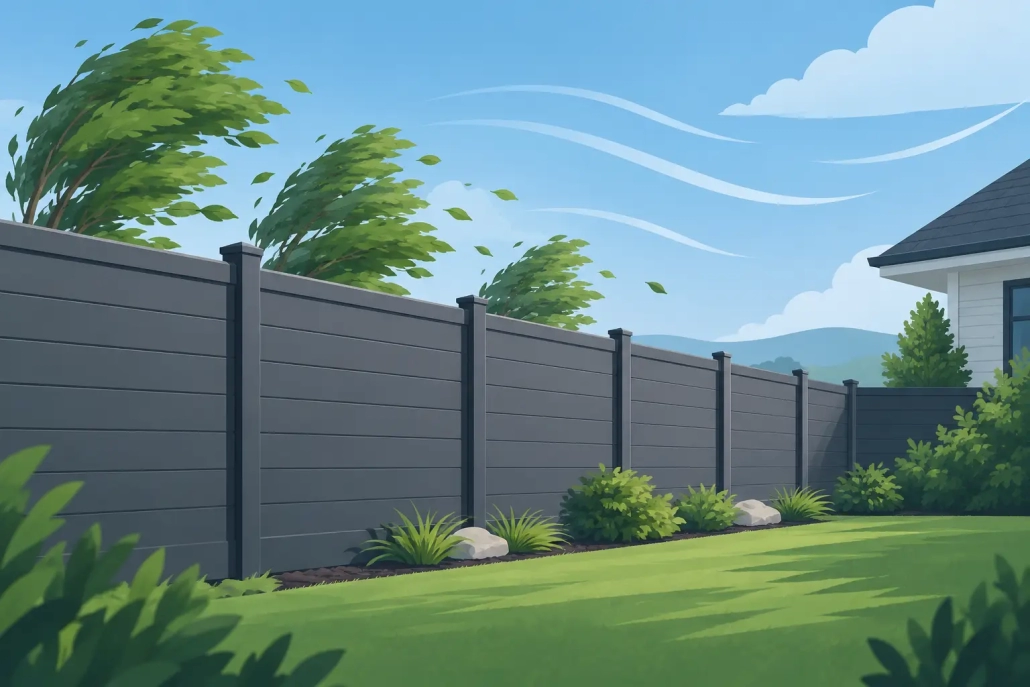
Best Fences for Windy Yards That Hold Up
A fence can look solid on installation day and still fail in the first serious windstorm if it was built like a sail. Choosing the best fences for windy yards comes down to more than material. Wind exposure, soil conditions, post depth, gate placement, and how much air can pass through the fence all affect whether it stays straight over time.
Across Vancouver Island, coastal weather, open rural properties, sloped lots, and storm-season gusts put extra pressure on fencing. A good-looking fence is not enough. It needs a structure designed for the conditions on your property.
Why Wind Damages Fences
Wind does not push evenly. It catches solid panels, presses against rails, works loose connections, and transfers force into every post. The taller and more enclosed the fence, the more wind load it must manage.
A six-foot privacy fence in a sheltered backyard may perform well with a standard build. Put that same fence on an exposed lot near the water, at the edge of a field, or on a ridge, and the design needs more attention. Posts can lean, rails can split, panels can rack, and gates can sag when the framework is not built for the load.
Drainage matters too. Saturated soil provides less support around posts. On Vancouver Island, wind and winter rain often arrive together, which is why post installation is the foundation of a long-lasting fence.
Best Fences for Windy Yards: Material and Design Options
There is no single best fence for every exposed property. The right choice depends on whether you need privacy, security, animal containment, boundary definition, or a combination of all four.
Chain Link Fencing for High-Wind Areas
Chain link is one of the most practical choices for windy yards because it allows air to pass through. Instead of catching the full force of a gust, the open mesh reduces pressure on posts and framework.
For acreage, commercial sites, dog runs, sports areas, and property boundaries, chain link offers reliable strength without creating a wind barrier. Heavier-gauge mesh, properly tensioned wire, solid terminal posts, and correctly sized line posts make a major difference. Privacy slats can be added in some cases, but they also increase wind load and should be considered carefully on exposed sites.
Chain link may not provide the finished appearance of cedar, but it is hard to beat for functional durability in open conditions.
Wire and Deer Fencing for Rural Properties
Wire fencing and deer fencing are also strong choices where wind is a concern. Their open construction reduces resistance while protecting gardens, livestock areas, orchards, and larger rural properties.
The key is choosing the right post spacing, brace assemblies, and tensioning method. Long runs of wire fence need properly built corners and end braces. Without them, wind, ground movement, and tension can gradually pull the fence out of alignment.
Deer fencing is particularly useful when keeping wildlife out matters more than privacy. It can cover large areas efficiently while keeping the visual impact low. For a rural or semi-rural property, it is often a better answer than building a tall solid fence that takes the full force of the wind.
Cedar Fencing With Wind Relief
Cedar remains a popular option for homeowners who want privacy, warmth, and a natural finished look. It can work well in a windy yard, but a fully solid cedar fence requires the right construction details.
A board-on-board design, for example, can offer privacy while leaving small gaps that relieve pressure. Spaced-board designs provide even more airflow and can look clean and intentional. A lower solid section with an open-top detail is another practical approach. It gives you screening where you need it while reducing the total sail effect of the fence.
If complete privacy is essential, stronger posts, deeper concrete footings, quality rails, and secure fastening become even more important. On highly exposed properties, it may make sense to reduce fence height, add stepped sections, or combine a privacy screen with more open fencing elsewhere.
Ornamental Fencing for Strength and Visibility
Ornamental metal fencing is a strong option for front yards, pool areas, commercial properties, and locations where security and curb appeal matter. Like chain link, it allows wind to move through rather than pushing against a solid surface.
This style works especially well where you want a defined boundary without closing off the property. It is durable, low maintenance, and suitable for sloped ground when properly planned. It does not deliver privacy on its own, but it can be paired with landscaping where screening is needed.
What Makes a Fence Wind-Ready
The fence material matters, but installation quality determines whether it performs. A strong fence is a complete system, not just a row of panels.
Posts are the first priority. They need to be sized for the fence height and expected wind load, set deep enough for the soil conditions, and secured with proper concrete work when required. On challenging sites, installers may need to work around rock, shallow soil, existing concrete, retaining walls, or uneven grades. These are not details to work around later. They should be addressed before the first post goes in.
Post spacing also affects strength. Wider spacing can reduce material costs, but it puts more strain on rails and panels. In exposed areas, closer spacing may be the better long-term decision.
Rails, brackets, screws, and fasteners deserve the same attention. A quality post will not help much if rails are undersized or connections are weak. Gates require extra reinforcement because they create a concentrated load on hinge posts. On a windy lot, a gate should be planned as part of the fence structure, not added as an afterthought.
Solid Privacy Fence or Open Fence?
This is usually the most important decision for homeowners. A solid fence delivers privacy and can reduce sightlines, but it catches wind. An open fence handles wind better, but it offers less screening.
If your yard receives occasional gusts and is protected by surrounding homes, trees, or terrain, a well-built cedar privacy fence may be a good fit. If your property is exposed to regular coastal winds or sits beside open land, an open design is often the safer and more durable choice.
There is also a middle ground. Semi-private cedar styles, louvered sections, decorative spacing, and strategic use of solid panels can provide privacy where it matters most – around patios, hot tubs, or neighboring sightlines – without enclosing the entire property behind a solid wall.
Site Conditions Change the Recommendation
Wind exposure is not the only variable. Soil, elevation, drainage, and access all shape the right fence design.
A level suburban lot with deep soil presents a different installation challenge than a rocky waterfront property or a steep acreage. If post holes require jackhammering, concrete drilling, or specialized site work, the installation plan needs to account for that from the start. Forcing a standard fence layout onto a difficult site often creates weak points that show up later.
Existing trees and hedges can help break wind, but they should not be treated as permanent structural protection. Trees lose limbs, hedges change over time, and wind can funnel through gaps between buildings. A fence should be built to stand on its own.
Common Mistakes to Avoid
The most common mistake is choosing a tall, solid fence strictly for privacy without considering wind exposure. Another is using light-duty posts or shallow footings to save money upfront. Both choices can lead to leaning sections, repeated repairs, or early replacement.
Avoid attaching a new fence to aging posts, undersized structures, or unstable retaining walls unless the supporting structure has been assessed. Be cautious with privacy screens, tarps, and dense slats on chain link as well. These additions can dramatically increase wind pressure on a fence that was designed to stay open.
It also helps to think beyond the fence line. A well-placed gate, a break in a long solid run, or a change in fencing style can reduce stress and improve how the property functions.
Build for the Weather Your Property Actually Gets
The best fence is not always the tallest, most private, or most decorative option. It is the one that meets your needs and is built for the weather, soil, and exposure of your site.
For open and high-wind areas, chain link, wire fencing, deer fencing, and ornamental fencing are often the most forgiving choices. For privacy-focused yards, cedar can perform well when the design includes wind relief and the posts, rails, and footings are built to handle the load.
Vancouver Island Fence Company approaches windy-yard fencing as a site-specific project. A proper assessment of exposure, grade, soil, and intended use makes it possible to build a fence that looks right on day one and remains dependable through the seasons. If your property sees regular wind, start with a design that gives the air somewhere to go and a structure strong enough to stay put.

