
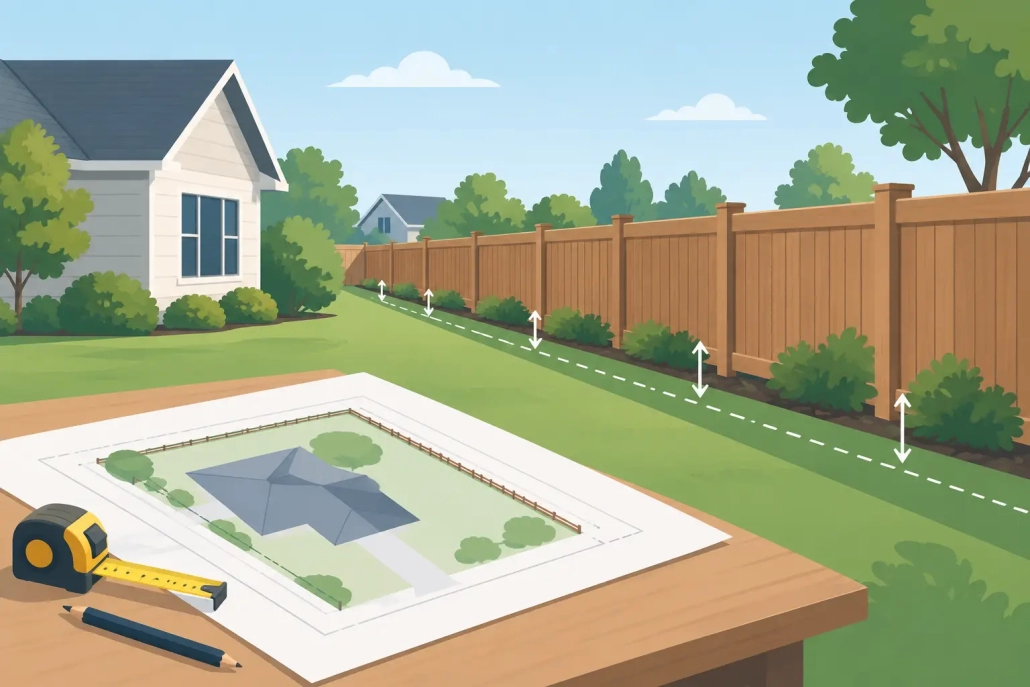
Fence Setback Rules: Plan Before You Build
A fence can look simple on a site plan, then become complicated the moment a post lands too close to a property line, road, utility route, or shared access. Fence setback rules determine where a fence can sit, and overlooking them can lead to expensive changes after the work has started.
For Vancouver Island homeowners, acreage owners, property managers, and commercial sites, the right first step is not choosing cedar, chain link, or ornamental panels. It is confirming where the fence belongs. A well-built fence should protect the property, fit the site, and avoid creating a dispute with a neighbor or local authority.
What Fence Setback Rules Actually Cover
A setback is the required distance between a structure and a defined boundary or feature. Depending on the property and local requirements, fence setback rules may apply to property lines, public roads, lanes, sidewalks, waterways, utility corridors, easements, and intersections.
Not every fence needs to be set back a large distance from every boundary. In many residential situations, a fence can be installed close to a property line. But that does not mean the line is always obvious, or that every part of the property is treated the same way. Front yards, corner lots, rural parcels, commercial sites, and waterfront or environmentally sensitive areas can have different restrictions.
Fence height is often tied to setback requirements as well. A backyard privacy fence may be acceptable where a tall front-yard fence is not. Gates, retaining elements, decorative columns, and security features can also be treated differently than a standard fence panel.
The practical point is simple: do not assume a fence that works on one street will be allowed on the next one.
Start With the Real Property Line
A fence should never be used to guess where a property boundary is. Existing fences, hedges, driveway edges, and old survey stakes can be misleading. A neighboring fence may have been installed inside the lot line, placed incorrectly years ago, or built to avoid a rock outcrop or tree.
If there is any uncertainty, review the property survey or speak with a qualified land surveyor before installation. This is especially worthwhile when building a permanent fence, dividing a large acreage, enclosing a commercial yard, or installing posts near an existing neighboring fence.
Installing just inside your own boundary can reduce the risk of placing a fence on a neighbor’s land. The trade-off is that you may be responsible for maintaining the narrow strip of ground on the other side of the fence. On steep, wooded, or wet sites, that space can be difficult to access later. The best placement depends on the boundary, maintenance needs, grade changes, and how the fence will be used.
For a shared boundary fence, speak with the neighbor before materials arrive. You do not need to agree on every design choice, but early communication can prevent disagreements about location, height, finished sides, gates, and who will maintain the fence over time.
Check Local Rules Before Ordering Materials
Municipal zoning bylaws and permit requirements vary across Vancouver Island communities. Nanaimo, Campbell River, Parksville, Qualicum Beach, Courtenay, Comox, and surrounding areas may each have their own rules for fence height, sightlines, setbacks, and permits.
A standard backyard fence may not require a permit in some locations, while a fence around a pool, a tall security fence, a fence on a commercial property, or a structure with substantial retaining work may have additional requirements. Rural and semi-rural properties can also be subject to agricultural, environmental, or access considerations.
Before finalizing a design, confirm these details with the local authority responsible for your property:
- Maximum fence height in the front, side, and rear yard
- Required clear sight areas near driveways, streets, and intersections
- Setbacks from roads, sidewalks, lanes, ditches, creeks, and shorelines
- Restrictions within utility rights-of-way or registered easements
- Permit requirements for pools, commercial security fencing, retaining structures, or unusual site conditions
This check protects more than the installation schedule. It helps avoid a situation where a completed fence must be cut down, moved, or removed because it blocks a sightline or sits within a restricted area.
Corner Lots Need Extra Attention
Corner properties often have two sides that function as frontages. That can affect both permitted fence height and placement. A tall solid fence near the corner may block a driver’s view of pedestrians, cyclists, or oncoming vehicles, even when the fence is entirely on private land.
Many local rules create a sight triangle or clear-vision area near intersections and driveways. Within that space, fencing may need to be lower, more open, or set farther back. Decorative metal fencing, open chain link, or a stepped-down design may work better than a full-height privacy fence in these areas.
Do not wait until post holes are being marked to address sightlines. A professional site visit can identify the issue early and help shape a layout that still provides security and curb appeal.
Easements and Utilities Can Limit Fence Placement
An easement gives another party rights to use a portion of private property for a specific purpose. Common examples include access routes, drainage corridors, utility lines, and shared driveways. You may still own the land, but that does not always mean you can block access with a fence or install posts wherever you want.
Utilities are another concern. Underground services may not follow the straight, obvious route between a house and the street. Before digging, have utility locations identified and review the planned post locations. This matters for every fence type, from a simple cedar boundary fence to deep-set commercial chain link posts.
A fence built across an access easement may need a gate, removable section, or a different alignment. In some cases, the best solution is to keep the fence outside the easement altogether. It depends on the registered rights, site layout, and access required for maintenance or emergency work.
Consider Grade, Drainage, and Retaining Work
Setbacks are only one part of proper fence planning. Vancouver Island properties often have slopes, rock, drainage swales, mature trees, and uneven ground that affect where posts can safely go.
A fence at the top or bottom of a slope may require stepped panels, racked panels, deeper posts, or a custom approach. If the fence also holds back soil, it may no longer be treated as a simple fence. Retaining work has different structural demands and may trigger additional design or permitting requirements.
Drainage deserves the same attention. A solid fence should not redirect runoff onto a neighboring property or trap water against a structure. On wet sites, the post layout, ground clearance, and material choice all matter. Good workmanship starts with understanding the whole site, not just stretching a string line between two corners.
Strata, Commercial, and Rural Properties Have Added Layers
A strata property may have rules that are stricter than municipal requirements. Approval may be needed for fence style, color, height, materials, or location, even where the local bylaw would otherwise allow the work. Review strata documents before committing to a design.
Commercial properties often need fencing that balances security, access, visibility, and vehicle circulation. A chain link security fence, ornamental perimeter fence, or gate system must not interfere with fire routes, loading areas, parking access, or required clearances.
On rural properties, deer fencing, wire fencing, and livestock enclosures can cover long distances and cross challenging terrain. Property lines may run through forest, uneven ground, or areas without clear markers. A careful layout and boundary confirmation are essential before setting hundreds of posts.
A Better Way to Plan Your Fence
The smoothest projects begin with accurate information. Confirm the property boundary, check municipal requirements, identify easements and utilities, then choose a fence design that fits the site. This order prevents the common mistake of falling in love with a layout that cannot be built as planned.
At Vancouver Island Fence Company, we look at more than the fence itself. We consider access, slope, drilling conditions, material performance, and the practical details that affect a finished installation. Whether the job calls for a cedar privacy fence, deer fencing on acreage, chain link security fencing, or a custom build on difficult ground, the goal is the same: build it right the first time.
Before a single hole is dug, take the time to confirm the rules that apply to your lot. A clear boundary and a smart layout give your new fence the solid start it deserves.

