
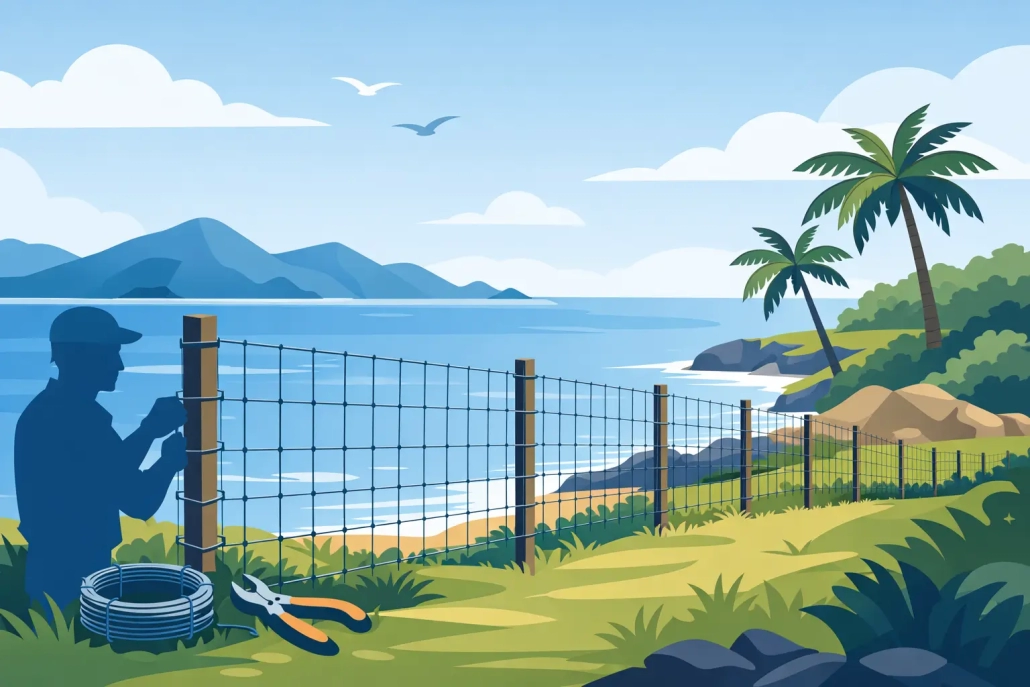
Wire Fence Installation Built for Island Land
A wire fence may look straightforward from the road, but the work that holds it together happens below grade and at every corner. Proper wire fence installation starts with a clear purpose: keeping dogs contained, protecting gardens, defining a boundary, securing a commercial yard, or managing livestock and wildlife on a larger property. The right material and post system depend on that purpose, as well as the ground beneath it.
Across Vancouver Island, a fence line can run through soft coastal soil, rocky ground, sloped acreage, mature roots, or a mix of all four. A light-duty wire fence built with the wrong posts may lean after one wet season. A well-planned fence with solid bracing, correctly tensioned wire, and gates that match the site can provide dependable service for years.
Start Wire Fence Installation With the Job It Must Do
Wire fencing is not one product. It includes welded wire, woven wire, field fence, deer fence, chain link, and various mesh sizes and wire gauges. Each has strengths, and choosing by price alone usually creates problems later.
For a backyard dog run, welded wire or chain link may be the right answer because it provides a visible, durable barrier that stands up to daily use. For a vegetable garden or orchard, a taller mesh fence can keep out deer while allowing wind and light to pass through. Rural properties may need woven wire or field fence designed to contain livestock or keep animals out of a designated area. Commercial sites often require heavier posts, secure access gates, and a fence layout that works around parking, equipment, and service areas.
Height matters as much as mesh. A fence that is high enough for a small dog may do very little against deer. Openings matter, too. Larger openings can be suitable for perimeter fencing, while smaller openings are safer where pets, poultry, or smaller animals are involved. If wildlife exclusion is the goal, the fence needs to account for what is trying to get in, not just what you are trying to keep inside.
The Posts Carry the Whole System
Wire is only as reliable as the structure supporting it. End posts, corner posts, gate posts, and changes in direction take the greatest load. These points need deeper setting and proper bracing because they resist the tension pulling through the entire fence line.
Line posts support the wire between those structural points. Their spacing depends on the terrain, wire type, fence height, and expected pressure on the fence. On level ground, posts can often be set farther apart than they can on a rolling or uneven property. Long runs without enough support tend to sag, especially when wire is exposed to wind, snow loads, animals, or people leaning against it.
Wood posts offer a traditional look and work well for many residential and rural applications. Metal posts can be efficient and durable, particularly for certain wire systems. In some installations, a combination works best: strong wood or steel terminal posts with lighter line posts between them. The right choice comes down to the fence design and site conditions, not a one-size-fits-all material preference.
On Vancouver Island, post holes can be the hardest part of the job. Rocky ground, buried debris, hardpan, and sloped access can turn a simple layout into a more involved construction project. That is where proper equipment and experience matter. Jackhammering, concrete drilling, or specialized site preparation may be necessary to create a fence that stays straight and secure rather than one that simply looks finished on day one.
Bracing prevents sagging and shifting
A tensioned wire fence needs braced end assemblies. These typically include an end post, a horizontal brace, and a diagonal tension wire or brace component. The assembly transfers pulling force into the ground instead of allowing the end post to twist inward.
Corners deserve the same attention. Every direction change creates tension from more than one side, so corners need to be built for the load. Skipping proper bracing is one of the most common reasons wire fences lose their shape over time.
Layout Should Solve Problems Before Digging Starts
The cleanest fence builds start with a careful walk of the property. This identifies grade changes, drainage paths, trees, rock outcrops, utilities, driveway access, and gate locations before posts are ordered or holes are drilled. It also gives property owners a chance to confirm where the fence belongs in relation to boundaries and neighboring properties.
A fence does not have to follow every dip and rise exactly. On some sites, stepping the fence down in sections gives a cleaner result. On others, following the contour is the better approach for keeping gaps low to the ground. The best method depends on whether the priority is appearance, animal control, security, or a balance of all three.
Gates should be planned early, not squeezed into the last available opening. A pedestrian gate needs clear access and reliable latching. A driveway gate needs enough width for vehicles, trailers, landscaping equipment, or maintenance access. Gate posts must be stronger than standard line posts because they carry repeated movement and concentrated weight.
Drainage also deserves attention. Water that runs along a fence line can undermine posts and carry soil away from the base of the fence. In wet areas, a slight adjustment to the alignment or post-setting method can prevent a recurring maintenance issue.
Tensioning Is Where Quality Shows
Once posts and braces are in place, the wire must be installed with even, controlled tension. Too little tension leaves a loose fence that sags quickly. Too much can overstress posts, distort mesh, and make the fence more vulnerable when a tree branch, animal, or equipment contacts it.
The wire should be attached using hardware suited to the material and post type. Fasteners need to hold firmly without pinching, cutting, or weakening the wire. At wood posts, staples should allow the wire to move slightly as temperatures change rather than locking it so tightly that it breaks under pressure.
Uneven terrain may require additional line posts, closer spacing, or separate tensioned sections. A fence can look straight from one angle while still having weak sections that pull loose over time. Professional installation focuses on the full run: the corners, braces, grade changes, attachments, and final tension.
Don’t overlook the bottom edge
For pet containment and wildlife control, the bottom of the fence is often the most important section. Small gaps can invite digging or allow animals to pass underneath. Depending on the application, the lower edge may need to follow the ground closely, be secured with additional wire, or extend below grade in areas where digging is expected.
For deer fencing, the concern is usually height rather than the bottom edge. For dogs, poultry, and smaller animals, both can be critical. Matching the installation detail to the animal saves costly adjustments after the fence is complete.
When Professional Installation Makes Sense
A simple, short wire fence on clear, level ground can be a manageable project for an experienced property owner. The equation changes when the fence includes long runs, steep slopes, heavy gates, difficult digging, commercial security needs, or animal-control requirements that cannot afford failure.
Professional crews bring the equipment to handle hard ground, the experience to set a straight layout across uneven terrain, and the practical judgment to adjust a design before a small issue becomes an expensive one. They can also coordinate the entire job, from material selection and site preparation through post setting, tensioning, and gate installation.
Vancouver Island Fence Company has worked with residential, commercial, and rural properties across the region since 1999. Whether the project calls for a practical backyard enclosure, deer protection around a garden, or a custom wire fence across challenging acreage, the goal is the same: build a fence that fits the property and performs as intended.
Before committing to a design, walk the proposed fence line with the end use in mind. Think about the animals, people, vehicles, weather, and maintenance the fence will face over the next several years. A well-built wire fence is not just a line around a property – it is a working structure that should make the property easier to use every day.

