
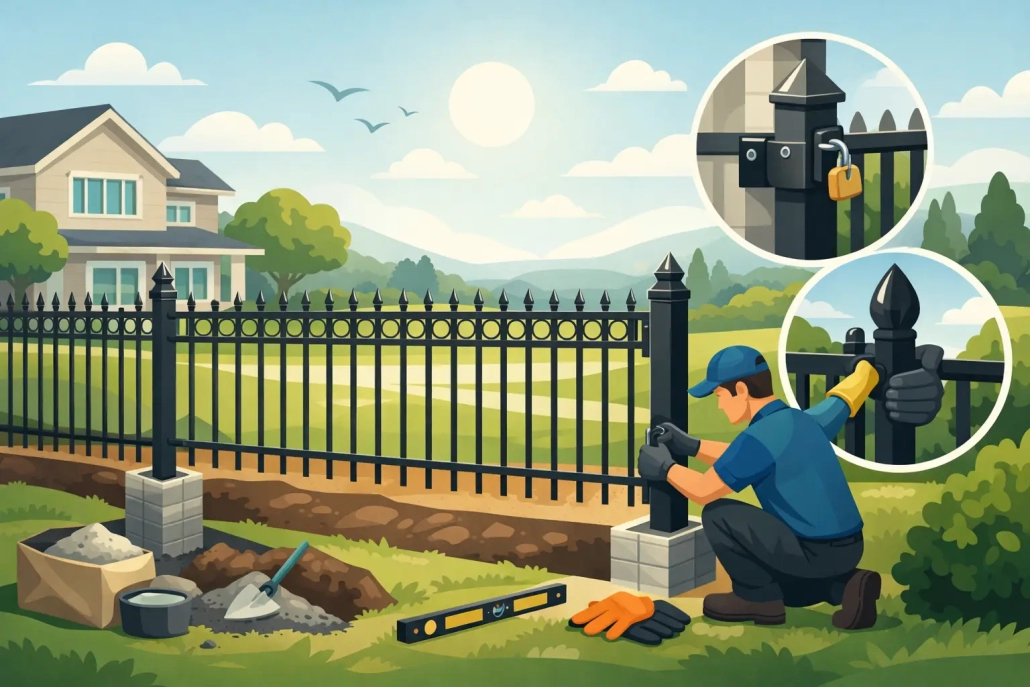
Ornamental Fence Installation That Lasts
A well-built ornamental fence does more than mark a property line. It frames a front yard, protects a pool or business entrance, controls access, and adds a finished look without closing off the view. Professional ornamental fence installation makes the difference between a fence that stays straight through wet winters and one that starts shifting, sagging, or rusting before it should.
For homeowners and property managers across Vancouver Island, ornamental fencing is often the right fit when curb appeal and security need to work together. It offers a clean, open appearance that suits modern homes, traditional properties, multifamily sites, commercial buildings, and landscaped entrances.
What Makes Ornamental Fencing Different?
Ornamental fencing is typically made from steel or aluminum panels with vertical pickets, horizontal rails, and matching posts. Many people call it wrought iron fencing because of its classic appearance, but modern ornamental systems are usually manufactured steel or aluminum. They provide the same formal look with more consistent components and lower maintenance requirements.
Steel is the stronger choice for areas where security, impact resistance, and long spans matter. It is commonly used around commercial properties, strata buildings, pool enclosures, and drive gates. Aluminum is lighter, corrosion-resistant, and a practical option for decorative residential applications. The right material depends on the property, the required fence height, exposure to weather, and how much security the fence needs to provide.
The finish matters as much as the material. Quality ornamental panels are usually protected with a durable powder-coated finish. This helps defend against rain, salt air, moisture, and everyday wear. On coastal and exposed Vancouver Island sites, choosing a system designed for local conditions is worth the attention.
Start With the Purpose of the Fence
Before selecting a style, decide what the fence needs to do. A decorative front-yard boundary has different requirements than a secure commercial perimeter. A pool enclosure must meet applicable safety rules, while a fence around a dog run needs picket spacing that prevents an animal from slipping through.
Most ornamental fence projects fall into one or more of these needs:
- Defining a property line without blocking sightlines
- Improving security around a home, business, or shared property
- Creating a safe pool, garden, pet, or equipment enclosure
- Adding a formal entrance with gates and matching hardware
- Protecting landscaped areas from unwanted access
Fence height, picket spacing, gate location, and post size should all follow the purpose. A low ornamental fence can add a sharp boundary at the front of a home. A taller steel system with lockable gates may be better for a commercial yard or utility area. One style does not fit every site.
Site Conditions Set the Installation Standard
The best-looking panel will not perform properly if the posts are not installed to suit the ground below. Vancouver Island properties can present everything from soft soil and sloped yards to buried rock, concrete, and difficult access. These conditions affect the equipment, footing depth, layout, and time required to complete the work correctly.
A proper site review identifies grade changes, underground services, retaining walls, drainage paths, existing concrete, and access for materials and equipment. It also confirms where the actual property line sits. Installing a fence on the wrong side of a boundary can create an expensive problem, even when the fence itself is built well.
Sloped ground deserves special attention. Ornamental panels can be stepped down in level sections or racked to follow the grade, depending on the panel system and the look required. Stepping creates a clean, structured appearance but can leave gaps below panels on sharper slopes. Racking follows the land more closely, though it has limits. The best method depends on the slope, the fence style, and whether pets or security concerns make ground clearance an issue.
Rock and concrete are not reasons to compromise on the job. They simply require the right approach. When posts must be set through existing concrete or into difficult ground, concrete drilling, jackhammering, and specialized site work may be necessary to establish solid post locations.
The Post Work Is Where Quality Shows
Ornamental fencing relies on straight, solid posts. Panels are manufactured to fixed dimensions, so small layout errors can become obvious quickly. A post that is out of plumb or set at the wrong spacing can affect every section that follows.
The installation starts with a measured layout. Corners, ends, gates, grade transitions, and panel runs are marked before holes are dug. Posts are then set at the correct depth for the fence height, soil conditions, and expected load. Gate posts often need more support because they carry repeated movement and the weight of the gate itself.
Concrete footings must be sized for the job, not treated as an afterthought. In stable soil, a standard footing may be suitable. In soft ground, exposed locations, or high-use gate areas, larger or deeper footings may be the better call. The goal is not simply to get the posts in the ground. It is to keep the fence aligned after seasons of rain, wind, freeze-thaw movement, and use.
Once the concrete has set appropriately, panels are installed with the correct brackets, fasteners, and rail connections. A professional crew checks alignment as the work progresses rather than trying to correct a long run at the end.
Gates Need a Practical Plan
A gate is often the most-used part of an ornamental fence, and it should be planned early. Consider who will use it, what needs to pass through it, how it will swing, and where water or snow may collect at the opening. A narrow walk gate works well for daily access. Equipment, garbage bins, landscaping crews, or vehicles may require a wider single gate or double gate.
Gate hardware should match the level of use. Self-closing and self-latching hardware may be needed around pools or child-access areas. Commercial gates may need heavy-duty hinges, panic hardware, keypad access, or provisions for future automation. A good gate closes cleanly, latches reliably, and maintains clearance as the surrounding ground changes.
Do not overlook swing direction. A gate that opens into a driveway, blocks a walkway, or catches on a slope creates frustration every day. These details are simple to address during planning and much harder to fix once posts are set.
Appearance Comes Down to the Details
Ornamental fencing can look minimal and modern or more traditional, depending on the panel design. Flat-top panels create a clean contemporary line. Spear-top pickets provide a more formal, security-focused look. Decorative rings, finials, arched gates, and custom post caps can add character without making the design feel overdone.
The fence should complement the property rather than compete with it. Black remains a popular choice because it works with most exterior colors, landscaping, stone, and wood. It also keeps the view open better than many lighter finishes. For homes with cedar gates, masonry columns, or custom entry features, ornamental panels can be integrated into a broader fence design.
This is where experienced planning helps. A front entrance may call for a lower decorative section and a more substantial gate. A backyard may combine ornamental fencing along a view-facing boundary with privacy fencing where neighbors are close. If you can imagine it, the right materials and site plan can often make it work.
Maintenance Is Simple, Not Zero
One advantage of ornamental fencing is that it does not need regular staining or painting like wood. Still, occasional care protects the investment. Rinse off dirt and salt residue, especially on properties near the water or along busy roads. Check gate hinges, latches, and fasteners once or twice a year. Trim vegetation that stays pressed against the fence, since constant moisture and debris can affect the finish over time.
Inspect the coating for chips or scratches after landscaping work, impacts, or winter storms. Small damaged areas should be addressed promptly with a compatible touch-up product. This is particularly important with steel fencing, where exposed metal can eventually corrode.
Choose an Installer Ready for the Whole Site
A basic ornamental fence project may look straightforward from the street. The work becomes more involved when there are slopes, rock, old concrete, tight access, custom gates, or several fence types meeting at one property. The installer should be able to handle the layout, materials, excavation, footings, gate work, and difficult site conditions without passing key parts of the project to someone else.
Vancouver Island Fence Company has installed fencing across Nanaimo, Campbell River, Parksville, Qualicum Beach, Courtenay, Comox, and surrounding communities since 1999. That local experience matters when the ground is uneven, the access is tight, or the design needs to do more than follow a straight line.
A well-planned ornamental fence gives a property a clear edge without making it feel closed in. Get the layout, post work, and gates right at the start, and the finished fence will look as dependable as it performs.

