
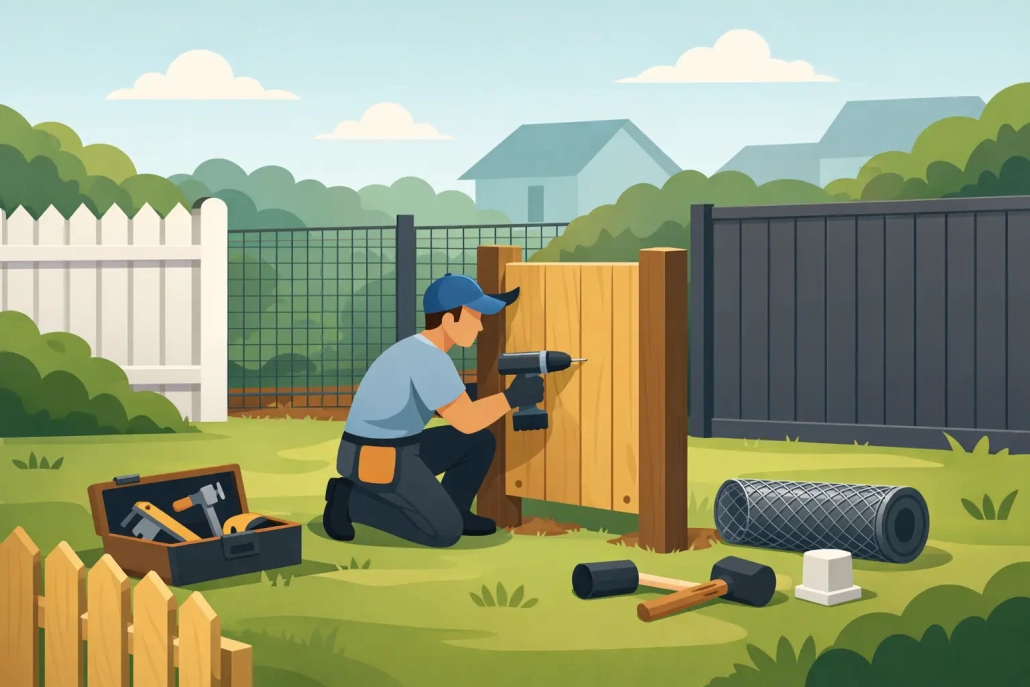
What Type of Fence Is Easiest to Install?
A fence can look simple from the street, but the work changes quickly once you hit a rock shelf, a slope, buried concrete, or an uneven property line. If you are asking what type of fence is easiest to install, chain link and basic wire fencing are usually the practical answer. They use fewer finished components, adapt well to uneven ground, and can cover large areas efficiently.
That does not automatically make them the best choice for every property. The easiest fence to install may not provide the privacy, appearance, security, or animal control you need. On Vancouver Island, site conditions matter just as much as the fence material. A straightforward fence layout on level soil is one thing. A cedar privacy fence through roots, rock, and grade changes is another.
What type of fence is easiest to install?
For most residential, commercial, and rural properties, a standard chain link fence is the easiest permanent fence to install properly. Posts are set at regular intervals, fabric is stretched between terminal posts, and the open design handles wind better than a solid panel fence. It is also forgiving on mild slopes because the mesh can follow the grade.
Wire fencing can be even faster for acreage boundaries, gardens, livestock areas, and lower-visibility applications. However, wire fencing still needs solid posts, correct tension, and appropriate bracing. A loose wire fence may go up quickly, but it will not stay straight or perform well over time.
The answer depends on what “easy” means for your project. If you mean the fewest installation steps, wire fencing is often the simplest. If you mean a durable, clean-looking fence suitable for a typical yard or business property, chain link is usually the better choice.
Why chain link is usually the simplest choice
Chain link has remained a common fencing option for a reason. It is durable, cost-effective, and suitable for many property types. Whether you need to enclose a backyard, secure equipment, create a dog run, or define a commercial boundary, it provides dependable performance without the labor involved in building a solid wood fence.
Installation is relatively efficient because the material is flexible. A crew sets the terminal, corner, and line posts, installs rails where needed, then stretches the chain link fabric tightly across the run. Gates, privacy slats, and heavier security features can be added when the application calls for them.
Chain link also works well where drainage and wind are concerns. Unlike a solid cedar fence, it does not act like a sail during strong gusts. That can reduce strain on posts, especially in exposed areas. Galvanized and vinyl-coated options provide additional corrosion resistance and a more finished appearance.
It is not the right fit when privacy or a traditional wood-fence look is the priority. But for practical security, pet containment, sports areas, and commercial sites, it is hard to beat for installation efficiency and long-term value.
Wire fencing is easiest for large, functional areas
Wire fencing is often the simplest option when appearance is secondary to function. It is commonly used around rural properties, gardens, animal enclosures, and large boundaries where a cedar or ornamental fence would be unnecessary and expensive.
The material itself is quick to handle, but the framework still matters. Strong corner assemblies and properly driven or set posts keep the fence tensioned and prevent sagging. The right wire type also matters. Welded wire, woven wire, field fence, and welded utility panels all serve different purposes.
For example, a light garden wire fence may be enough to mark off a planting area, while deer fencing needs sufficient height and secure anchoring to keep wildlife out. A livestock enclosure needs more strength than a simple boundary line. Choosing the wrong wire may create an easy install at first, followed by repairs later.
On uneven acreage, wire fencing is often easier to adapt than rigid panels. It can follow changing grades and work around trees or natural features with less cutting and custom fabrication. That makes it a strong option for properties in Nanaimo, Campbell River, Courtenay, Comox, Parksville, Qualicum Beach, and surrounding rural areas.
Deer fencing is simple in concept, not always in site work
Deer fencing is a practical choice for protecting gardens, orchards, landscaping, and crops. The fence material is generally lightweight, and large runs can be installed without the weight and expense of wood panels. For many rural and semi-rural properties, it is one of the more efficient ways to create a high barrier.
The challenge is height. Deer fencing needs to be tall enough to discourage jumping, which means longer posts, secure corners, and careful tensioning. Gates also need to match the fence height and close securely. If the ground falls away, there are gaps under the fence, or the corners are weak, deer will find the vulnerable point.
This is a good example of why the easiest material does not always mean the easiest completed project. The mesh may be light and quick to roll out, but access, terrain, post depth, and gate placement determine whether the installation performs as intended.
Cedar fencing takes more work but delivers privacy
A cedar fence is not usually the easiest fence to install, especially when built board by board. It requires accurately placed posts, level rails, consistent board spacing, clean cuts, and attention to the top line. On a sloped lot, the crew must decide whether the fence should step down in sections or follow the grade in a racked layout.
That added labor is worthwhile when privacy, curb appeal, and a warm natural finish matter. Cedar is a popular choice for Vancouver Island homes because it suits both established neighborhoods and newer residential developments. It can be built as a solid privacy fence, a decorative screen, or a custom design that complements the home and landscape.
Prebuilt wood panels can reduce some labor, but they still rely on properly installed posts. A panel fence only looks straight if its foundation is straight. It can also be less forgiving on slopes than a custom-built cedar fence.
If privacy is your priority, do not choose chain link simply because it is easier to install. A well-built cedar fence is a better long-term solution for many backyards, even though it demands more planning and craftsmanship.
Ornamental fencing requires precision
Ornamental aluminum or steel fencing can be relatively fast to assemble on level ground because many components are manufactured to fit together. It offers a clean, durable appearance for front yards, pools, strata properties, and commercial entrances.
Still, it is not a casual installation. Post spacing must be exact, panels need to remain level, and gates require precise alignment. Slopes can add complexity, depending on whether the panels rack or step. Drilling into concrete, working around retaining walls, or installing heavy gates also calls for the right equipment and experience.
Ornamental fencing is often easier to maintain than cedar, but it is not necessarily easier to install. It is best selected for appearance, security, and longevity rather than speed alone.
Site conditions can make any fence difficult
A basic chain link fence on open, level ground can be installed efficiently. The same fence becomes more demanding when posts must be set through rock, old concrete, roots, buried debris, or tight access areas. Vancouver Island properties often bring these conditions together.
Before choosing a fence, consider the grade, soil, drainage, existing structures, utility locations, gate access, and the job the fence must do. A fence that contains a large dog needs different strength and clearance than one that protects a vegetable garden. A commercial perimeter may require heavier posts, taller fabric, security gates, and more durable hardware.
Posts are the foundation of every fence type. If they are too shallow, poorly aligned, or inadequately supported for the soil conditions, the fence may lean, sag, or shift. This is why difficult site work should be addressed at the estimate stage, not discovered after materials arrive.
Choose the fence that is easiest to own
The easiest fence to install is not always the easiest fence to live with. Chain link is generally the simplest permanent option for strength, speed, and flexibility. Wire fencing is often the fastest choice for large functional areas. Cedar takes more labor but provides privacy and a finished residential look, while ornamental fencing brings a refined appearance with more exact installation requirements.
The right choice comes down to your property, your purpose, and the ground beneath the fence line. Vancouver Island Fence Company can assess the site, recommend the right material, and handle everything from standard installation to rock drilling, concrete work, and custom builds. A fence should fit the property from the first post, not just look good on installation day.

