
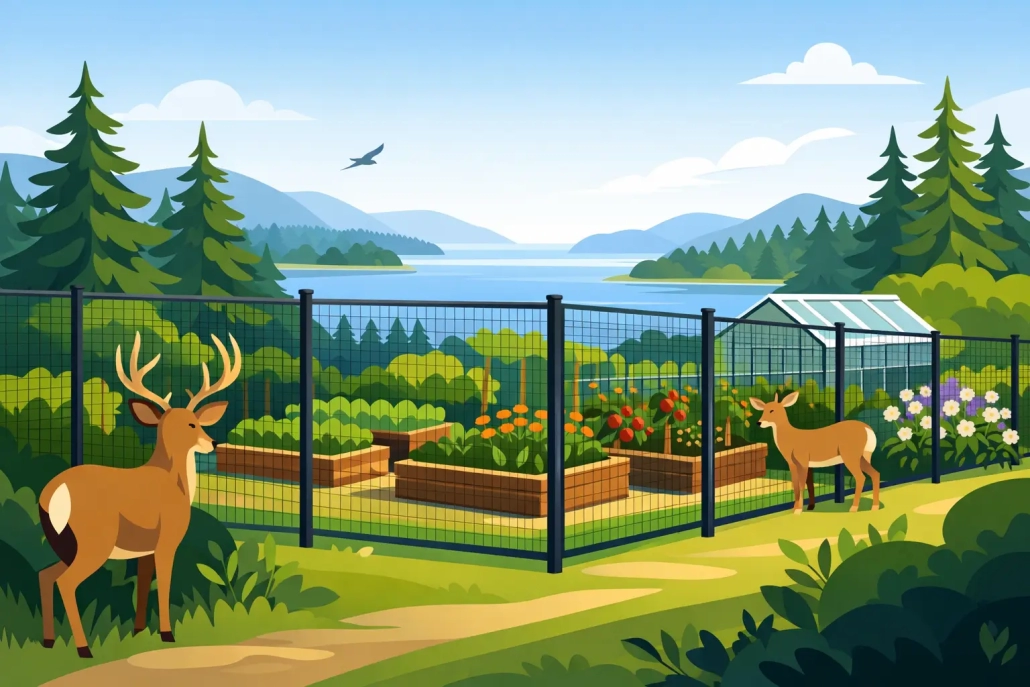
Deer Fencing That Protects Vancouver Island Gardens
A beautiful garden can turn into a nightly feeding stop in a matter of days. Deer fencing is one of the most dependable ways to protect vegetables, fruit trees, shrubs, and new landscaping from the deer pressure common across Vancouver Island. The right fence does more than mark a boundary. It creates a physical barrier that deer are unlikely to jump, push through, or work around.
For properties in Nanaimo, Parksville, Qualicum Beach, Courtenay, Comox, Campbell River, and surrounding rural areas, deer are a regular part of the landscape. That makes fence design a practical decision, not an afterthought. Height, material, access points, terrain, and installation quality all affect whether a fence protects your property for years or becomes an expensive frustration.
Why Deer Fencing Needs a Different Approach
A standard backyard fence may keep pets contained and define a property line, but it is not automatically a deer fence. Deer are athletic, persistent animals. When food is available on the other side, a low fence or poorly secured gate may not slow them down for long.
Height is the starting point. Most effective deer fencing is built at approximately 7 to 8 feet tall. The exact height depends on the site, nearby terrain, and the local deer activity, but shorter fencing often leaves too much opportunity for a deer to jump over. A fence installed along a slope may need added height in lower areas, where the top rail sits closer to the deer’s approach path.
Visibility also matters. Deer can sometimes hesitate at a tall, highly visible barrier, especially when it is installed tightly and has a clear top line. Flexible wire mesh can be an excellent option, but it must be properly tensioned. Loose material, sagging spans, and open corners reduce the fence’s effectiveness and make the finished job look unfinished.
Choosing the Right Deer Fence Material
There is no single material that suits every property. The best choice depends on the level of protection needed, the desired appearance, site conditions, and budget. A practical deer fence should match how the property is used, not just how it looks on installation day.
Heavy-Duty Wire Mesh
Wire mesh fencing is a common choice for acreage, gardens, orchards, and large landscape areas. It provides a strong physical barrier while allowing light and airflow through. Black-coated mesh is often less visually noticeable than galvanized material, helping the fence sit back in the landscape rather than dominate it.
Mesh size matters. Smaller openings near the bottom can help keep out smaller wildlife, while larger openings may be suitable where deer are the main concern. For properties with dogs, livestock, or multiple wildlife concerns, the fence design may need to account for more than deer alone.
Chain Link With Added Height
Chain link is durable, familiar, and well suited to areas where security and containment matter alongside deer control. For a deer barrier, standard chain link height is often extended with additional fencing material, posts, or a purpose-built taller system.
This option works particularly well for commercial sites, storage areas, utility spaces, and larger residential properties. It is not always the most decorative choice, but it can be a long-lasting solution where performance comes first.
Wood and Wire Combinations
A wood and wire fence can offer a more finished look around a garden, estate property, or rural home. Cedar posts, rails, and gates can frame wire mesh while giving the installation a warmer, more intentional appearance.
The trade-off is cost and maintenance. Wood adds visual value, but every structural component needs to be sized and installed for the fence height and wind load. A tall fence catches more wind than a typical privacy fence, particularly in exposed Vancouver Island locations. Proper post depth, bracing, and material selection are not details to overlook.
The Details That Make Deer Fencing Work
A deer fence is only as strong as its weakest point. Gates, corners, changes in elevation, and transitions beside buildings are the areas most likely to create gaps. Good installation accounts for these conditions before the first post goes in.
Gates deserve special attention. A gate needs to be tall enough to match the surrounding fence and tight enough at the ground to prevent animals from slipping underneath. For drive-through access, double gates may be required, but they must meet cleanly and latch securely. A gate that is difficult to use will eventually be left open, which defeats the purpose of the fence.
Corners and end posts carry significant tension in wire fencing. These structural points need appropriate bracing, especially on long runs. Without it, tension can pull posts out of alignment over time and create sagging wire. Professional crews plan the layout so the fence remains straight, secure, and serviceable.
Ground conditions are equally important. Rocky soil, sloped lots, bedrock, tree roots, and uneven grade are common challenges on the Island. In some cases, posts need concrete footings. In others, the site may require drilling, jackhammering, or adjusted post placement to create a stable line. Forcing a standard installation method onto a difficult site is a shortcut that often shows up later as leaning posts and loose fencing.
Plan the Fence Around How You Use the Property
Before choosing a fence line, consider what you are protecting and how you need to move through the space. Fencing only the garden may be more cost-effective than enclosing an entire property. On the other hand, enclosing a larger area can protect ornamental plantings, berry bushes, fruit trees, and outdoor living spaces at the same time.
Walk the proposed line and look for access requirements. You may need a pedestrian gate for daily garden use, a wider opening for equipment, or a service gate for landscapers. Keep gates in convenient locations, but avoid placing them where water pools or where a slope makes operation difficult.
It is also worth considering sightlines. A tall deer fence changes the feel of a yard, particularly on smaller residential lots. Black mesh, carefully placed posts, and planting can reduce its visual impact. In more visible front-yard areas, a combination design may provide the protection you need without making the property feel enclosed.
Property boundaries should be confirmed before installation. A fence built on the wrong side of a line can lead to avoidable disputes and costly changes. If the fence runs near a road, shared driveway, utility area, or neighboring property, plan for setbacks and access before work begins.
When a Professional Installation Is the Better Choice
Some smaller garden enclosures can be straightforward, but tall deer fencing is not a basic weekend project on every site. The height alone creates handling and tensioning challenges. Add uneven ground, rock, custom gates, long fence runs, or structural woodwork, and installation quality becomes critical.
A professional installer can assess the terrain, recommend material options, set posts securely, and build gates that work with the fence rather than against it. This is especially valuable when the project needs concrete drilling, difficult excavation, or custom construction. The goal is not simply to get a fence standing. It is to build one that stays tight, straight, and effective through changing weather and regular use.
Vancouver Island Fence Company works with homeowners, acreage owners, and commercial property managers who need fencing that performs in real site conditions. From a protected backyard garden to a large wire-fenced perimeter, the approach should fit the property and the problem.
Deer Fencing Questions Property Owners Often Ask
Will deer jump an 8-foot fence?
Deer are capable jumpers, but a properly installed 8-foot fence is widely considered an effective physical deterrent. Consistent height is important. Low spots, nearby retaining walls, stacked materials, or raised ground can give deer an easier crossing point.
Can deer get under a fence?
They can if the bottom edge is loose or there are gaps beneath it. Fence material should follow the grade closely and be secured where needed. On uneven ground, the layout may need stepped sections or carefully fitted mesh to avoid open spaces.
Does deer fencing need maintenance?
Yes, although a well-built fence should require limited upkeep. Check tension, gates, latches, damaged mesh, and vegetation growth periodically. After storms or falling branches, inspect the fence line before a small issue becomes an opening.
Is a deer fence worth it for a small garden?
It depends on what you grow and how often deer visit. If deer regularly browse vegetables, flowers, berry plants, or young trees, a focused garden enclosure can save significant time, money, and frustration. It is often more dependable than repeated use of sprays or temporary deterrents.
A good deer fence lets you plant with confidence instead of planning around what wildlife might eat next. Start with a clear assessment of your site, your access needs, and the level of protection you expect, then build the barrier to meet those conditions from the ground up.

