
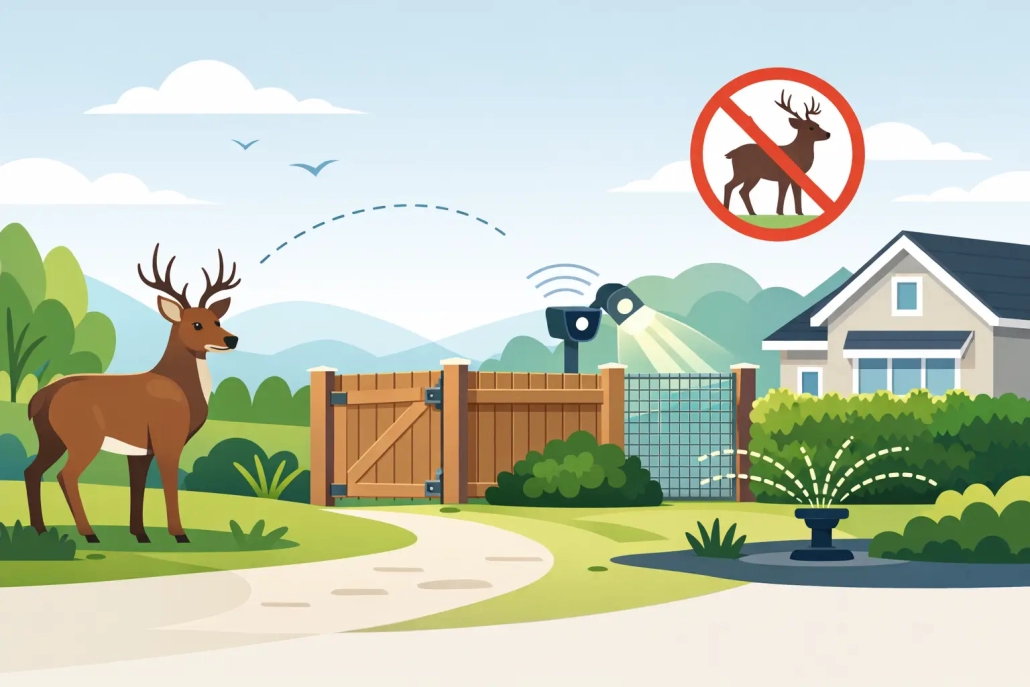
How to Stop Deer Entering Property Safely
Deer can clear a low garden fence before you have finished planting. On Vancouver Island, they are a familiar problem for homeowners, acreage owners, and property managers protecting vegetables, shrubs, young trees, and landscaped grounds. Knowing how to stop deer entering property comes down to one thing: creating a barrier they cannot comfortably jump, push through, crawl under, or bypass at a gate.
Repellents, noise makers, and motion lights may help for a short time, but they are not a dependable property boundary. A properly planned deer fence is the long-term answer. The right design depends on your lot size, terrain, visibility needs, local wildlife pressure, and whether the fence also needs to contain pets or define a residential boundary.
How to Stop Deer Entering Property With the Right Fence
Height is the first requirement. Deer are athletic and cautious, but a hungry deer will jump farther and higher than most people expect. For reliable exclusion, a deer fence should generally be at least 7.5 to 8 feet high. In areas with heavy deer traffic, sloped ground, nearby banks, or tempting food sources, 8 feet or more provides a better margin.
A 4- or 5-foot fence may look substantial, yet it is usually only an obstacle, not a deer barrier. Deer can jump it with room to spare. Adding a top rail, angled extension, or taller mesh section may improve an existing fence, but retrofits need to be assessed carefully. The finished structure must remain tight, properly braced, and secure at every transition.
Fence material matters as much as height. Black polypropylene deer mesh is a practical choice where homeowners want protection without a heavy visual footprint. It can blend into trees and larger rural properties while protecting gardens, orchards, and perimeter lines. Wire deer fencing offers greater durability and is often a stronger fit for acreage, commercial sites, or locations where branches, wildlife, and weather create more wear.
For a residential property where appearance is a major consideration, deer protection can also be incorporated into a more finished fence design. Cedar, ornamental, chain link, and wire fencing can be combined with taller screening or purpose-built deer barriers where appropriate. The best option is not always the least visible or the cheapest upfront. It is the one that protects the area without creating a fence you will need to replace in a few seasons.
A Deer Fence Is Only as Strong as Its Posts
Tall fencing puts more force on posts, corners, and gates than a typical backyard fence. Wind catches mesh and wire. Uneven ground creates gaps. A deer leaning or pressing against a fence can reveal weak installation quickly. That is why deer fencing needs more than a few tall posts driven into the ground.
Corner assemblies and end posts need proper bracing to keep tension in the fence. Line posts must be spaced for the material and site conditions. On rocky Vancouver Island properties, installation may require concrete drilling, jackhammering, or other site preparation to create a stable foundation. Skipping that work can leave posts loose, fence lines sagging, and the barrier less effective over time.
The bottom edge deserves equal attention. Deer are more likely to jump than dig, but they will walk through any opening they can find. A fence should follow the terrain closely, with no loose areas at dips, drainage swales, or around roots and boulders. Depending on the site, the bottom can be tensioned, secured to a ground wire, or extended and pinned to prevent gaps.
Gates Are the Most Common Weak Point
A well-built perimeter will not help if a gate is left open, hangs too low, or has a large gap underneath. Deer often find the easiest route first, especially when they have become accustomed to feeding in the area.
Every access point should be built to the same effective height as the fence. That includes driveway gates, walk gates, service entrances, and temporary access areas. Gate posts need enough strength to support tall, heavy gates without sagging. Latches should close securely, and the space beneath the gate should be checked after seasonal ground movement.
For wider driveways, the gate design should be practical for daily use. A gate that is awkward to open is more likely to be left open. This is where a site-specific plan helps. The right solution may be a pair of swing gates, a sliding gate, or a separate pedestrian entry that reduces unnecessary vehicle gate use.
Plan for Terrain, Sightlines, and Property Use
A deer fence around a small vegetable garden is straightforward. Protecting a full residential lot, vineyard, commercial site, or rural acreage requires more planning. Before choosing a fence, consider where deer currently enter, what they are eating, and which parts of the property actually need protection.
Walk the perimeter and look for natural travel corridors. Deer commonly follow the edge of woods, drainage areas, quiet side yards, and open routes between neighboring properties. A fence line that uses existing grade changes and boundaries can be more efficient than trying to enclose every unused section of land.
Slope changes are especially important. The usable height of a fence is measured from the ground on the deer’s approach side. A fence installed along the top of a bank may be easier to jump from higher ground outside the property. In that case, the fence may need additional height, a revised alignment, or grading work near the line.
Visibility also affects material selection. Open deer mesh may suit a large landscaped property because it protects the view. Chain link or wire fencing may be the better choice where durability, security, or pet containment is also needed. A solid cedar fence can provide privacy, but it must still be high enough to function as deer exclusion if that is the goal.
Do Repellents and Other Deterrents Work?
Repellents can be useful as a temporary layer of protection, particularly for new plantings outside a fenced area. Scent-based products, motion-activated sprinklers, lights, and reflective devices may make deer uncomfortable at first. The problem is that deer adapt. Rain reduces many treatments, batteries fail, and hungry deer will often tolerate a deterrent when food is available.
Use these methods to support a fence, not replace one. They can help protect individual plants while a permanent barrier is being planned or installed. Choosing deer-resistant plants can also reduce damage, although no plant is completely deer-proof when browse pressure is high.
Avoid relying on a single seasonal tactic if your property has recurring deer visits. Once deer establish a feeding pattern, they tend to return. A physical barrier changes that pattern far more effectively than a rotating collection of short-term deterrents.
Choosing Between Mesh, Wire, and Chain Link
The right deer fence is based on the job, not a one-size-fits-all product. Mesh fencing is often the most discreet option for large areas and gardens. It works well when installed with adequate height, tension, and support, but it can be damaged by falling limbs or equipment if the site is heavily wooded or actively maintained.
Wire deer fencing provides a more substantial long-term barrier. It is a strong choice for acreage and locations that need a tougher perimeter. It can also be designed to suit irregular terrain better than rigid panels.
Chain link is durable and versatile, especially where security, pets, or commercial use are part of the project. Standard chain link heights may need extensions or custom planning to keep deer out. The finished fence should be designed around the highest realistic risk, not simply the standard material size available.
A professional installation is often worthwhile when fence height, gates, bedrock, slopes, or long runs are involved. Vancouver Island Fence Company builds deer, wire, chain link, cedar, and custom fencing for properties where the work needs to hold up, not just look finished on installation day.
Keep the Fence Working After Installation
A deer fence does not require constant maintenance, but it should be inspected a few times each year. Check after windstorms, heavy rain, snow, tree work, or construction activity nearby. Look for loose mesh, damaged wire, leaning posts, open gates, and changes in ground level that create openings.
Keep vegetation from growing into the fence line. Vines and heavy brush can add weight, hide damage, and make repairs more difficult. Trim branches that could fall across the fence, especially along wooded property edges.
The most effective deer barrier is one that matches the property and is installed with care from the ground up. Build it high enough, secure it at the bottom, give the gates the same attention as the fence line, and deer will have a much better reason to move on.

