
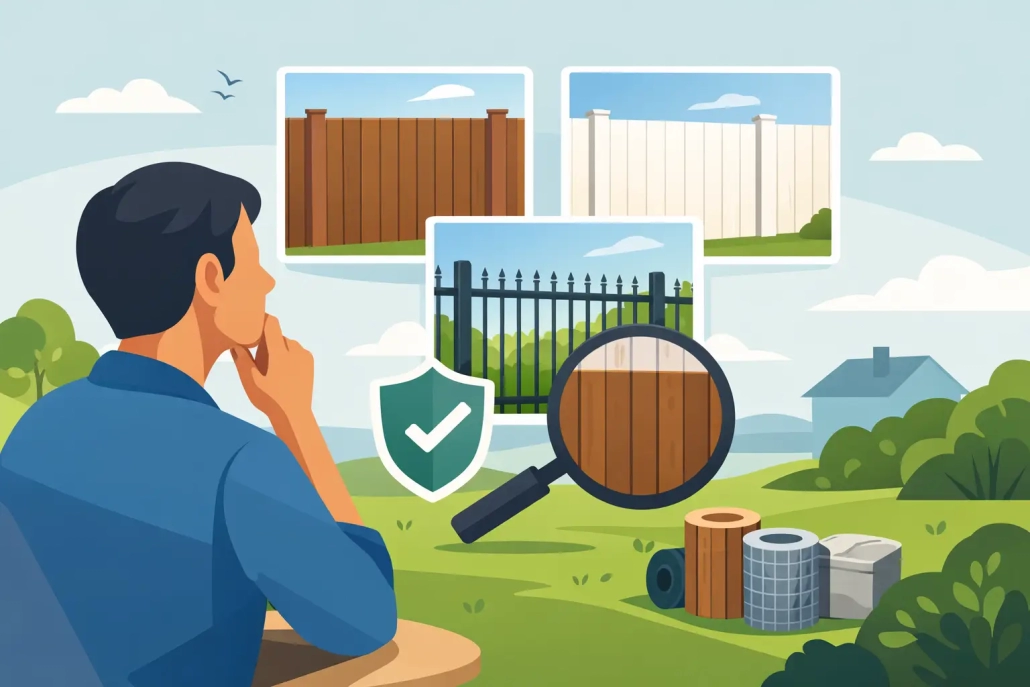
How to Choose Backyard Fencing That Lasts
A fence that looks good on installation day still has to stand up to wet winters, uneven ground, wind exposure, pets, and daily use. Knowing how to choose backyard fencing starts with what the fence needs to do on your property, not simply which style looks best in a photo.
For a compact Nanaimo yard, privacy may be the priority. On a rural property near Courtenay or Campbell River, deer control and clear boundaries may matter more. A commercial site may need durable access control without blocking visibility. The right answer changes with the site, which is why a proper fence plan considers purpose, material, layout, and installation conditions together.
Start With the Job Your Fence Must Do
Most backyard fencing projects have one primary purpose and one or two secondary needs. Be clear about the primary job before selecting a material or height. A privacy fence, for example, needs a different design than a fence meant to keep a dog safely contained.
Privacy fencing usually calls for solid cedar panels or closely spaced boards. It creates a defined outdoor space, reduces sightlines from neighboring homes, and can add warmth to the yard. The trade-off is wind load. A solid fence catches more wind than an open design, so post depth, footing size, and framing matter a great deal.
For pets and children, focus on containment before appearance. The fence should be high enough for the animal, tight enough at the bottom to discourage digging or slipping through, and equipped with a dependable gate latch. Chain link is a practical option for many families because it is durable, visible, and easier to adapt to uneven ground. Cedar can also work well when privacy is part of the requirement.
Security fencing often benefits from visibility. Ornamental fencing or chain link can define a boundary and control access while allowing people to see into and out of the property. For acreage, gardens, and properties with wildlife pressure, deer fencing or wire fencing can protect plants and livestock areas without the cost of building a full solid perimeter.
How to Choose Backyard Fencing for Your Site
A fence is only as reliable as its installation. Vancouver Island properties regularly present conditions that affect how a fence should be built: slopes, rock, mature roots, soft ground, drainage routes, and difficult access. These details are not minor. They determine whether posts stay straight and whether the finished fence follows the land cleanly.
Check the grade before choosing a style
Walk the proposed fence line and look for changes in elevation. A gently sloped yard can often use a racked fence, where rails follow the grade. Steeper slopes may need stepped panels, with each section dropping down at a controlled interval. Both approaches can look sharp, but they produce different gaps at the bottom and different sightlines across the top.
If you need to contain a small dog, stepped fencing may require extra attention at low points. If privacy is the priority, racking may create a more consistent appearance on moderate slopes. A site visit is the best time to work through these choices rather than trying to correct them after posts are set.
Find out what is below the surface
Rock and buried concrete are common challenges on Island properties. So are older fence footings, roots, drainage lines, and compacted fill. These conditions can affect post placement, excavation time, and the equipment needed to complete the work properly.
A contractor with the ability to handle jackhammering, concrete drilling, and difficult site construction can keep a challenging project moving without reducing the quality of the installation. Moving a post a few inches may sound simple, but it can change panel spacing, gate alignment, and the entire layout. Good fence work solves those issues deliberately.
Plan drainage and water flow
Do not build a fence that traps water where it needs to move. Check for downspouts, low spots, swales, and areas where winter runoff collects. Wood posts and fence bottoms should not sit in constantly wet soil, and gates should not swing into areas that become muddy or flooded.
A small adjustment to the fence line, a graded opening beneath a panel, or the right spacing at the bottom can prevent ongoing maintenance problems. This is especially useful on properties with heavy seasonal rain.
Choose a Material That Fits the Work
There is no single best backyard fence material. The best choice is the one that meets your priorities without creating unnecessary maintenance, cost, or structural demands.
Cedar fencing for privacy and curb appeal
Cedar remains a strong choice for homeowners who want a natural, private backyard. It fits established neighborhoods, complements landscaping, and can be built in many styles, from simple vertical boards to more custom designs with lattice or decorative top details.
Wood needs reasonable care over time. Exposure, moisture, and sun will change its appearance, and occasional repairs or finishing may be needed. But a well-built cedar fence uses quality materials, proper spacing, sound framing, and securely set posts to give homeowners a durable and attractive result.
Chain link fencing for practical containment
Chain link is a dependable option when security, pet containment, durability, or budget is the focus. It works well for side yards, larger lots, commercial spaces, and locations where you do not want to block light or views.
Modern chain link does not have to look purely industrial. Black vinyl-coated options can blend more quietly into a yard, while privacy slats can add screening in selected areas. Its open design also handles wind better than a solid privacy fence, which can be useful on exposed properties.
Ornamental fencing for defined, visible boundaries
Ornamental fencing provides a clean, finished appearance with strength and visibility. It is often a good fit for front yards, pool areas, commercial properties, and homes where a solid wood fence would feel too closed in.
This style is not usually the answer for full privacy, but it does create a strong boundary without hiding the property. Gate design and latch hardware are especially important here, since they are both functional and highly visible.
Deer and wire fencing for larger properties
On acreage or semi-rural lots, fencing may need to protect gardens, orchards, animals, or newly planted landscaping from deer and other wildlife. Deer fencing and wire fencing can cover larger distances efficiently and can be designed around the specific animals and areas being protected.
Height, mesh size, post spacing, and tension all matter. A fence that is too low or loosely installed may not solve the problem. This is one area where choosing the right specification is more important than choosing the most decorative option.
Do Not Treat Gates as an Afterthought
A fence can be well built and still frustrate you every day if the gates are poorly planned. Decide who needs access and what needs to pass through the opening. A walk gate for garbage bins has different requirements than a double gate for trailers, lawn equipment, or service vehicles.
Gate posts carry more weight and movement than standard line posts. They need proper support, and the opening must be laid out square from the start. Consider the swing direction, clearance over the ground, latch location, and whether the gate will be used in wet or icy conditions. If privacy or security matters, make sure the gate design matches the fence rather than becoming its weak point.
Confirm Boundaries and Local Requirements First
Before installation begins, confirm where your property line sits. Do not rely only on an older fence, a garden edge, or a neighbor’s assumption. If there is any uncertainty, review your property documents or arrange for appropriate boundary confirmation.
It is also wise to check local rules that may affect fence height, placement, sightlines, pool safety, or permits. Requirements can differ by municipality and by the location of the fence on the lot. Corner properties and fences near driveways often need extra attention to preserve safe visibility.
Talk with neighbors early when a shared boundary is involved. A straightforward conversation about style, height, timing, and access can prevent misunderstandings later. Even when one owner is managing the project, a respectful approach helps the work go smoothly.
Compare Quotes by Scope, Not Just Price
A low number on a quote can leave out the parts that make a fence last. When comparing proposals, ask what is included in the post installation, materials, gate hardware, demolition, disposal, site preparation, and difficult-ground work. Confirm the fence height, board or mesh type, post size, spacing, and finish details.
The installer should also be prepared to explain how they will handle slopes, rock, existing concrete, and access limitations. These are not surprise extras if they are visible at the estimate stage. Clear scope protects both the homeowner and the contractor.
Vancouver Island Fence Company has been building fences across the Island since 1999, including projects that require custom layouts and demanding site work. The goal is not to force every property into the same fence design. It is to build the fence that does its job, fits the site, and stays dependable through the seasons.
A good backyard fence should make the property easier to use the moment it is installed. Bring a clear idea of what you need protected, contained, screened, or defined, then let the site conditions guide the final design. That is how you get a fence you will still be glad you chose years from now.

