
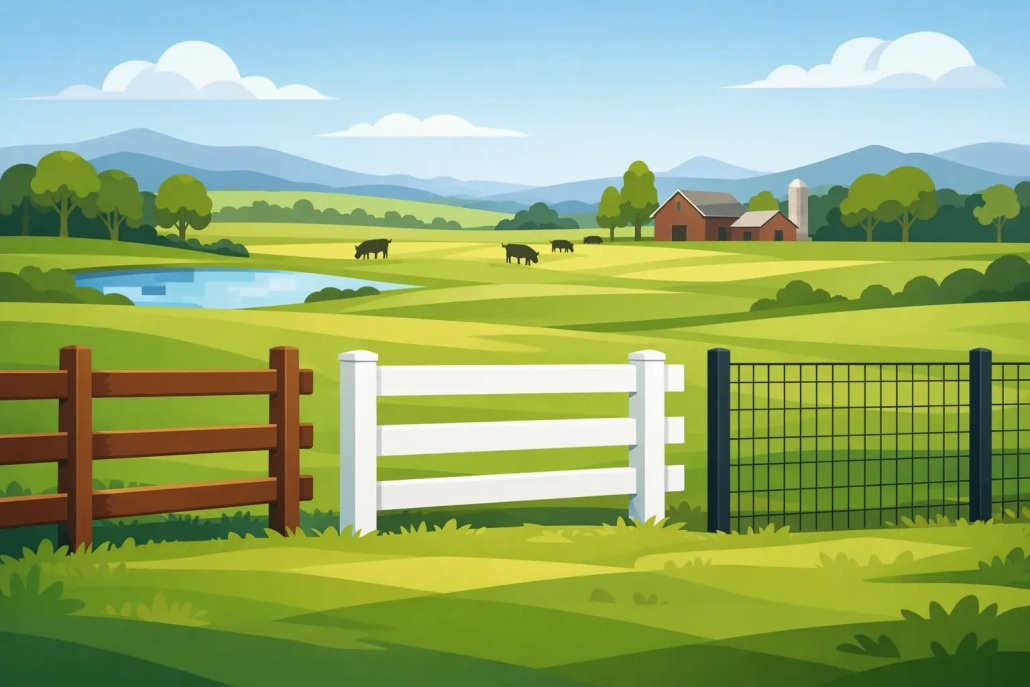
Best Fencing for Acreage Properties That Lasts
Acreage fencing has to do more than mark a property line. It may need to contain animals, keep deer out of a garden, secure equipment, protect a driveway entrance, or create privacy around the home while standing up to years of wet Vancouver Island weather. The best fencing for acreage properties is the fence that matches the job, the terrain, and the amount of maintenance you are prepared to take on.
A long fence line is a significant investment. Choosing the right material before posts go in the ground can prevent costly changes later. The strongest plan usually combines practical perimeter fencing with more decorative fencing near the home, entry, or public-facing areas.
Best Fencing for Acreage Properties Starts With Purpose
Before choosing a style, define what the fence must accomplish. A fence designed to hold livestock is built differently from one intended to discourage deer. A boundary fence may only need clear, durable definition, while a security fence around a workshop or commercial yard may need a lockable gate, tighter mesh, and a more rigid frame.
Start by considering what needs to stay in, what needs to stay out, and where people need access. Also think about visibility. Some rural property owners want an open view across the land. Others need privacy near the house, pool, patio, or neighboring property.
Fence height matters as much as material. A low wire fence may define a boundary, but it will not stop deer. A tall privacy fence can create a comfortable outdoor area, but it is generally not the most cost-effective choice for several acres of perimeter. The right approach is often a combination rather than one fence type used everywhere.
Wire Fencing for Large Perimeters
For long acreage boundaries, wire fencing is often one of the most practical options. It is adaptable, cost-conscious over large distances, and available in configurations suited to livestock, pets, gardens, and general property definition.
Woven wire creates a more consistent barrier than basic strands of wire and can be selected with smaller openings near the bottom when animals or smaller pets are a concern. Field fencing works well for many rural applications, while heavier-gauge wire and properly braced corner posts provide better long-term performance where pressure from animals or uneven ground is expected.
The key is not to treat wire fencing as a simple install. Long runs need properly set posts, tensioned wire, strong corners, and bracing that can carry the load. On sloped or wooded acreage, layout and post placement determine whether the fence stays straight and functional through changing seasons.
Wire fencing is a good choice when function matters more than appearance across a broad boundary. It can also be paired with wood posts, gates, or a more finished fence style around the main residence.
When wire fencing is the right fit
Wire fencing is particularly useful for property lines, animal containment, garden protection, and large areas where a solid-panel fence would be unnecessary or too expensive. It provides visibility across the property and can follow rolling terrain better than many rigid fence systems.
It is not the best choice when full privacy is the goal. It also needs the right wire type and height for the animals and wildlife involved. A fence built for a dog may not be appropriate for goats, horses, deer, or livestock with different containment needs.
Deer Fencing for Gardens, Orchards, and Crops
Deer are a regular concern for Vancouver Island acreage owners. They can damage vegetable gardens, fruit trees, landscaping, and young plantings quickly. Deer fencing is designed around one simple fact: deer can jump much higher than most people expect.
A successful deer fence generally needs significant height, often around 7 to 8 feet depending on the site and the level of pressure from wildlife. The mesh should be durable enough to resist tearing, and the installation needs to be tight and secure at the bottom so deer cannot push through an opening.
Black mesh deer fencing is a popular option because it is less visually intrusive than heavier metal fencing. It can protect a garden or orchard without blocking views of the property. For areas that need greater strength or a more permanent barrier, wire-based systems may be the better choice.
Gate openings deserve the same attention as the fence itself. A well-built deer fence with a loose or undersized gate leaves an easy access point. Plan for wheelbarrows, lawn equipment, tractors, or vehicles before deciding on gate width and placement.
Chain Link Fencing for Security and Animal Control
Chain link is a proven option for acreage properties that need a strong, visible, low-maintenance barrier. It is commonly used around dog runs, work yards, equipment areas, storage compounds, and property sections where reliable containment is the priority.
Galvanized chain link performs well in wet conditions, while black vinyl-coated chain link offers a cleaner appearance around homes, gardens, and recreational areas. It can be installed at different heights and paired with privacy slats or screening in selected areas when more visual separation is needed.
For a large perimeter, chain link can cost more than basic wire fencing, especially where extensive clearing, rock drilling, or concrete work is required. But where security, durability, and pet containment matter, it is often worth the investment. It is also a practical choice for properties that need wide vehicle gates or secure pedestrian access.
Cedar Fencing Where Appearance and Privacy Matter
Cedar fencing is often the right choice around the house, patio, pool, or driveway entrance. It provides warmth, privacy, and a finished look that suits many Vancouver Island homes. Cedar can be built as solid privacy fencing, horizontal slat fencing, lattice-top panels, or custom designs that complement the home and landscape.
On acreage, cedar is usually best used strategically rather than along every boundary. A cedar fence can define the residential portion of the property while wire, deer fencing, or chain link handles the larger functional areas beyond it. This approach directs the budget toward the spaces you see and use every day.
Wood fencing requires quality construction to last. Posts need to be set correctly, rails need appropriate support, and the design should account for moisture and ground movement. A fence that looks good on installation day should still be straight, secure, and serviceable years later.
Ornamental Fencing for Entrances and Defined Spaces
Ornamental fencing gives an acreage property a clean, durable finish around entrances, front yards, pools, and commercial sites. It provides stronger visual definition than wire fencing without creating the solid wall of a privacy fence.
This style is especially effective when paired with gates, masonry columns, or a cedar feature fence. It allows visibility while creating a more secure and polished boundary. For properties with a formal entrance or a public-facing business area, ornamental fencing can make a strong first impression.
It is typically not the first choice for miles of rural perimeter, but it works exceptionally well in the areas where curb appeal, access control, and long-term appearance matter most.
Terrain Can Change the Fence Plan
Acreage properties rarely offer a flat, clear path from one corner to the next. Trees, drainage ditches, exposed rock, steep grades, and soft ground all affect installation. A fence that looks straightforward on a site map can become more involved once crews begin setting posts.
Sloped land may require stepped panels, racked fencing, adjusted post spacing, or custom transitions. Rocky sites can require jackhammering or concrete drilling. Wet areas may need a different post strategy and careful planning to avoid trapping water or undermining the fence line.
Clearing is another consideration. Removing enough brush to create a workable line is different from clearing a wide corridor that changes the character of the property. A good fence plan follows the land where possible while keeping lines accessible for future repairs and maintenance.
Do Not Forget Gates, Corners, and Access
The most useful fence can become frustrating if the gates are poorly planned. Consider how the property is used throughout the year. Will you need access for a trailer, RV, tractor, firewood delivery, landscaping equipment, or emergency vehicles? A driveway gate that is too narrow can create a permanent problem.
Corners and end posts also carry more stress than line posts. They need the strength to support tensioned wire, gates, and changes in direction. This is one area where professional installation pays off. A fence is only as dependable as its posts, corners, hardware, and ground preparation.
For acreage owners in Nanaimo, Campbell River, Parksville, Qualicum Beach, Courtenay, and Comox, Vancouver Island Fence Company can help plan and install fencing that fits the land instead of forcing a standard solution onto a complicated site. From deer fencing and wire runs to cedar privacy sections and secure gates, the work should be built around how you actually use the property.
The right acreage fence does not need to be the same from one end of the land to the other. Build the perimeter for protection, build access points for the equipment and people who use them, and invest in a finished look where it matters most.

