
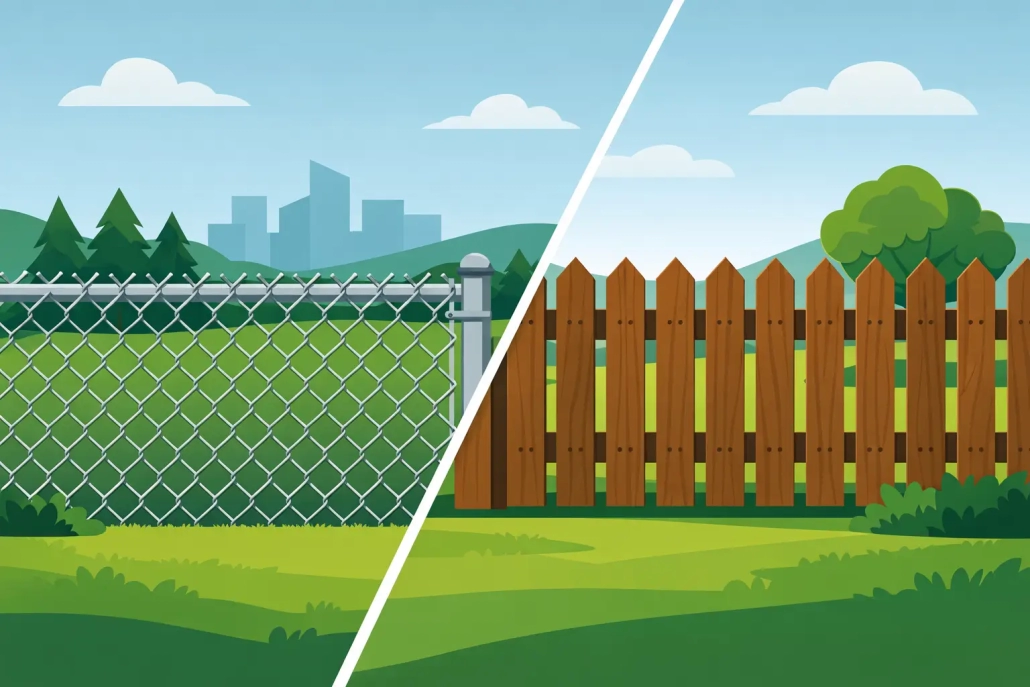
Chain Link Versus Wood Fencing for Your Property
A fence can solve a practical problem or create a new one if the material does not suit the property. When comparing chain link versus wood fencing, the right answer comes down to what the fence needs to do: contain pets, secure a commercial yard, create privacy, define a boundary, or stand up to wet Vancouver Island conditions for years to come.
Wood and chain link are both proven choices, but they perform very differently. A cedar privacy fence can make a backyard feel finished and protected. Chain link can cover a large area economically and handle demanding security or animal-control work. Looking at the full job – site conditions, installation requirements, maintenance, and long-term use – will lead to a better result than choosing based on appearance alone.
Chain Link Versus Wood Fencing: The Main Differences
The most visible difference is privacy. A standard chain link fence is open, allowing light, wind, and visibility through the mesh. It is ideal when you need a clear property boundary, a durable enclosure, or a secure perimeter without closing off the space. It is commonly used for dog runs, sports areas, commercial properties, acreage, and utility enclosures.
A wood fence, particularly a cedar privacy fence, provides a solid visual barrier. It helps separate close neighbors, screen patios, reduce the view of storage areas, and create a more private outdoor living space. For many homeowners in Nanaimo, Parksville, Courtenay, and Comox, that finished backyard feel is the main reason to choose wood.
Cost is also different, although the size and complexity of the job matter more than a simple per-foot comparison. Chain link is often the more economical choice for long fence lines because the materials install efficiently and require fewer components than a solid wood fence. Wood requires posts, rails, boards, fasteners, and more labor per section. Decorative details, gates, stepped panels, and custom heights can add to the overall price.
That does not mean chain link is always the lower-cost project. Difficult access, rock, steep grades, concrete drilling, tall fence heights, privacy slats, or heavy commercial gates can change the budget quickly. A professional site visit helps identify those factors before construction begins.
Privacy, Security, and Curb Appeal
Choose wood when privacy is the priority. A properly built cedar fence blocks direct views and creates a clear division between properties. It also offers more design flexibility. Board layouts, lattice tops, cap rails, horizontal styles, and gate details can be selected to match the home and landscape.
Wood is also a strong choice for curb appeal. Cedar has a warm, natural appearance that suits many Vancouver Island homes. Left unfinished, it will weather to a soft gray over time. Staining or sealing can preserve a preferred color, but that adds an ongoing maintenance task.
Chain link is the better fit when visibility supports the purpose of the fence. A business may want staff to see into a service yard. A rural property owner may need to contain dogs while keeping sightlines open. A school, strata property, or facility may need a reliable enclosure that does not create hidden corners.
For security, both materials can be effective when they are designed for the job. Chain link is difficult to push through and can be built with stronger framework, heavier mesh, taller heights, and secure gates. It is well suited to commercial sites and practical perimeter fencing. Wood creates a more solid barrier, but fence height, gate hardware, and post installation determine how secure it will be in real use.
How Each Fence Handles Vancouver Island Conditions
Vancouver Island fencing needs to deal with frequent rain, damp ground, wind exposure, and varied terrain. The quality of the installation matters as much as the material itself. Posts need appropriate depth and concrete support, lines need to follow the grade correctly, and gates need to be built to operate reliably through seasonal changes.
Cedar is naturally resistant to decay, which makes it a practical choice for local residential fencing. Even so, wood is an organic material. It can fade, dry, move, split, or develop surface wear over time. Good construction details help: quality posts, proper spacing, strong rails, suitable fasteners, and clearance from soil where possible.
Chain link uses galvanized steel components designed to resist corrosion. Vinyl-coated chain link is another option where appearance and added protection are important. It does not rot, and it generally holds up well in wet conditions with limited routine care. However, coastal exposure, damaged coatings, loose fittings, and poorly set posts can still shorten the life of any metal fence.
Wind deserves special attention. A solid wood fence catches more wind than open chain link mesh. On exposed lots, a wood fence may require careful post sizing, deeper footings, and sound structural planning. Chain link allows air to pass through, making it a practical option for windy properties, although privacy slats or screens can increase wind load significantly.
Maintenance and Long-Term Ownership
Chain link is usually the lower-maintenance choice. Periodic checks for loose tension wire, damaged mesh, gate alignment, or rust at scratched areas are generally enough. If a section is damaged by equipment, a fallen branch, or an impact, repairs can often be contained to one area rather than requiring a full fence replacement.
Wood needs more attention, especially if you want to maintain a consistent finished appearance. Homeowners should inspect wood fencing for loose boards, damaged rails, leaning posts, and vegetation holding moisture against the fence. Cleaning and staining or sealing may be worthwhile depending on the desired look and exposure.
The maintenance trade-off is simple: chain link asks less of the owner but offers less privacy and a more utilitarian appearance. Wood creates more privacy and visual warmth but needs occasional care to stay at its best.
Site Challenges Can Change the Best Choice
A flat, accessible yard is one thing. A sloped lot with bedrock, mature trees, retaining walls, tight side access, or existing concrete is another. These conditions affect layout, labor, materials, and the type of fence that will perform well.
Chain link can adapt well to uneven ground because the mesh can follow many grades. It is often a practical choice for long rural boundaries or irregular sites. Wood fencing can also be built on slopes, either by stepping panels or racking the fence to follow the grade. The right method depends on the slope, desired appearance, and need to prevent gaps below the fence.
If pets are involved, those gaps matter. A small dog may find its way under a stepped wood fence, while a larger dog may test a lighter gate or climb a short fence. Deer, livestock, and wildlife-control projects require another level of planning, including fence height, wire selection, and ground clearance.
Difficult ground should not be treated as an afterthought. Rock and concrete may require jackhammering or drilling, and access limitations may affect how materials are brought onto the site. An experienced fencing contractor can plan for these realities rather than making assumptions that lead to delays or weak installation.
When Chain Link Is the Better Choice
Chain link is often the best value when function comes first. It works especially well for large yards, commercial compounds, dog runs, sports areas, rural boundaries, and properties where visibility is useful. It is also a sensible choice when you want dependable containment without the cost and maintenance of a solid privacy fence.
Consider chain link if your priorities are long fence runs, durability, open sightlines, straightforward maintenance, or a secure enclosure for animals and equipment. Privacy slats can improve screening, but they will not create the same finished look or solid barrier as a cedar fence.
When Wood Is the Better Choice
Wood is usually the better investment when the fence will be a major part of your outdoor living area. It is a natural fit for backyards near neighbors, patios, pools, gardens, and side yards where privacy and appearance matter every day.
Choose wood if you want a custom look, greater privacy, and a fence that complements the home rather than simply marking a boundary. Cedar fencing is particularly well suited to homeowners who value craftsmanship and are prepared to maintain the material over time.
The best fence is the one that suits the property, not just the initial budget. Before choosing, walk the site with a contractor, discuss how you use the space, and account for terrain, gates, privacy, pets, wind, and future maintenance. Vancouver Island Fence Company can assess those details and build a fence that is made for the way your property actually works.

