
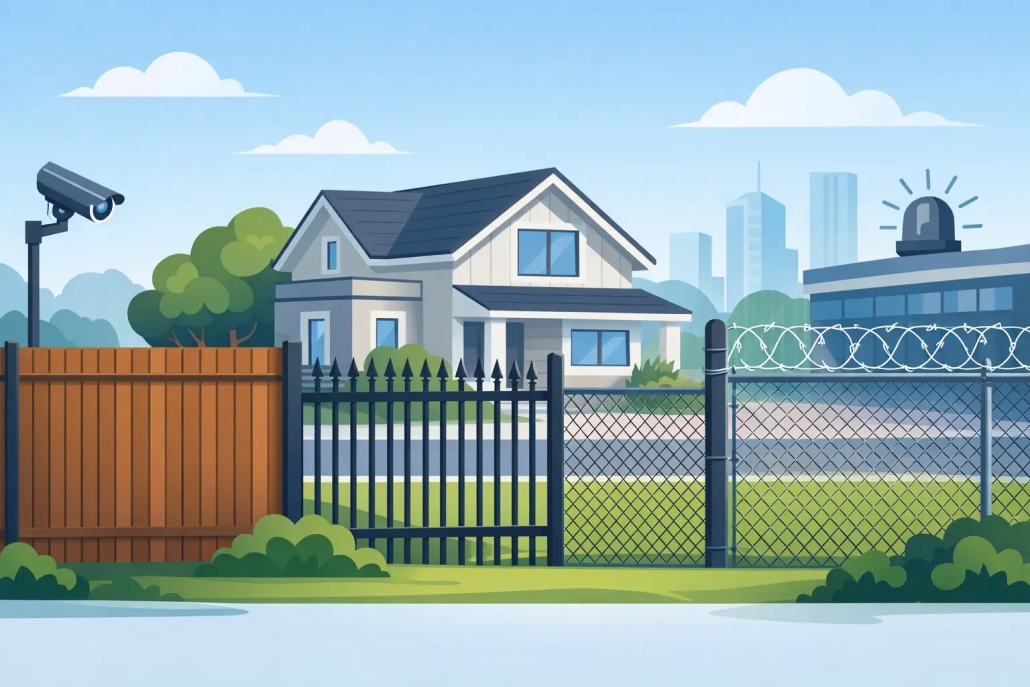
Security Fencing That Fits Your Property
A fence is only security fencing if it does more than mark a boundary. It needs to discourage unwanted access, control where people and vehicles enter, protect what matters on the property, and stand up to the conditions around it. For a Nanaimo home, that may mean a secure backyard and a lockable gate. For a commercial yard, acreage, or multi-unit property, it may mean a taller perimeter, stronger posts, controlled access points, and clear sightlines.
The right build depends on what you are protecting and how the site works. A good-looking fence can provide real security, but appearance alone does not make it secure. Post depth, material strength, gate hardware, terrain, and installation quality all affect the finished result.
What Security Fencing Should Accomplish
Security needs are different from one property to the next. A homeowner may want to keep children and pets safely contained while adding privacy from a neighboring lot. A property manager may need to reduce unauthorized access to waste areas, storage spaces, or parking areas. Rural owners may need to keep deer out of gardens, livestock in designated areas, and strangers away from equipment.
Before choosing a fence style, start with the practical job it needs to do. Is the priority privacy, access control, animal containment, theft deterrence, or separation between public and private areas? Many projects have more than one answer. A cedar privacy fence, for example, can make a backyard feel private while also creating a clear physical boundary. A chain link fence with a properly built gate may be a better fit for a commercial lot where visibility matters as much as access control.
Effective security fencing usually provides three things: a visible boundary, a physical obstacle, and a reliable entry point. If one of those pieces is weak, the entire system is weaker. A tall perimeter fence has limited value if the gate can be easily lifted, forced, or left open. Likewise, a strong gate needs posts and footings that can carry its weight without sagging over time.
Choosing Security Fencing by Property Type
Residential homes and multi-family properties
For homes, security often needs to work alongside curb appeal and privacy. Cedar fencing remains a popular choice because it offers a warm, finished appearance and can be built at heights that create a more private yard. The design can be tailored with solid panels, lattice details, custom gates, or stepped sections for changing grades.
Privacy fencing does have a trade-off. A solid fence limits sightlines from the street or neighboring properties. That may be exactly what a backyard needs, but it can be less suitable around a front entrance, parking area, or shared access lane where visibility helps residents see activity around the property.
Ornamental fencing is a strong option where appearance and visibility both matter. It creates a defined perimeter without closing off the view, making it well suited to front yards, strata properties, pool areas, and commercial-facing locations. Adding a self-closing or lockable gate can improve control around areas that need restricted access.
Commercial yards and service areas
Commercial security fencing needs to account for daily use. Delivery vehicles, staff access, equipment movement, waste pickup, and after-hours security all influence the design. Chain link fencing is often the practical choice for yards, compounds, storage areas, and property lines because it is durable, visible, and adaptable to a wide range of site layouts.
Fence height, mesh type, post size, and gate configuration should be chosen together. A wide rolling gate may suit a service yard, while a single walk gate can provide controlled pedestrian access. If the property has multiple users, it may make sense to separate vehicle and pedestrian entrances rather than relying on one gate for everything.
Visibility is one reason chain link works well in commercial settings. Staff can see into and out of the enclosed area, and the fence does not create hidden corners in the same way as a solid barrier. Where privacy is needed for a specific area, screening can be considered, but it should not interfere with gate operation, drainage, or necessary visibility.
Acreages, farms, and rural properties
On rural and semi-rural properties, fencing often has to manage both security and animals. Deer fencing can protect gardens, orchards, and landscaping from costly damage. Wire fencing can define larger areas, contain animals, and create practical divisions across an acreage.
The challenge is that rural sites are rarely simple rectangles on level ground. Slopes, trees, rock, wet areas, long runs, and changing soil conditions all affect installation. A fence that looks adequate on paper can develop gaps under the bottom rail, loose corners, or uneven tension if the site is not properly assessed before work begins.
For properties with equipment, outbuildings, or stored materials, consider creating a smaller secured zone instead of trying to make every acre equally restrictive. A well-built enclosed yard around the highest-value assets can be more practical and cost-effective than overbuilding the entire perimeter.
The Details That Make a Fence More Secure
The material matters, but construction details are what make a security fence dependable year after year. Posts need to be installed for the ground conditions and the fence load. Gates need the right hardware and support. Corners, ends, and grade changes need proper attention rather than quick fixes.
These four decisions deserve careful planning:
- Fence height: A taller fence is harder to climb or step over, but local regulations, visibility, and neighboring properties may limit what makes sense.
- Post and footing depth: Posts must be stable enough to resist wind, gate weight, and soil movement. Shallow or poorly set posts are a common cause of leaning and sagging.
- Gate design: Gates are moving parts. Their width, hinges, latches, drop rods, locks, and clearance should match how the entrance will actually be used.
- Ground clearance: The bottom of the fence should follow the grade closely enough to prevent easy access underneath while still allowing for drainage and normal site conditions.
On Vancouver Island, site conditions can vary sharply from one property to the next. Soil, bedrock, slopes, tree roots, and existing concrete can all change the scope of the work. A contractor that can handle jackhammering, concrete drilling, and difficult site construction can build a more reliable solution where a basic post-hole approach is not enough.
Gates Are the Working Part of Security Fencing
Many fence problems start at the gate. It is used more than any other part of the perimeter, and it is usually the first place visitors, delivery drivers, tenants, or intruders will test. A security gate should close cleanly, latch consistently, and be easy for authorized users to operate.
For a residential side yard, a solid wood gate with quality hinges and a lockable latch may be all that is needed. For a commercial compound, a heavier steel-framed chain link gate, properly supported posts, and a secure locking method may be the better choice. The right answer depends on gate width, frequency of use, wind exposure, and whether vehicles need regular access.
Do not treat gate placement as an afterthought. Positioning the gate near a driveway, path, or service route makes it more likely people will use it as intended. A gate installed in an inconvenient location often leads to shortcuts, propped-open access, and unnecessary wear on the fence.
Build for the Site, Not Just the Product
It is tempting to choose security fencing from a photo or a standard package. But the best fence is one designed around the property. A steep backyard may need stepped panels or racked sections. A rock-heavy site may require drilling. A commercial lot may need to keep clear of utility routes, fire access, or drainage paths. A rural boundary may need carefully tensioned wire and reinforced corners over a long distance.
That is why a site visit matters. It gives the installer a chance to measure the grade, identify access issues, review existing structures, and discuss how the property will be used after the fence is installed. It also helps prevent surprises that can affect the timeline or budget once work begins.
Vancouver Island Fence Company has worked on residential, commercial, and rural projects across the Island since 1999. The goal is not to sell the same fence for every job. It is to build a fence that suits the site, the security need, and the way you use your property.
A well-planned fence should make your property easier to manage, not harder to live or work around. Start with what needs protection, decide how people and vehicles should move through the space, and choose an installation team prepared to handle the ground beneath the fence as carefully as the fence itself.

