
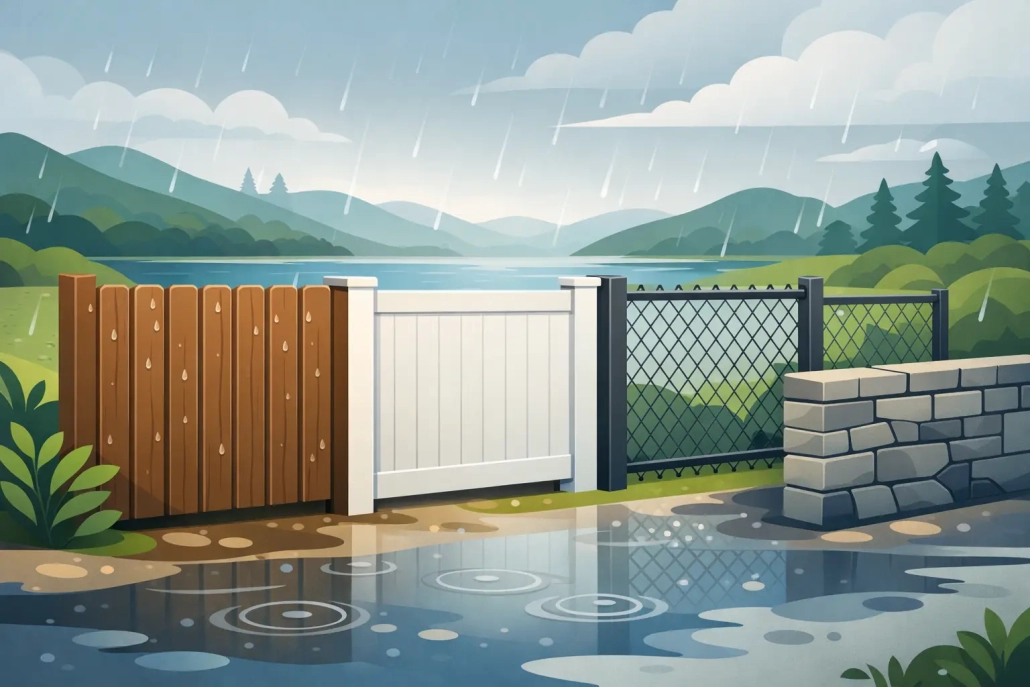
Best Fence Materials for Wet Climates Compared
A fence on Vancouver Island has to handle more than a few rainy weeks. It needs to stand up to wet soil, wind-driven rain, moss, salt air in coastal areas, and long stretches where wood and ground never fully dry. Choosing the best fence materials for wet climates starts with knowing where moisture causes failure: at the posts, along the bottom rails, around fasteners, and anywhere water is trapped.
The right material depends on what the fence needs to do. A private backyard fence has different requirements than a commercial security enclosure, a deer fence around an acreage, or a boundary fence on uneven ground. Appearance matters, but drainage, post installation, and proper construction matter just as much.
What Moisture Does to a Fence
Wet weather does not automatically ruin a fence. Poor material choices and poor installation do. When posts sit in saturated soil, they can shift, rot, or heave. When horizontal rails hold water, decay can begin before it is visible from the yard. Fasteners can stain wood or corrode, and vegetation pressed against a fence slows drying even further.
On Vancouver Island, the challenge is usually persistent moisture rather than one major storm. That means a fence should be built to shed water, allow airflow, and remain stable when the ground softens. A well-built fence also needs the right depth, base preparation, and concrete work for the site conditions.
Best Fence Materials for Wet Climates
There is no single best choice for every property. Cedar, vinyl, chain link, ornamental metal, and wire fencing can all perform well in wet climates when they are matched to the job and installed correctly.
Cedar for privacy and natural curb appeal
Cedar remains one of the strongest choices for residential privacy fencing in rainy coastal areas. It has natural oils that help resist decay and insects, and it handles moisture better than many common softwoods. Its warm, natural appearance also suits wooded lots and established neighborhoods throughout Nanaimo, Parksville, Qualicum Beach, Courtenay, and Comox.
Cedar is not maintenance-free. It will weather to gray over time unless it is cleaned and protected, and untreated cut ends deserve attention. The bottom of the fence should be kept clear of soil, mulch, and standing water. A small gap below the boards gives the wood room to dry and helps prevent premature deterioration.
For homeowners who want a solid privacy screen without the manufactured look of vinyl, cedar is often the right balance of appearance, performance, and repairability. Individual boards or rails can be replaced when damage occurs, which is useful on properties with trees, pets, or active family yards.
Vinyl for low-maintenance privacy
Vinyl fencing does not absorb water, so it will not rot, split, or require staining. That makes it a practical option for homeowners who want a clean, consistent privacy fence with limited ongoing maintenance. A periodic wash is usually enough to remove dirt, algae, and surface mildew.
Its main trade-off is structural. Vinyl panels still rely on properly set posts and internal supports, particularly in exposed locations. High winds, slopes, gates, and soft ground require careful planning. A poorly installed vinyl fence can lean or rack even though the material itself is unaffected by rain.
Vinyl also has a more defined visual style than cedar. Some property owners prefer it, while others want the natural character of real wood. It is worth considering if low upkeep is the priority and the property design suits it.
Chain link for security, pets, and commercial use
Galvanized chain link is one of the most dependable fence systems for wet ground. It does not hold water like a solid wood fence, allows wind to pass through, and provides excellent visibility for commercial sites, dog runs, utility areas, and property boundaries. Vinyl-coated chain link adds another layer of protection and a more finished appearance.
The material is especially effective where drainage is poor or terrain is difficult. Because the fabric is open, it places less wind load on posts than a privacy fence. That can make a major difference on exposed acreage or coastal lots.
Chain link is not the first choice when complete privacy is the goal. Privacy slats or screening can be added, but they increase wind resistance and should be planned carefully. For security, animal containment, and long service life, chain link remains one of the most practical wet-climate options.
Ornamental metal for long-term strength
Ornamental metal fencing offers a clean, durable solution for front yards, pool areas, commercial properties, and locations where visibility matters. Quality powder-coated or properly finished metal resists moisture well and does not have the rot concerns of wood.
The key is using the right finish and hardware for the environment. Coastal exposure can be harder on metal because salt air accelerates corrosion. Galvanized components, quality coatings, and routine inspection of scratches or damaged areas help extend the life of the fence.
Metal fencing is often a higher upfront investment than chain link or basic wood, but it can be an excellent long-term choice where security and appearance need to work together. Gates deserve the same attention as the fence line, especially on sloped or wet sites where alignment can change over time.
Wire and deer fencing for acreage
For rural and semi-rural properties, wire fencing and deer fencing offer practical protection without blocking views or creating a heavy visual barrier. They are well suited to gardens, livestock areas, large lot boundaries, and locations where deer pressure is a regular problem.
Galvanized wire performs well in wet conditions, provided the posts and braces are built for the tension of the system. Deer fencing, in particular, depends on correct height, tight installation, and strong corner construction. A few weak posts can compromise a long run of fence.
These systems are often the right answer where a solid privacy fence would be unnecessary or too costly. They also work well across uneven terrain, although difficult ground may require drilling, jackhammering, or custom post solutions.
The Posts Matter as Much as the Fence Material
A premium fence material cannot compensate for posts that are too shallow, poorly braced, or installed in waterlogged holes. Posts carry the weight of gates, panels, wind pressure, and seasonal movement in the ground. They are where most fence failures begin.
Pressure-treated wood posts are common and can perform well when properly rated for ground contact. Metal posts offer a strong alternative for chain link, ornamental, and some wood fence designs. On privacy fences, steel-post systems can provide additional strength while allowing the finished face to remain cedar.
Concrete is useful in many installations, but it must be used with site conditions in mind. Water needs a path to drain away from the post area rather than collect around it. In especially wet or challenging ground, an experienced installer will assess soil, grade, access, and the demands of the fence before deciding on the best installation method.
Design Details That Help a Fence Last
A wet-climate fence should be designed to dry. Keeping wood off the ground is one of the simplest and most effective steps. Cap boards on wood posts can reduce water entry, while properly spaced boards and rails help air circulate.
Use corrosion-resistant fasteners. Hot-dipped galvanized or stainless steel fasteners are a better choice than basic hardware that can rust, bleed stains onto wood, or fail early. Hinges, latches, and gate hardware should also be selected for outdoor moisture exposure.
Grade matters as well. If water regularly runs toward the fence, the issue may be drainage rather than fencing. Clearing debris, trimming plants back from the fence line, and correcting problem drainage areas can add years to the structure.
Choosing the Right Fence for Your Property
If privacy and natural appearance are the goal, cedar is usually the leading choice. If you want minimal maintenance, vinyl deserves a close look. For security, pet containment, commercial boundaries, or difficult terrain, chain link is hard to beat. Ornamental metal suits properties that need a more formal look with lasting strength, while wire and deer fencing are practical for acreage and animal control.
The final decision should account for wind exposure, soil conditions, slope, gates, local wildlife, and the amount of maintenance you are willing to do. Vancouver Island Fence Company has worked with these conditions since 1999, including sites that need custom layouts, concrete drilling, or more demanding ground preparation.
A fence built for wet weather should not simply survive the rain. With the right materials, drainage, and workmanship, it should keep doing its job long after the rainy season has passed.

