
How to Prepare Your Yard for Fence Installation
A fence is only as good as the ground, layout, and post work holding it up. Knowing how to prepare your yard for fence installation helps prevent delays, protects underground services, and gives your finished fence a clean, lasting result. Whether you are planning cedar privacy fencing in Nanaimo, chain link for a commercial lot, or deer fencing on a rural property, a little site preparation makes a major difference.
Start With the Fence Purpose and Layout
Before clearing brush or moving materials, decide what the fence needs to do. Privacy, pet containment, security, pool safety, livestock control, and property definition all call for different fence styles, heights, gate locations, and post spacing.
A cedar privacy fence may need a straight, consistent line that complements the home and creates a finished backyard. A deer fence may follow a larger, irregular property edge and need extra height. Chain link fencing often works well for durable, practical security, but access gates and vehicle traffic need to be planned early.
Walk the proposed fence line and consider how you use the property. Think about mower access, garbage bins, driveway clearance, gates, garden beds, sheds, retaining walls, and outdoor living spaces. A gate that looks right on a drawing can become frustrating if it opens into a slope, blocks a walkway, or is too narrow for equipment.
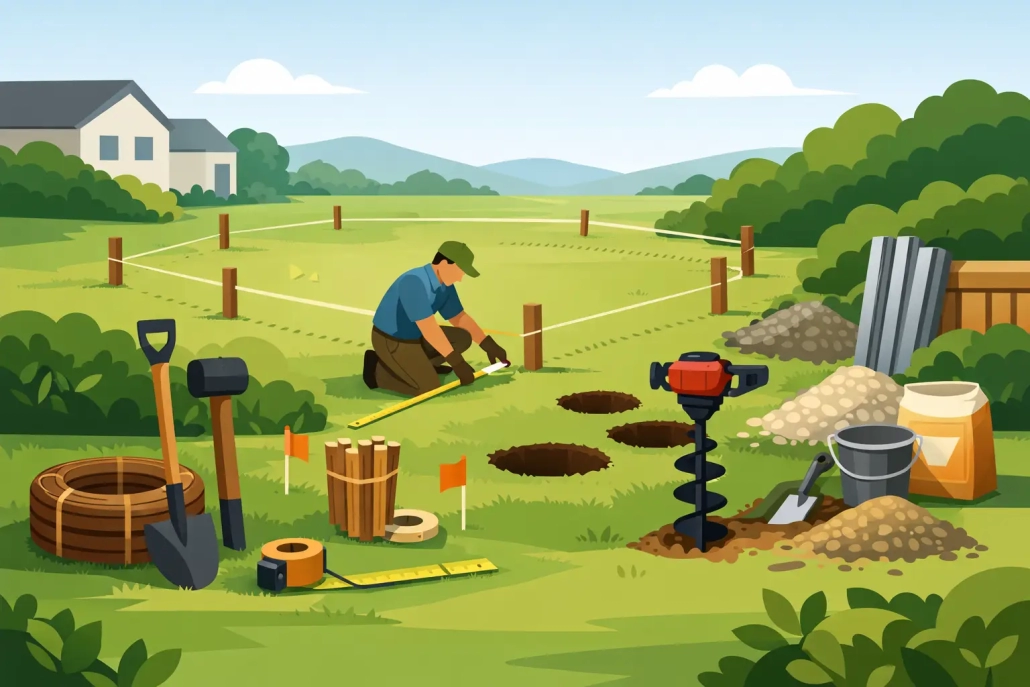
Marking a rough line with string, marking paint, or temporary stakes gives everyone a clear starting point. It also helps identify bends, grade changes, obstructions, and places where a custom solution may be needed.
Confirm Property Lines Before You Prepare a Yard for Fence Installation
Do not assume an existing fence marks the legal boundary. Older fences can be set inside a property line, built in the wrong location, or shifted over time as neighboring properties change hands. Building on the wrong line can create an expensive dispute and may require a new fence to be moved or removed.
Review your property documents and look for survey pins or professional survey markers. If the boundary is unclear, a current survey or advice from a qualified survey professional is the safest route. This is especially worthwhile for acreage, corner lots, waterfront properties, and homes where the fence will sit close to a neighbor’s structure.
Speak with neighboring owners before work begins when the fence follows a shared boundary. A straightforward conversation about the fence location, height, style, and construction schedule can avoid confusion later. Local bylaws, strata rules, and municipal requirements may also affect height, setbacks, and the placement of fences near roads, sidewalks, or intersections.
Arrange Utility Locates and Identify Hidden Services
Fence posts go below ground, and that is where preparation becomes a safety issue. Request utility locates well before installation so the fence line can be checked for electrical, gas, water, communications, sewer, and irrigation services. Markings show where known services are located, but they do not replace careful digging practices near those areas.
Private lines require extra attention. Landscape lighting, sprinkler pipes, invisible pet fences, drainage lines, septic components, and power running to a detached garage or shed may not appear on a standard utility locate. If you know of any buried service, point it out during the site visit.
On Vancouver Island, rocky ground and older properties can bring additional surprises. Buried concrete, old fence footings, roots, abandoned pipes, and shallow bedrock may change how posts are installed. A capable fencing contractor can assess the site and determine whether hand digging, jackhammering, concrete drilling, or another approach is required.
Clear the Fence Line Without Over-Clearing the Yard
The installation crew needs a workable path along the full fence line. Remove loose items such as patio furniture, planters, toys, firewood, hoses, and movable yard decorations. Trim back grass, blackberry bushes, vines, and low branches that interfere with the work area.
There is no need to strip the whole yard bare. The goal is to provide clear access to the proposed post locations and enough room to safely carry materials, set posts, and build panels. If you have mature trees or landscaping you want to protect, identify them in advance. A fence can often be adjusted slightly, stepped with the grade, or custom-built around site features when the layout allows.
Keep in mind that roots are not just a nuisance. Large roots can affect post depth and long-term stability. Cutting major roots may harm a tree, while forcing posts around them can create an uneven fence line. This is a situation where a site-specific plan matters more than a one-size-fits-all layout.
Check Grade, Drainage, and Soil Conditions
A level yard is simple, but many Vancouver Island properties are anything but level. Slopes, rock, wet ground, retaining walls, and uneven fill all affect the way a fence is built.
Walk the line after rain if possible. Look for standing water, soft soil, washout areas, and downspouts that discharge near the future fence. Water can weaken soil around posts and shorten the life of wood components if drainage is ignored. In some cases, the fence should be set back from a drainage channel or designed with enough clearance to avoid trapping water and debris.
A fence on a slope can be built using a stepped layout or a racked layout. Stepped fencing keeps panels level and drops them down in sections. Racked fencing follows the slope more closely. The right choice depends on the material, the steepness of the grade, the desired appearance, and whether gaps under the fence create a problem for pets or wildlife.
Rocky soil is common in many areas. It does not mean a fence cannot be installed, but it may require specialized equipment and more time than standard post digging. Good preparation means discussing known rock, fill, or concrete with your installer before the crew arrives, not after the first post hole is underway.
Make Room for Materials and Equipment
Fence installation requires more than a clear line. Posts, panels, concrete, gates, tools, and equipment need a practical route into the work area. Check side-yard access, gate openings, driveway space, and any narrow passage between the home and a neighboring building.
Let your contractor know about stairs, steep hills, limited parking, shared driveways, or access through another property. These conditions do not necessarily stop the job, but they can affect crew size, equipment choices, scheduling, and cost.
Protect surfaces that matter. If materials need to cross a lawn, garden, paver patio, or newly paved driveway, identify those areas during the estimate. Move vehicles out of the driveway if access is needed, and make sure gates are unlocked on installation day. If pets are normally in the yard, arrange a secure indoor space or alternate enclosure while the work is taking place.
Remove Obstacles and Plan Around Existing Structures
Look closely at what sits near the fence line. Sheds, decks, retaining walls, AC units, fuel tanks, trees, and existing fencing can all influence post placement. Old fence removal should be discussed before installation, including whether posts and concrete footings need to be extracted or can be safely cut below grade.
Do not forget overhead clearance. Tree limbs, low service lines, and building eaves can interfere with tall posts or equipment. Gates also need room to swing or slide without contacting landscaping, vehicles, or structures.
For commercial and rural properties, think beyond the immediate line. Consider delivery routes, emergency access, equipment movement, livestock patterns, and where employees or tenants need to enter. Functional fencing starts with a layout that works every day, not just one that looks good from the road.
Know What You Need to Handle Before Installation Day
Your contractor can guide the project, but property owners are often responsible for confirming permits, strata approvals, and boundary information. Requirements vary by community and by fence type. Pool enclosures, commercial security fences, roadside fencing, and taller deer fencing may have more specific rules than a standard backyard fence.
Have a clear answer on access and approvals before materials arrive. If a neighbor has agreed to temporary access for construction, confirm the timing and conditions. If landscaping or irrigation must be moved, arrange that work ahead of the installation date. Small details handled early keep the project moving.
A professional site visit is the best time to raise concerns about rock, drainage, gates, unusual terrain, or a fence design that needs to do more than define a boundary. Vancouver Island Fence Company has handled standard residential yards as well as difficult sites that require drilling, jackhammering, and custom construction. Bring the real conditions forward early, and the finished fence can be built to suit your property rather than forcing your property to suit the fence.
A prepared yard gives your crew room to work safely and gives your fence the foundation it deserves. Walk the line, confirm the details, and ask questions before installation day. That preparation is often what turns a good fence project into one that stays strong, looks right, and works reliably for years.

