
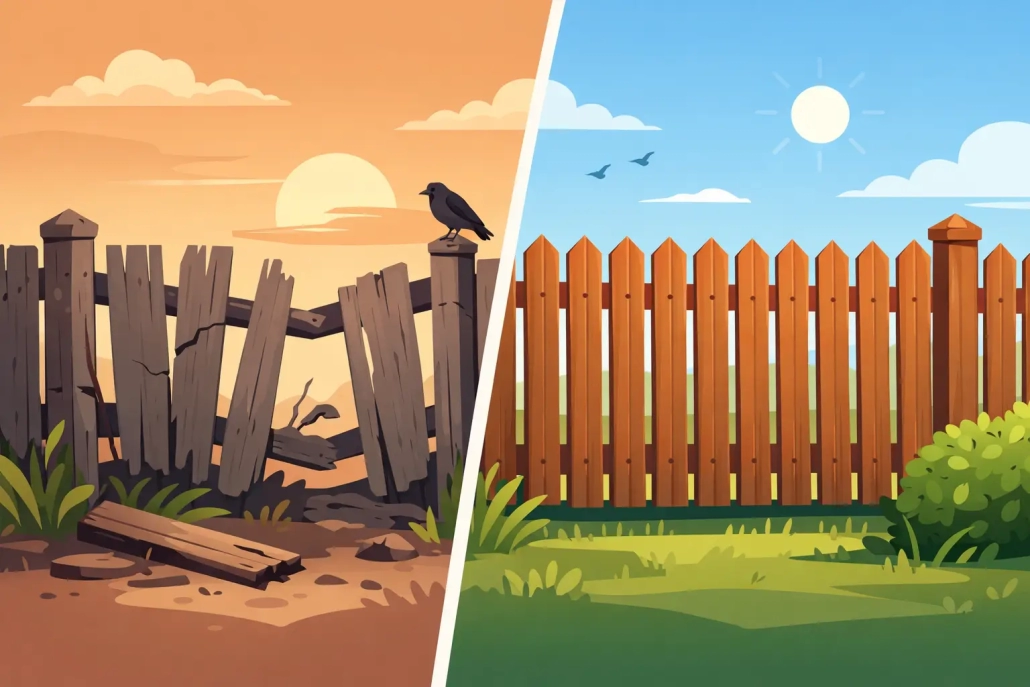
When Should a Fence Be Replaced? 8 Clear Signs
A fence rarely fails all at once. More often, it starts with one leaning section, a gate that no longer latches, or cedar boards that feel soft near the ground. If you are asking when should a fence be replaced, the answer usually comes down to structure, safety, and whether another repair will actually last.
On Vancouver Island, fences deal with steady rain, wind, damp ground, salt air in some coastal areas, and heavy vegetation. A well-built fence can serve a property for many years, but climate and installation conditions matter as much as the material itself. Replacing a fence at the right time protects your property, improves its appearance, and prevents a small issue from becoming a larger job.
When Should a Fence Be Replaced Instead of Repaired?
A repair makes sense when the damage is isolated. One broken board, a single damaged rail, or a gate that needs adjustment does not automatically call for a full replacement. If the posts are solid, the fence line is straight, and the rest of the material is in good condition, targeted repairs can extend its useful life.
Replacement becomes the better investment when the fence has widespread deterioration or its main structural components are failing. Posts, rails, footings, and gates do the hard work. Once several of these parts are compromised, replacing individual boards only improves the appearance for a short time.
A good rule of thumb is this: if repairs would involve a large portion of the fence line, or if the repaired sections will not match the remaining fence in strength or condition, it is time to consider a new installation.
8 Signs Your Fence Is Near the End of Its Service Life
1. Posts Are Leaning, Rotting, or Moving in the Ground
Fence posts are the foundation of the entire structure. A slight lean can sometimes be corrected if it is caused by a single loose post, but several leaning posts usually point to a broader issue. Waterlogged soil, poor drainage, undersized footings, or wood rot below grade can all weaken a fence from the ground up.
Press on a post after heavy rain. If it moves easily, has visible cracking, or feels soft at the base, it needs attention. On a wood fence, rot often begins where the post meets the soil and may not be obvious from a distance.
2. Rot Has Spread Beyond a Few Boards
Cedar is a strong, attractive choice for privacy fencing, but no wood fence is immune to moisture over time. Surface weathering is normal. Deep rot is different. Watch for boards that crumble at the edges, split badly around fasteners, or stay dark and soft after dry weather.
If rot is limited to a few pickets, those pickets can often be replaced. If rails, posts, caps, and multiple boards are affected, the fence has likely reached the point where repairs will continue to pile up.
3. Multiple Sections Are Sagging or Bowing
A fence should follow a consistent line, even where a property has a slope or changing grade. Sagging panels, bowed rails, and uneven tops can signal failing connections or weakened posts. This is especially common after years of wind exposure or when a fence was not designed for the site conditions.
A bowed fence may still look serviceable from one side, but it can fail quickly during a strong wind event. This matters around pools, driveways, livestock areas, commercial sites, and any location where a damaged fence could create an access or safety problem.
4. The Gate Will Not Stay Aligned
A dragging or misaligned gate is often one of the first practical signs of structural movement. Hinges can be adjusted, and latches can be replaced, but a gate that repeatedly sags may be attached to a failing post or a fence section that is shifting.
For a driveway, side yard, enclosure, or commercial access point, a gate must work reliably every day. If it no longer closes securely, it is more than an inconvenience. It may leave pets, children, equipment, or private areas without proper protection.
5. Fasteners Are Failing Throughout the Fence
Loose nails, rusted screws, and detached rails are not always visible until boards begin pulling away. A handful of failed fasteners is a repair issue. Widespread corrosion or repeated board movement usually means the fence has been exposed to enough moisture and stress that a larger rebuild is more practical.
This is one reason professional installation matters. The right fasteners, post depth, rail layout, and material selection all affect how well a fence holds up through wet seasons and changing ground conditions.
6. The Fence No Longer Provides the Security or Privacy You Need
Sometimes a fence is structurally sound enough to remain standing but no longer does its job. A low chain link fence may not provide the security a commercial property now requires. An aging cedar fence with gaps may no longer give a backyard privacy. A rural property may need deer fencing or wire fencing that better protects gardens, animals, or crops.
Replacement is an opportunity to match the fence to the property as it is used now, not as it was used ten or twenty years ago. That could mean moving to ornamental fencing for curb appeal, adding a stronger chain link system, or building a custom solution around difficult terrain.
7. Repairs Are Becoming Frequent and Expensive
The cost of a repair is not just the invoice for the current work. It is also the likelihood that another section will fail next season. If you have repaired several posts, replaced multiple rails, and continue dealing with loose boards or gates, add up the total cost over the last few years.
There is no exact percentage that applies to every project, but when repair costs start approaching a meaningful portion of replacement, a new fence often offers better value. A replacement gives you consistent materials, correct structural support, and a single finished look rather than a patchwork of old and new sections.
8. The Fence Has Visible Storm or Impact Damage
Fallen branches, vehicle contact, severe winds, and shifting trees can damage more than the panels you can see. A fence may look repairable while posts have been pulled out of alignment or footings have cracked underground.
After an impact, inspect the full fence line. Look for separation at the rails, changes in post alignment, cracked concrete, and tension issues in chain link or wire fencing. A qualified contractor can determine whether the damage is isolated or whether replacement is the safer option.
Material Age Matters, but Condition Matters More
Fence lifespan varies widely. A well-installed cedar fence can last many years with proper maintenance, while poorly drained posts can fail much sooner. Chain link fencing may remain structurally useful for decades, but its fabric, fittings, and gates can corrode or loosen over time. Ornamental fencing is durable, though damaged coatings and compromised posts still need prompt attention.
Age should start the conversation, not make the decision. A 15-year-old fence that is straight, secure, and well maintained may have plenty of life left. A newer fence installed with shallow posts, poor drainage, or unsuitable materials for the site may need major work much sooner.
Site Conditions Can Change the Right Solution
Vancouver Island properties are not all built on flat, dry ground. Sloped yards, rock, dense roots, clay soils, coastal exposure, and uneven access can all affect fence performance. A replacement project is the right time to correct the original weak points rather than repeat them.
For example, a new cedar privacy fence may need deeper or better-supported posts in a wind-exposed yard. A commercial chain link installation may require concrete drilling or specialized footing work. A rural deer fence may need to follow a long, uneven boundary while maintaining the proper height and tension. These details determine whether the new fence performs as expected.
Vancouver Island Fence Company handles standard installations as well as difficult site work, including jackhammering and concrete drilling where the property calls for it. The goal is not simply to put a fence back where the old one stood. It is to build a fence that suits the ground, the purpose, and the demands of the site.
What to Do Before Replacing Your Fence
Start by walking the entire boundary, not just the section that looks worst. Check posts, rails, gates, corners, and areas hidden by shrubs or stored materials. Take note of drainage problems, overgrown trees, and any changes you want to make to the fence height, layout, or access points.
If the fence sits near a property line, confirm the boundary before work begins. For shared fences, speak with the neighboring owner early. If the project involves a pool, business property, animals, or a security concern, make those requirements clear during the estimate so the fence can be designed for its actual use.
A new fence should feel like a long-term improvement, not a temporary fix with fresh boards. When posts are failing, repairs keep adding up, or the fence no longer protects what matters, replacement gives you a clean start and a structure built to do the job properly.

